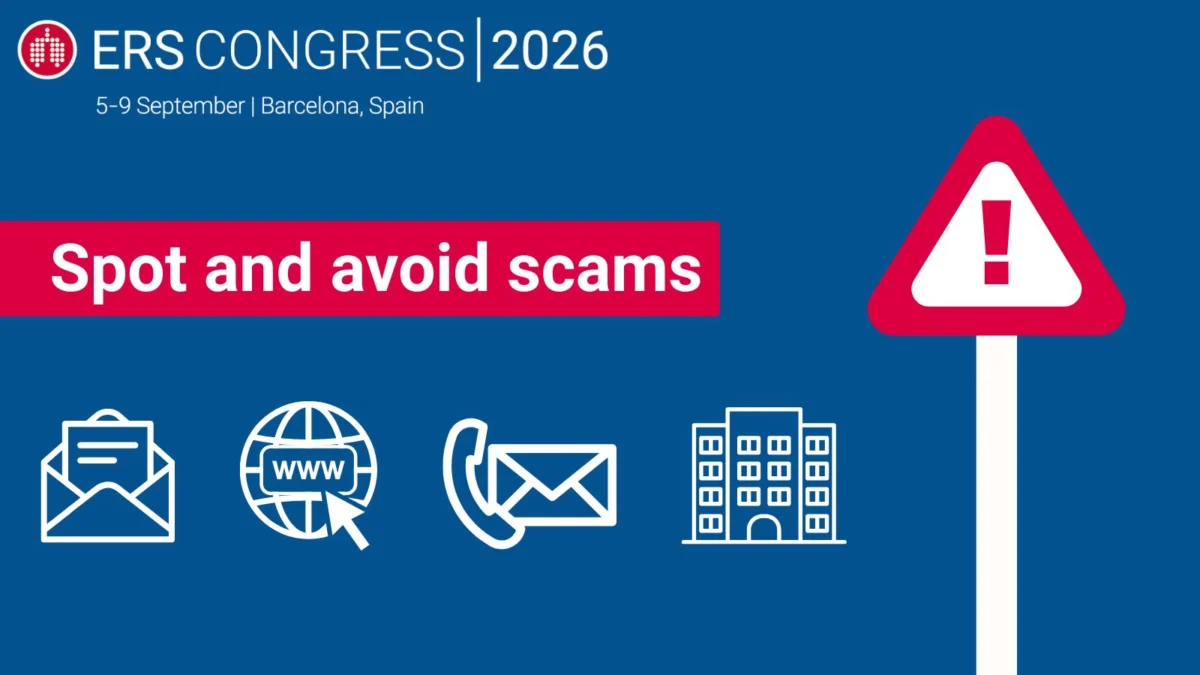
18 May, 2026 – As the international scientific community prepares for the highly anticipated European Respiratory Society (ERS) Congress, scheduled to take place in Barcelona, Spain, and via a digital hybrid platform from 5–9 September 2026, the organization has issued a stern advisory regarding the rise of sophisticated cyber-fraud targeting medical professionals.
The ERS Congress stands as a cornerstone of the global respiratory health calendar, drawing thousands of clinicians, researchers, and industry leaders annually. However, this prestige has made the event a recurring target for organized criminal syndicates who exploit the eagerness of delegates to secure registration, accommodation, and travel. By establishing fraudulent websites and distributing deceptive communications, these bad actors seek to harvest financial data and personal information.
In response, the ERS has released a comprehensive security framework to guide attendees, ensuring that the integrity of the event remains untarnished by digital malfeasance.
Main Facts: Navigating the Landscape of Potential Fraud
The primary threat facing ERS Congress attendees involves "imposter services." These entities often mirror the official branding of the ERS, creating high-fidelity websites that appear indistinguishable from the legitimate portal. These fake sites lure unsuspecting users into providing credit card details for non-existent hotel bookings or registration packages that never materialize.
"The safety of our delegates extends beyond the physical venue in Barcelona; it includes their digital security," noted a spokesperson for the ERS. "We are committed to providing a seamless experience, but that requires a partnership of vigilance between the society and our members."
Key Security Protocols for Delegates:
- Verification of Communications: All official correspondence originates from an
@ersnet.orgdomain. Any email claiming to represent the Congress that stems from a public domain (such as Gmail, Yahoo, or suspicious look-alike domains) should be treated as a red flag. - Centralized Management: Registration for the 2026 Congress is handled exclusively by the K.I.T. Group GmbH. Any attempt by third-party entities to process payments outside of this designated platform should be reported immediately.
- Authorized Partnerships: The ERS has officially partnered with bnetwork to manage accommodation and travel logistics. Delegates are urged to use the official "Venue, Accommodation, and Travel" page on the ERS website to facilitate all bookings.
Chronology: A History of Exploitation in Medical Conferences
The phenomenon of "conference hijacking" is not new, but it has evolved in complexity over the past decade.
- 2018–2020: The rise of online event platforms during the pandemic provided a fertile breeding ground for scammers. As medical conferences moved to virtual formats, hackers capitalized on the confusion, creating fake "login portals" that captured user credentials.
- 2022–2024: Following the return of in-person events, scammers shifted their focus toward travel and accommodation. By offering "discounted" rates that were significantly lower than market value, criminals successfully phished thousands of dollars from medical practitioners globally.
- 2025: A record year for cybersecurity threats in the medical field. Major scientific societies reported a 30% increase in fraudulent emails targeting international delegates.
- May 2026: In anticipation of the Barcelona gathering, the ERS has taken a proactive stance, issuing this advisory months ahead of the event to ensure that attendees are educated on the risks long before they finalize their travel plans.
Supporting Data: The Global Impact of Conference Scams
While specific financial losses for individual conferences are often kept confidential, industry analysts suggest that "event-based fraud" costs the global conference industry millions of euros annually.
A recent survey conducted by the International Congress and Convention Association (ICCA) indicated that:
- Over 40% of large-scale international medical conferences report being targeted by unauthorized third-party housing agencies.
- Financial Impact: Victims of these scams often lose not only the cost of the fraudulent booking but also suffer the secondary impact of having their credit card information compromised, leading to further identity theft.
- The "Phishing" Factor: Medical professionals are often considered "high-value targets" due to their access to institutional funding and high-limit professional credit cards.
The ERS is currently working with cybersecurity experts to monitor the dark web and registered domains that infringe upon the ERS brand, attempting to shut down malicious sites before they can reach the public.
Official Responses and Verification Procedures
The ERS has established a clear, tiered response system for those who find themselves in a precarious situation.
Contacting the Authorities
If a delegate is unsure about the legitimacy of a communication, the ERS mandates that they do not click any links or download attachments. Instead, they are encouraged to contact the society directly via their verified website.
For registration-specific queries, the K.I.T. Group GmbH serves as the primary point of contact. If a delegate believes they have already engaged with a fraudulent company, the ERS requests that all communication with the scammers cease immediately. "Do not attempt to ‘negotiate’ or ask for a refund from a fraudulent site," the ERS advised. "Once a scammer has your financial information, further interaction only provides them with more opportunities to exploit you."
Verification Channels
- Direct Inquiries: Members can reach out to the ERS secretariat via the contact form on their official portal.
- Official Supplier List: Before finalizing any third-party transaction, attendees should cross-reference the company name against the official list of partners and suppliers.
Implications: The Long-term Cost of Digital Fraud
The implications of these scams extend beyond the individual victim. When a delegate loses funds or faces the stress of a fake booking, it undermines the trust necessary for the scientific community to engage with international events.
The Institutional Perspective
For the ERS, protecting the congress is a matter of preserving the professional environment required for high-level scientific exchange. When attendees are distracted by fraudulent logistics, the primary goal—advancing respiratory health—is compromised. Furthermore, the legal and administrative burden of addressing these fraud reports places a significant strain on the organization’s resources.
The Professional Perspective
For the individual clinician or researcher, falling victim to a scam can be a source of significant professional embarrassment and financial hardship. In many cases, these individuals are traveling on grants or departmental budgets. The loss of these funds can jeopardize their ability to participate in future research opportunities.
A Call for Global Vigilance
The ERS Congress 2026 is an opportunity for the global community to unite in Barcelona. However, the ERS emphasizes that the best defense is an informed delegate. By adhering to the official channels and exercising skepticism toward unsolicited "deals" or "exclusive offers," attendees can help protect the integrity of the event.
As a final reminder to the global community, the ERS has incentivized early registration through an early-bird discount available until 1 July 2026. By registering early through the official website, delegates not only save on costs but also ensure their participation is documented within the secure, verified database managed by the society.
"We look forward to welcoming the global respiratory community to Barcelona," the statement concluded. "By staying alert and verifying every communication, we can ensure that our focus remains where it belongs: on the science, the innovation, and the patients we serve."
For further information, updates on the 2026 Congress, or to report a potential scam, please visit the official European Respiratory Society website.