For many men, the passage of time brings a quiet, creeping challenge: the gradual loss of muscle mass. While often dismissed as an inevitable consequence of aging, this process—medically known as sarcopenia—is not a permanent state of decline. It is a physiological shift that begins as early as our 30s and frequently accelerates once we cross the threshold into our 60s.
However, the modern medical consensus is clear: the human body remains remarkably adaptable well into its later chapters. New research consistently demonstrates that muscle tissue can respond to resistance training at any age, regardless of your starting point. You do not need to invest in a costly gym membership, navigate intimidating weight rooms, or lift heavy iron to revitalize your strength.
To help men navigate this phase of life, we consulted with James Brady, CPT, a certified personal trainer at OriGym. Brady has developed a high-impact, low-barrier morning routine specifically designed to combat age-related muscle loss and restore the functional strength required for an active, independent life.
The Biological Context: Understanding Sarcopenia
Sarcopenia is defined by the progressive loss of skeletal muscle mass and strength. It is more than just a matter of aesthetics; it is a critical component of healthy aging. Muscles are the "engine" of the body, and as that engine shrinks, the risk of falls, metabolic issues, and decreased mobility increases.
According to research published in the National Institutes of Health archives, consistent resistance training acts as a potent stimulus for muscle protein synthesis. When you subject your muscles to controlled stress, you signal your body to repair and reinforce those tissues. For men over 60, this is the primary defense against the frailty often associated with the senior years.
Why the Morning Routine Matters
Consistency is the single greatest predictor of success in any fitness endeavor. However, as the day progresses, the demands of work, family, and social obligations often create friction that causes even the best-laid plans to fall apart.
Scientific studies suggest that "habit stacking"—attaching a new behavior to an existing morning routine—is the most effective way to ensure long-term adherence. By performing your strength work first thing in the morning, you remove the "decision fatigue" that sets in by 5:00 PM. You aren’t just building muscle; you are building a non-negotiable lifestyle habit.
The Five Pillars: A Morning Strength Circuit
James Brady has curated five movements that target the muscle groups most critical for "activities of daily living" (ADLs). These moves focus on functional movement patterns: pushing, squatting, hinging, and stabilizing.
1. Chair Sit-to-Stands
The ability to rise from a chair without assistance is one of the most reliable markers of longevity. This move targets the quadriceps, hamstrings, and glutes.
- The Science: This is a closed-chain exercise, meaning your feet remain fixed, which reduces shear stress on the knee joint while effectively loading the lower body.
- Execution: Place a sturdy chair behind you. Stand with feet shoulder-width apart. Lower your hips back and down until you lightly touch the seat, then engage your glutes to stand back up. Keep your chest high and your eyes forward. For an added challenge, perform this without using your hands for balance.
2. Wall Push-ups
The "push" is a fundamental human movement. Traditional floor push-ups can be harsh on the wrists and shoulders for some men, but wall push-ups offer a safer, scalable alternative that maintains the benefits of chest and triceps engagement.
- The Science: By adjusting the angle of your body against the wall, you control the load. This allows for progressive overload, where you can gradually increase the challenge as you become stronger.
- Execution: Stand facing a wall, about an arm’s length away. Place your palms flat against the wall at shoulder height. Slowly bend your elbows to bring your chest toward the wall, keeping your body in a straight line from heels to head. Push back to the starting position.
3. Glute Bridges
Lower back pain is a common complaint for men over 60, often caused by "gluteal amnesia"—where the glutes become inactive due to prolonged sitting. The glute bridge is the primary corrective exercise for this issue.
- The Science: Strengthening the gluteal complex helps stabilize the pelvis, which takes the burden of daily movement off the lumbar spine.
- Execution: Lie on your back with your knees bent and feet flat on the floor. Drive through your heels to lift your hips toward the ceiling until your body forms a straight line from shoulders to knees. Squeeze your glutes at the top, then lower with control.
4. Standing Calf Raises
Your calves are the "second heart" of your body, responsible for pumping blood back up the legs and providing the stability necessary for balance and walking.
- The Science: Strong calves are essential for fall prevention. As we age, the gait often shortens; robust calf strength helps maintain a powerful stride.
- Execution: Stand near a wall or chair for balance. Rise onto the balls of your feet, lifting your heels as high as possible. Pause at the top for one second, then lower your heels back to the ground slowly.
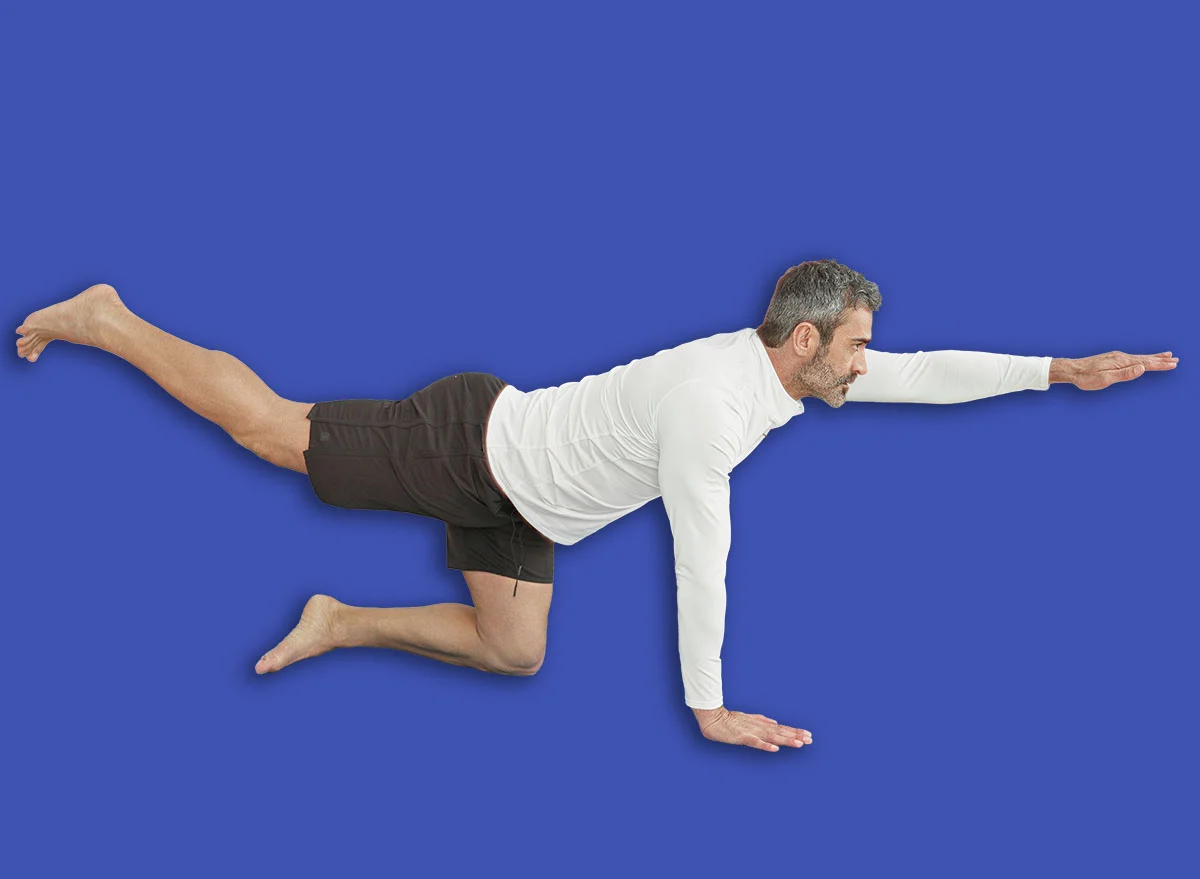
5. The Bird Dog
This exercise is a gold standard for spinal health. It requires cross-body coordination and deep core activation, which are essential for preventing injury during twisting or reaching motions.
- The Science: Research indicates that the Bird Dog improves proprioception—your body’s ability to sense its position in space—which is vital for maintaining balance in later years.
- Execution: Start on your hands and knees in a tabletop position. Simultaneously extend your right arm forward and your left leg backward, keeping your back flat and your hips level. Return to center and switch to the opposite side.
Supporting Data and Implications
The transition into your 60s and beyond is a period of "optimization." While the physiological changes are real, they are not a terminal decline. Data from sports science journals suggests that men who engage in resistance training even two to three times per week see marked improvements in bone mineral density, insulin sensitivity, and cognitive function.
The implication is clear: you are in control of your trajectory. By dedicating just 15 to 20 minutes each morning to these movements, you are not merely "working out." You are investing in your future independence. You are ensuring that you can carry your own groceries, play with your grandchildren, and travel without the fear of mobility limitations.
Professional Advice: The Path Forward
When beginning this program, remember that form is paramount. James Brady emphasizes that "slow and controlled" is the mantra for success. You aren’t looking to exhaust your muscles to the point of failure; you are looking to stimulate them toward growth and maintenance.
If you find any of these movements painful, modify the range of motion. If you feel confident, increase the number of repetitions. The goal is to create a consistent, daily ritual that integrates strength into your morning routine as seamlessly as brushing your teeth.
As you embark on this journey, keep in mind that progress is measured in months and years, not days. The strongest men are not those who lift the most weight, but those who show up for their bodies every single day. By prioritizing this routine, you are taking a proactive stance against the limitations of aging, choosing instead to remain strong, capable, and lean well into your golden years.
Disclaimer: Before beginning any new exercise program, it is recommended that you consult with your primary care physician, especially if you have pre-existing health conditions or concerns regarding mobility.