In recent years, the pursuit of longevity has moved from the fringes of science fiction into the mainstream of wellness culture. At the center of this movement is Bryan Johnson, the tech entrepreneur turned longevity crusader, whose quest to reverse his "biological age" has captivated the public imagination. Through his Netflix-documented "Don’t Die" initiative, Johnson has become the face of a burgeoning industry: biological age (bio age) testing.
But as the market floods with mail-order kits promising to reveal the secrets of your cellular clock, a critical question emerges: Are these tests a revolutionary tool for proactive health, or are they a high-priced distraction from the foundational habits that actually dictate our lifespan?
The Quest for "Biological Age"
While chronological age is simply the number of candles on your birthday cake, biological age is a measure of how your cells and organs are functioning relative to the average person. A 50-year-old with the cellular profile of a 40-year-old is considered "younger" biologically, while the inverse suggests accelerated aging.
Bryan Johnson’s highly publicized routine—involving dozens of daily supplements, hyperbaric oxygen therapy, and rigorous biometric tracking—is an attempt to quantify and manipulate this metric. Johnson claims his efforts have successfully lowered his biological age by over five years. However, the scientific community remains divided. Investigations, such as those by The New York Times, have occasionally countered these claims, suggesting that metrics can be volatile and that the "reversal" of aging is a complex, often misunderstood phenomenon.
A Chronology of the Longevity Boom
The obsession with quantifying aging didn’t happen overnight. It is the result of decades of research into biomarkers—measurable indicators of biological states.
- Early Research: Scientists began identifying markers like telomere length (the protective caps on chromosomes) as proxies for cellular aging in the late 20th century.
- The Methylation Breakthrough: In the 2010s, researchers like Steve Horvath developed "epigenetic clocks," which use DNA methylation—a process where chemical tags attach to DNA—to estimate biological age.
- The Consumer Shift: Once reserved for elite research laboratories, these technologies were packaged into consumer-facing blood and urine kits. Today, podcasts hosted by figures like Peter Attia, Joe Rogan, and Andrew Huberman have brought these tests into the living rooms of millions, driving massive market demand.
Supporting Data: What Are We Actually Measuring?
To understand if these tests are valid, one must look at what they track. Most consumer tests focus on specific biomarkers:
- DNA Methylation: Often considered the "gold standard" of current bio-age science, these tests (such as the DunedinPACE) measure the rate at which your epigenome changes. While promising, researchers warn that these tests were designed for population-level studies, not necessarily for tracking an individual’s daily health tweaks.
- Telomere Analysis: Shortened telomeres are linked to cell senescence. However, commercial tests often use simplified methods (qPCR) that lack the rigorous accuracy of clinical-grade testing (flow-FISH), making them better suited for curiosity than medical decision-making.
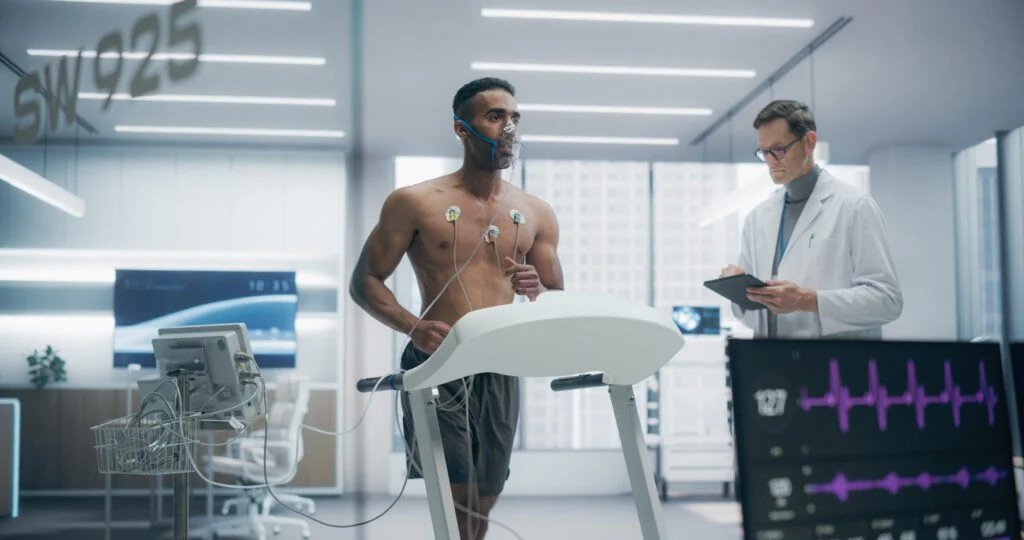
- VO2 Max: Perhaps the most validated metric for longevity, VO2 max measures the body’s ability to utilize oxygen. Unlike abstract cellular markers, VO2 max has a direct, well-documented correlation with all-cause mortality.
Free Biomarkers: The "Low-Tech" Advantage
You do not need a billionaire’s budget to track your aging trajectory. Several low-tech, scientifically validated physical tests provide a surprisingly accurate snapshot of your functional age:
- The Sitting-Rising Test (SRT): By lowering yourself to the floor and standing back up without using limbs for leverage, you test balance, strength, and mobility—all critical predictors of long-term survival.
- Grip Strength: Often cited as a better predictor of longevity than blood pressure, grip strength is a proxy for overall muscle mass and neuromuscular health.
- One-Leg Balance: The ability to stand on one leg for 10–60 seconds (depending on age) is a vital indicator of neuro-muscular integrity and injury risk.
- Fatigability Scales: Using tools like the Pittsburgh Fatigability Scale, you can measure how quickly you tire during daily activities—a key early warning sign of systemic health decline.
- Waist-to-Height Ratio: Rather than relying on simple body weight, measuring body composition via tape measure provides a clearer picture of metabolic health, which is far more predictive of heart disease and diabetes than the scale.
Official Responses and Medical Perspectives
Mainstream medicine has a cautious stance on commercial bio-age testing. Organizations like the American Heart Association emphasize that the most reliable biomarkers remain traditional clinical markers: blood pressure, lipid panels (including ApoB), and hemoglobin A1c.
The medical consensus is clear: Data without context is noise. If a commercial test informs you that your "liver age" is 60, but your clinical blood work (AST/ALT levels) and ultrasound show a healthy liver, the commercial test may be providing an artifact of data rather than a medical truth. Furthermore, if a testing company uses your results to upsell expensive, proprietary supplement stacks, medical professionals advise extreme skepticism.
Implications: The Trap of "Data-First" Living
The greatest danger of the bio-age movement is the "Data-First" fallacy: the belief that by measuring something, you are improving it.
Mistake 1: Ignoring the Evergreen Basics
Too many individuals seek the "bio-hack" of the month—peptides, rare supplements, or extreme cryotherapy—while ignoring the foundations:
- Consistent strength training to maintain metabolic health.
- Sleep hygiene to facilitate systemic repair.
- Nutrient-dense nutrition to mitigate inflammation.
- Stress management to protect the nervous system.
These "boring" habits have thousands of peer-reviewed studies supporting their ability to extend both lifespan and healthspan. No supplement can negate the biological damage of chronic inactivity or poor sleep.
Mistake 2: Failing to Act on the Data
Data is a mirror. If you use a test to identify a deficiency—for example, high blood glucose or low muscle mass—you must act on it. If you simply note the result and continue your current lifestyle, the test has provided no value. Effective biomarker testing should function as a feedback loop: test, intervene through lifestyle, re-test, and evaluate.
The Future of Proactive Health
As we look forward, the integration of biomarker testing into clinical practice is inevitable. However, the path to a longer life remains paved with consistent, repeatable actions rather than expensive, one-off diagnostics.
For the individual, the takeaway is empowering: You have more control over your biological clock than you might think. By utilizing free functional tests, prioritizing clinical blood panels under the guidance of a physician, and relentlessly focusing on the "boring" pillars of health, you can build a foundation that no high-tech test can replace.
Ultimately, your biological age is not a fixed destiny. It is a reflection of the choices you make every single day. The most advanced technology at your disposal is not a blood-methylation kit or a proprietary algorithm—it is the consistent application of healthy behavior. Whether you are a professional coach helping a client navigate stress or an individual looking to extend your prime, remember: the goal is not just to "not die," but to live with vitality and purpose at every stage of the journey.