









As we navigate the golden years of our lives, there are many things we welcome: the growth of our retirement portfolios, the expansion of our social circles, and the deepening of our family bonds. However, there is one area where expansion is often less than desirable: the midsection. As we cross the threshold of age 55, it is a common biological reality that our waistlines may begin to thicken.
While this shift is often perceived as merely cosmetic, it is frequently the result of a complex interplay of hormonal shifts, age-related muscle atrophy (sarcopenia), and changes in metabolic rate. The good news? You are not a passive observer of these changes. By implementing targeted, sustainable exercise routines, you can reclaim your core strength, improve your posture, and significantly enhance your physical function.
To guide us through this process, we sat down with Karen Ann Canham, CEO and founder of Karen Ann Wellness. As a Board-Certified Wellness Coach and Nervous System Specialist with nearly two decades of experience, Canham provides a roadmap for those looking to prioritize abdominal health in their later years.
The Reality of "Spot Reduction" and Core Health
Before diving into the mechanics of specific exercises, it is vital to manage expectations through a lens of physiological reality. There is a persistent myth in the fitness industry that specific "ab workouts" can melt away belly fat.
"First, it’s important to note that no ab exercise can directly ‘shrink belly fat,’ because spot reduction isn’t physiologically possible," Canham clarifies. "However, certain classic core exercises can strengthen the abdominal muscles, improve posture, and enhance the appearance and function of the midsection."
The goal for individuals over 55 should shift from aesthetics to functional stability. By targeting the deep stabilizing muscles—the transverse abdominis, the multifidus, and the pelvic floor—you can create a "natural corset" that supports the spine, prevents lower back pain, and promotes better posture. These movements are designed to be joint-friendly, sustainable, and highly effective for those who may need to avoid the high-impact, high-volume sit-up routines of their youth.
Chronology of Core Decline: Why the Midsection Changes After 55
To understand how to fix the issue, we must first look at the timeline of why it occurs.
The Physiological Shift
- Hormonal Fluctuations: For many, the post-50 period is marked by a decline in hormones like estrogen and testosterone. These hormones play a significant role in fat distribution. When levels drop, the body is more prone to storing visceral fat—the deep fat that surrounds the internal organs—around the midsection.
- Sarcopenia (Muscle Loss): After the age of 30, adults lose between 3% and 5% of their muscle mass per decade. By 55, this cumulative loss affects the core significantly. Muscles that are not actively engaged begin to atrophy, leading to a "softer" appearance and reduced metabolic efficiency.
- Reduced Metabolic Rate: As muscle mass decreases, the resting metabolic rate slows down. If dietary habits remain identical to those of your 30s or 40s, the body is likely to store the excess energy as adipose tissue.
- Lifestyle Adaptations: With retirement or a shift in professional demands, activity levels often fluctuate. A reduction in daily non-exercise activity thermogenesis (NEAT)—the energy expended for everything we do that isn’t sleeping, eating, or sports-like exercise—can contribute to a gradual accumulation of weight.
Supporting Data: The Importance of Functional Stability
According to the American Council on Exercise (ACE), core training is not just about the "six-pack" muscles. It is about the "lumbo-pelvic-hip complex." When this area is weak, the body compensates by putting undue stress on the knees, hips, and lower back.
Research published in the Journal of Strength and Conditioning Research indicates that older adults who engage in consistent, low-impact core training demonstrate improved balance and a lower incidence of falls. Furthermore, strengthening the transverse abdominis—the deepest layer of abdominal muscle—is directly correlated with reduced chronic lower back pain.
Canham emphasizes that her chosen exercises are designed for safety. "I chose these exercises because they train both the superficial abdominal muscles and the deeper stabilizing muscles that support posture, balance, and spinal health. They also tend to be more joint-friendly and sustainable for adults over 55 than high-volume sit-up routines."
The Five Pillars: Expert-Recommended Core Exercises
Canham recommends the following five movements for those looking to build a resilient, functional core.
1. Modified Crunches
Traditional sit-ups can often cause neck strain and place excessive pressure on the lumbar spine. Modified crunches offer a safer alternative by limiting the range of motion.
- The Benefit: They effectively target the rectus abdominis while keeping the cervical spine neutral.
- Execution: Lie on your back with knees bent and feet flat on the floor. Instead of lifting your entire back off the ground, focus on curling only your shoulder blades a few inches toward the ceiling. Keep your chin tucked as if holding an egg under your chin.
2. Bent-Knee Leg Raises
Lower abdominal strength is often the first to go as we age. This movement helps stabilize the pelvis.
- The Benefit: It targets the lower portion of the abdominal wall and improves overall core control without the shear force of straight-leg raises.
- Execution: Lie flat on your back, hands by your sides. Lift your legs until your knees are at a 90-degree angle. Slowly lower them until your toes gently touch the mat, then lift them back up. Keep your lower back pressed firmly into the floor throughout the movement.
3. The Dead Bug
Don’t let the name fool you; this is one of the most effective ways to train the deep core without stressing the spine.
- The Benefit: It forces the core to stabilize the spine against the movement of the limbs, which is the primary functional job of the abdominals in daily life.
- Execution: Lie on your back with arms extended toward the ceiling and knees bent at 90 degrees. Lower your right arm behind your head while simultaneously extending your left leg straight out. Return to center and switch sides.
4. The Bird-Dog
This is an essential move for spinal health and cross-body coordination.
- The Benefit: It builds core stability, improves posture, and enhances balance by engaging the erector spinae and the obliques.
- Execution: Start on all fours (tabletop position). Simultaneously extend your right arm forward and your left leg backward. Keep your hips square to the floor—do not allow them to tilt. Hold for a few seconds, then return to the start and switch sides.
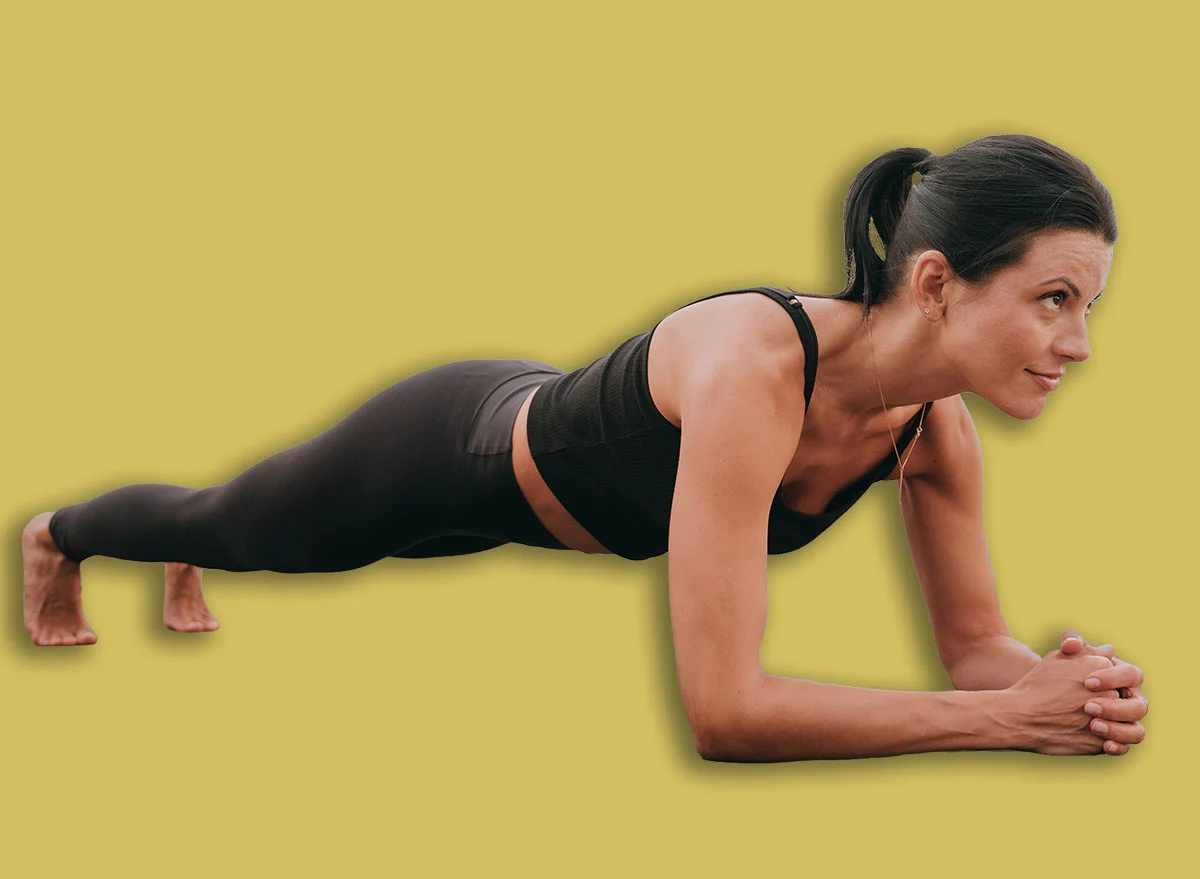
5. The Forearm Plank
The gold standard for core integration.
- The Benefit: It strengthens the entire core—including the transverse abdominis, obliques, and spinal stabilizers—in one single, isometric movement.
- Execution: Lie face down, then prop yourself up on your forearms and toes. Keep your body in a straight line from head to heels. Engage your glutes and pull your belly button toward your spine. Avoid sagging your hips or lifting them too high.
Implications for Longevity
Adopting these exercises is not merely a superficial pursuit. For the population over 55, the implications of a strong core extend to every aspect of daily living.
- Enhanced Mobility: A strong core acts as the center of gravity for the body. When the center is stable, movement becomes more fluid, reducing the risk of injuries during recreational activities.
- Back Health: By relieving the load on the spinal column, core strength is the most effective preventative measure against the debilitating back pain that plagues millions of older adults.
- Improved Balance: As we age, proprioception—the body’s ability to sense movement and location—can diminish. Core training improves the feedback loop between the brain and the body, leading to better balance and a significantly reduced risk of falls.
- Metabolic Health: While exercise alone doesn’t eliminate fat, the muscle mass gained through consistent core training contributes to a healthier metabolism, which helps in the long-term management of body composition.
Final Thoughts from the Expert
Karen Ann Canham reminds us that the journey to a stronger core is not a sprint. "Consistency is more important than intensity," she notes. By dedicating just 15 to 20 minutes a few times a week to these foundational movements, you are investing in a future of independence, vitality, and health.
Whether you are just starting your fitness journey or returning to a routine after a hiatus, listen to your body, maintain proper form, and embrace the process of becoming stronger with every passing year. Your midsection may be the first place you notice change, but your entire body will be the one to reap the rewards.