





Achieving a toned, resilient midsection after the age of 60 is often shrouded in myths. While the fitness industry frequently promotes high-intensity floor exercises that may be taxing on the joints, modern exercise science suggests a more accessible, sustainable approach: the chair-based core workout.
A 21-day program, when centered on proper biomechanics and consistency, can yield transformative results for seniors. By focusing on five specific chair-based movements, individuals over 60 can build the foundational strength necessary for better posture, improved balance, and a leaner waistline.
The Reality of Abdominal Definition After 60
It is essential to clarify that "spot reduction"—the idea that you can burn fat specifically from your stomach by doing crunches—is a fitness myth. True abdominal definition is the result of a physiological trifecta: hypertrophy of the core musculature, a reduction in systemic body fat, and a consistent nutritional strategy.
After 60, metabolic rates naturally shift, and the body’s recovery capacity requires more strategic planning. However, 21 days is a statistically significant window. It is the duration often cited by behavioral psychologists as the time required to solidify the neural pathways of a new habit. By committing to three weeks of structured chair exercises, you are not just working your muscles; you are recalibrating your lifestyle to prioritize daily movement, mindful nutrition, and consistent physical exertion.
The Biomechanical Advantage of the Chair
The chair serves as more than a simple seat; it is a tool for stability. For many older adults, the transition from floor to standing or the pressure of lying on hard surfaces can be prohibitive due to back pain, neck strain, or joint stiffness.
A sturdy, armless chair allows for:
- Neutral Spine Alignment: Reducing the risk of excessive strain on the lumbar vertebrae.
- Controlled Range of Motion: Eliminating the momentum-based "cheating" that often occurs during floor-based movements.
- Accessibility: Allowing individuals to train in environments that feel safe and supported, thereby increasing the likelihood of long-term compliance.
The 21-Day Core Protocol: Five Essential Moves
To maximize these three weeks, execute these movements three to five times per week. Focus on "mind-muscle connection"—feeling the contraction in your deep abdominals rather than relying on hip flexors or neck muscles.
1. The Seated Bicycle Crunch
The bicycle crunch is a gold-standard exercise because it targets both the rectus abdominis (the "six-pack" muscle) and the obliques (the side muscles) simultaneously.
- The Technique: Sit tall at the edge of your chair. Place your fingertips lightly behind your ears. As you bring your right knee toward your chest, rotate your torso so your left elbow meets the right knee.
- Why It Works: By keeping the motion seated, you remove the instability of the floor, allowing for a slower, more deliberate rotation that protects the spine.
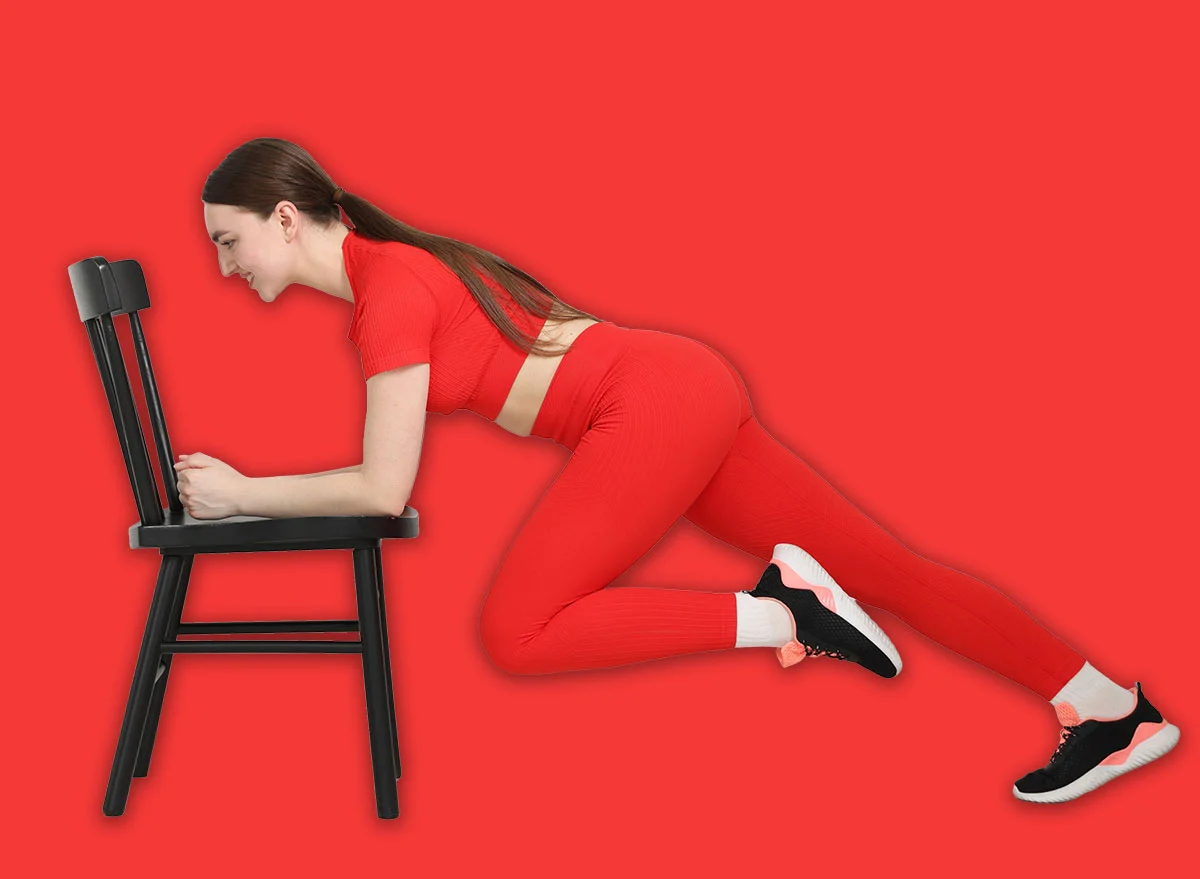
2. Chair Plank Knee Drive
The plank is the ultimate test of core bracing. Moving to an incline—using the seat of a sturdy chair—makes this accessible for most fitness levels.

- The Technique: Place your hands on the seat of a stabilized chair. Extend your legs back into a high-plank position. Drive one knee toward your chest, hold for a second, and return.
- The Benefit: This is an anti-rotation exercise. It trains your core to maintain a rigid, stable spine while your limbs move, which is exactly the skill required to prevent falls and maintain balance.
3. Seated Straight-Leg Raise
Many people struggle with "lower belly pooch" because they lack the strength to properly engage the lower rectus abdominis.
- The Technique: Sit tall, gripping the sides of your chair. Keep one leg straight and lift it until it is parallel to the floor. Engage your core to keep your torso perfectly upright.
- Pro Tip: If your hip flexors feel overworked, reduce the height of the lift. The focus is on the "pull" from your lower abdomen.
4. Chair-Supported Cross-Body March
Aerobic core work is crucial for calorie expenditure. This movement mimics a standing march but adds a rotational element.
- The Technique: Stand behind your chair for support. March in place, but with every step, aim to bring your knee toward the opposite side of your chest.
- Why It Works: The cross-body motion recruits the obliques while elevating the heart rate, bridging the gap between strength training and cardiovascular conditioning.
5. Chair Plank Shoulder Tap
This is the ultimate finisher to build stabilization.
- The Technique: Return to your plank position on the chair. Slowly lift your right hand to tap your left shoulder, then switch.
- The Goal: The objective is to keep your hips completely still. If your hips sway, you are losing core tension. Keep the movement slow and rhythmic.
Chronology of Progress: What to Expect
- Days 1–7 (The Adjustment Phase): You may feel soreness as your body adapts to new movement patterns. Focus on form rather than speed. Hydration is key during this week.
- Days 8–14 (The Engagement Phase): You will notice that you can perform more repetitions with less strain. Your "bracing" instinct—the ability to tighten your core during daily tasks—will begin to feel automatic.
- Days 15–21 (The Integration Phase): By the third week, your posture should naturally improve. You are no longer just "exercising"; you are moving with a stronger, more supportive center of gravity.
Supporting Data and Medical Perspectives
Clinical research published in journals such as the Journal of Aging and Physical Activity indicates that resistance training in older adults is directly correlated with improvements in metabolic health and glucose control. When the core is strengthened, the body becomes more efficient at managing energy.
Furthermore, a study in the American Journal of Medicine suggests that core stability exercises reduce the incidence of chronic low back pain in seniors by up to 40%. The chair-based approach, by minimizing ground-reaction forces, allows seniors to perform higher-volume sets without the inflammatory response often associated with high-impact training.
Official Recommendations and Safety
Before beginning any new exercise regimen, particularly one involving core rotation or planks, it is advised to consult with a primary care physician or a physical therapist, especially if you have a history of osteoporosis or disc issues.
Safety Checklist:
- Ensure Stability: Always use a chair that is pushed against a wall to prevent it from sliding.
- Breathing: Never hold your breath during these exercises. Exhale during the "effort" phase of each move to maintain blood pressure regulation.
- Progression: Do not rush to increase reps. Consistency with proper form will yield better results than sloppy, high-volume sessions.
Implications for Longevity
Building a strong core after 60 is not merely an aesthetic pursuit; it is a fundamental pillar of "healthspan"—the number of years you live in good health. A strong core supports the spine, prevents the "stooped" posture often associated with aging, and provides the balance necessary to maintain independence.
By adopting this 21-day chair-based strategy, you are investing in a more capable version of yourself. While the "six-pack" may be the visual goal, the true prize is a body that feels resilient, agile, and ready to meet the demands of daily life with renewed vitality. Remember: the 21 days are just the beginning. The habits formed in these three weeks are the seeds of a stronger, healthier future.