As we navigate our sixth decade and beyond, the architecture of our physical independence rests on a foundation of lower-body strength. Among the various muscle groups that dictate our quality of life, the quadriceps—the large, four-part muscles at the front of the thighs—reign supreme. They are the engines behind every step, the stabilizers during every transition, and the guardians of our balance. Yet, despite their importance, research consistently shows that quad strength is often one of the first physical attributes to decline with age.
Restoring and maintaining this strength is not merely an aesthetic concern; it is a non-negotiable requirement for functional autonomy. When the quads weaken, the ripple effect is felt across every facet of daily existence: climbing stairs becomes labored, rising from a chair requires momentum, and the once-simple act of walking can begin to feel like a calculated risk.
The Myth of the Gym Machine
For many, the first instinct when confronting muscle loss is to head to the nearest fitness center and hop onto a leg extension or leg press machine. While these tools are effective at isolating muscle groups, they often fall short in translating strength to the real world.
According to biomechanical research, gym machines are designed to stabilize the body for the user, removing the need for core engagement and the activation of smaller, secondary stabilizing muscles. When you rely solely on fixed-path equipment, you may increase the size of the muscle, but you often fail to train the neurological pathways and coordination required for independent movement. This is where "functional training"—exercises that mimic the movements of daily life—becomes essential.
Supporting Data: Why Standing Matters
Recent scientific literature supports a paradigm shift in how we approach training after 60. A 2025 study highlighted that functional, gravity-based standing exercises offer superior outcomes for balance, mobility, and lower-body coordination compared to isolated machine-based protocols. Furthermore, research published in leading geriatric journals suggests that compound lower-body movements—those that involve multiple joints and muscle groups—significantly enhance muscular endurance and joint health.
To help navigate this transition from machine-based training to functional, home-friendly movement, we consulted with James Brady, CPT, a certified personal trainer at OriGym. Brady emphasizes that for those over 60, the goal is "movement quality over raw power."
1. Sit-to-Stand Squats: The Foundation of Mobility
The sit-to-stand squat is arguably the most fundamental movement for longevity. It is a direct simulation of the most common daily task: rising from a chair. By stripping away the momentum of a traditional squat and forcing a controlled, independent ascent, this move builds the specific strength required for household independence.
Why it works: It forces the quads to engage fully through the entire range of motion, from the seated position to full extension, without the assistance of machines.
How to do it:
- Position a sturdy chair against a wall to ensure it does not slide.
- Sit at the edge of the chair with feet hip-width apart and knees bent at a 90-degree angle.
- Keep your chest tall and core engaged.
- Lean slightly forward, press through your heels, and stand up without using your hands for support.
- Slowly lower yourself back to the seat, controlling the descent for three seconds. Repeat for 10–12 repetitions.
2. Split Squats: Addressing Asymmetry
As we age, we often develop "side dominance," where one leg carries more of our body weight than the other. This imbalance can lead to gait issues and an increased risk of falls. Split squats are the ultimate corrective tool because they require each leg to work independently.
Why it works: By isolating one leg, you force the quadriceps to manage stability, which enhances knee health and strengthens the smaller stabilizing muscles around the hip and ankle.
How to do it:
- Stand tall, then take a moderate step forward with your right foot, leaving your left foot behind you with the heel lifted.
- Keep your torso upright—avoid leaning forward.
- Lower your back knee toward the floor, ensuring your front knee stays aligned over your ankle, not pushing past your toes.
- Drive through the front heel to return to the starting position. Complete 8 reps on each side.
3. Step-Ups: Replicating Daily Obstacles
If you have ever felt hesitant while climbing a flight of stairs or navigating a curb, the step-up is your primary defense. This movement improves the explosive power needed to lift your body weight vertically, a skill that is essential for navigating the built environment.
Why it works: Step-ups are highly functional and require significant coordination. The act of stepping up and then controlling the descent works both the concentric (lifting) and eccentric (lowering) phases of the quad muscles.
How to do it:
- Use a low, sturdy step or a platform that puts your knee at or below a 90-degree angle when your foot is placed on it.
- Place your right foot firmly on the step.
- Push through your right heel to lift your body, bringing your left foot up to join the right.
- Slowly lower your left foot back to the floor, followed by the right.
- Keep your posture tall and avoid using your arms for momentum. Complete 10 reps per leg.
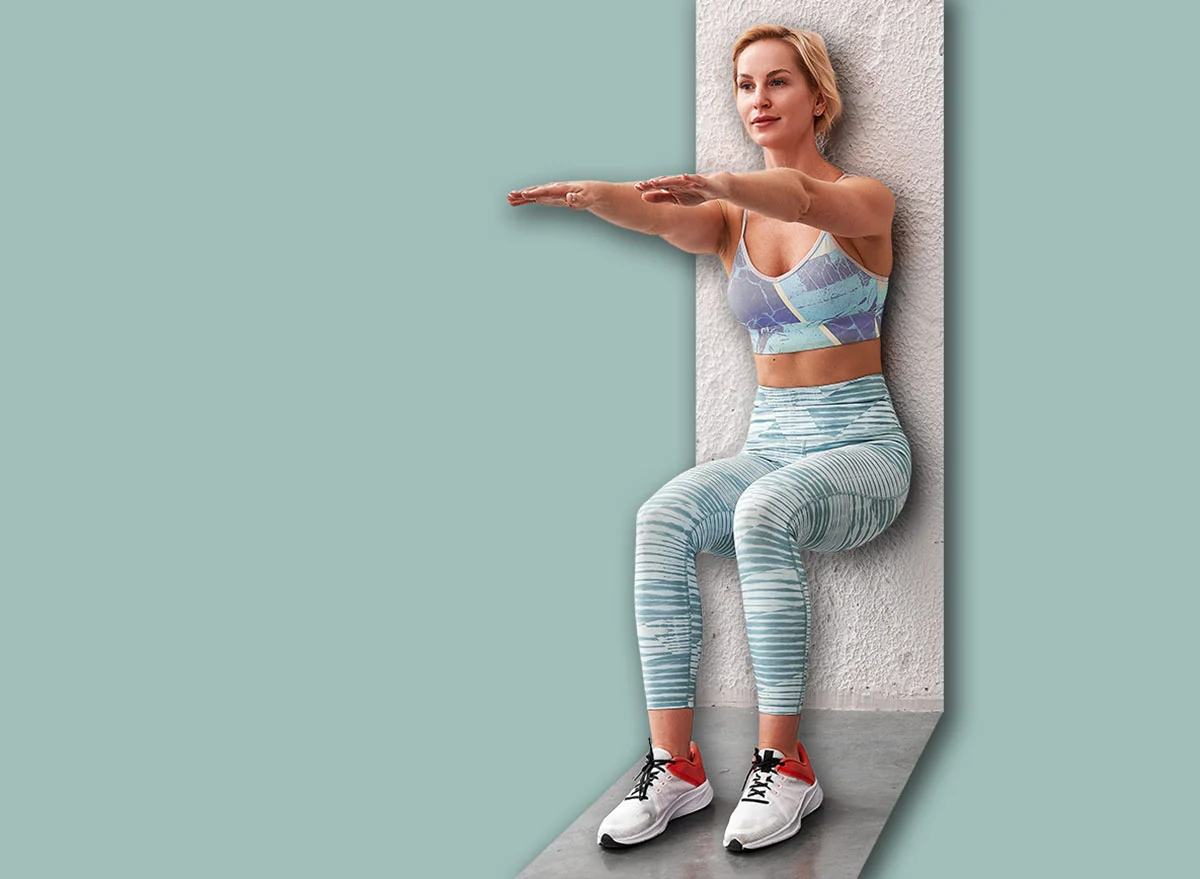
4. Wall Sits: Isometric Endurance
Unlike the other movements on this list, wall sits are an isometric exercise. This means the muscle is engaged and under tension, but the joint is not moving. This is a game-changer for those who experience joint discomfort during dynamic movements.
Why it works: It builds "muscular endurance," allowing your quads to stay strong for longer periods, such as while standing in a grocery store line or cooking dinner.
How to do it:
- Stand with your back flat against a sturdy wall.
- Walk your feet out about two feet from the wall.
- Slowly slide down until your knees are bent at a comfortable angle (aim for 45 to 90 degrees).
- Ensure your back stays pressed against the wall and your knees are aligned over your ankles.
- Hold for 20–45 seconds, breathing steadily throughout.
5. Reverse Lunges: Knee-Friendly Power
While forward lunges can sometimes place significant shear stress on the knee joint, the reverse lunge is far more forgiving. By stepping backward, you shift the load toward the glutes and quads, reducing the pressure on the kneecap.
Why it works: The backward motion naturally improves balance and proprioception—your body’s ability to sense its position in space—which is a critical factor in fall prevention.
How to do it:
- Stand with feet hip-width apart.
- Take a controlled step backward with your right foot.
- Lower your hips until both knees are bent at approximately 90-degree angles.
- Keep your front knee steady; do not let it cave inward.
- Push off the ball of your back foot to return to a standing position. Alternate legs for 10 repetitions total.
Implications for Long-Term Health
The consensus among experts like James Brady is clear: the path to maintaining mobility after 60 is paved with consistent, functional movement. By integrating these five standing exercises into your weekly routine, you are not just "working out"—you are investing in your future independence.
When you strengthen your quads, you are essentially "future-proofing" your body. You are creating a buffer against the physical decline that so often forces older adults into assisted living or limited lifestyles. The transition from machine-focused training to functional, standing movements is a sign of a sophisticated approach to aging—one that prioritizes movement quality, joint longevity, and the ability to live life on your own terms.
As you begin this journey, remember that consistency beats intensity every time. Start with two sessions per week, listen to your body, and focus on the precision of your form. Your future self will thank you for the strength you build today.