







By Investigative Desk
In a society that predominantly measures human worth through the lens of professional output, those navigating the complexities of chronic illness and disability often find themselves marginalized by a singular, persistent inquiry: “So, when are you going back to work?”
For Kari McBride, a former social worker and single mother, this question became a recurring source of psychological distress. After a life-altering accident four-and-a-half years ago, McBride’s existence was forcibly bifurcated into “Before” and “After.” While the “Before” version of her life was characterized by academic achievement and career milestones, the “After” has been defined by a grueling regimen of medical interventions, autoimmune diagnoses, and the persistent, quiet labor of survival.
McBride’s story is not an outlier. It is a mirror reflecting the struggles of millions who face the intersection of medical trauma and the societal expectation of continuous economic productivity.
The Chronology of a Shifted Identity
The trajectory of McBride’s life mirrors the unpredictable nature of trauma. Before her injury, she had just completed her Master of Social Work (MSW) and had secured a position as a school social worker. She was a single mother at the height of her professional potential.
The “Before” and “After”
- The Pre-Injury Era: Characterized by academic rigor, professional stability, and the traditional milestones of early adulthood.
- The Point of Divergence: A singular accident abruptly ended her professional tenure. The immediate aftermath involved a brush with death, followed by a protracted period of intensive medical care.
- The Mid-Recovery Phase: McBride describes this as a period of grief—not just for her physical health, but for the loss of her professional identity. Her MSW degree, once a source of pride, became a dormant asset, sidelined by the immediate demands of therapy, medication management, and chronic pain.
- The Current Phase: A transition toward a new form of advocacy. McBride has begun to redefine "work" as something untethered from a payroll, shifting her focus toward systemic change and self-advocacy.
The Burden of Societal Expectations
Sociologists argue that the Western construct of identity is inextricably linked to labor. From a young age, the question "What do you want to be when you grow up?" primes individuals to define themselves by their eventual occupation. When that occupation is stripped away by disability, the individual is often left with a profound existential void.
The Stigma of "Non-Productivity"
The pressure to "return to work" acts as a form of social surveillance. For those with invisible disabilities—such as autoimmune disorders, neurological conditions, or chronic pain—the physical inability to maintain a 40-hour work week is often met with skepticism. This skepticism leads to the internalization of shame, as the individual feels they are failing a societal contract that they never truly consented to in its current, rigid form.
McBride’s experience highlights that the guilt of "not working" is often exacerbated by the very systems designed to support those in recovery, which prioritize a return to the workforce over the holistic recovery of the individual.
Supporting Data: The Economic and Mental Toll
The struggle described by McBride is backed by systemic data regarding the disability community and employment. According to the Bureau of Labor Statistics (BLS), the labor force participation rate for persons with a disability is significantly lower than that of their counterparts without a disability.
- The Employment Gap: For many, the barriers to employment are not a lack of capability, but a lack of structural accommodation.
- The "Hidden" Labor: Research in the field of disability studies increasingly highlights the "invisible labor" performed by patients. Navigating the healthcare system—scheduling appointments, managing complex medication interactions, and advocating for care—is often equivalent to a part-time job in terms of time and cognitive load.
- Mental Health Outcomes: A study by the American Psychological Association (APA) suggests that chronic pain patients who are forced to adhere to traditional productivity metrics often experience higher rates of depression and anxiety compared to those who are supported in finding alternative forms of engagement.
Redefining Advocacy: The New Work
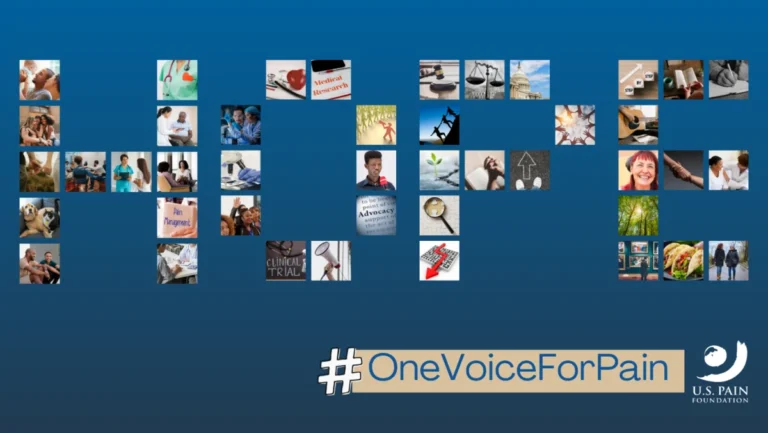
McBride’s recent visit to her state capitol represents a paradigm shift. Sitting in the halls of power, feeling the physical precursors of a migraine, she realized that her professional background was not wasted—it had simply been repurposed.
The Evolution of the Social Worker
"I am working," McBride asserts. "Just in a different way."
Her work now involves:
- Systemic Advocacy: Utilizing her MSW knowledge to navigate legislative processes to better support the disabled community.
- Destigmatization: By speaking publicly about her journey, she is challenging the societal norms that equate human value with a salary.
- Self-Advocacy: Learning to operate within the limits of her body, rather than against them, which is a full-time, high-stakes endeavor.
This transition from "employee" to "advocate" is a critical evolution. It suggests that the value of an individual’s education and experience remains intact, even when the environment in which they apply those skills changes.
Implications for Public Policy and Healthcare
The narrative of "returning to work" needs a fundamental update. Policy experts suggest that for the disability community to thrive, the following shifts must occur:
1. Re-evaluating Disability Benefits
Current disability frameworks often punish beneficiaries for attempting to work, creating a "benefit trap." Legislative efforts must focus on supporting partial participation without the threat of losing essential medical coverage.
2. Acknowledging Invisible Labor
Healthcare providers and policymakers must recognize that managing a chronic condition is a form of work. This acknowledgment would validate the patient experience and reduce the psychological burden of perceived "laziness."
3. Corporate Culture Reform
The post-pandemic era of remote work has demonstrated that productivity is not tied to a desk. Corporations should adopt more flexible, output-based metrics rather than time-based attendance, which would allow those with fluctuating health conditions to contribute meaningfully to the economy.
Conclusion: A Shift in Inquiry
The inquiry, “When are you going back to work?” is ultimately a closed question. It demands a binary answer—yes or no, past or future—which ignores the complexities of the present.
As Kari McBride suggests, a more compassionate and accurate question would be: “How are you living your life now?”
This question shifts the focus from the economic utility of an individual to their human agency. It acknowledges that life does not pause for an injury; it merely changes shape. By broadening our definition of "work" to include advocacy, self-care, and the navigation of a challenging reality, we can create a society that honors the resilience of the individual regardless of their employment status.
The story of the "After" is not a tragedy of lost productivity; it is a testament to the endurance of the human spirit. It is a reminder that we are not what we do; we are, fundamentally, how we choose to live in the face of whatever life brings us. For those living with chronic illness, the "work" of living is perhaps the most important contribution they will ever make.