











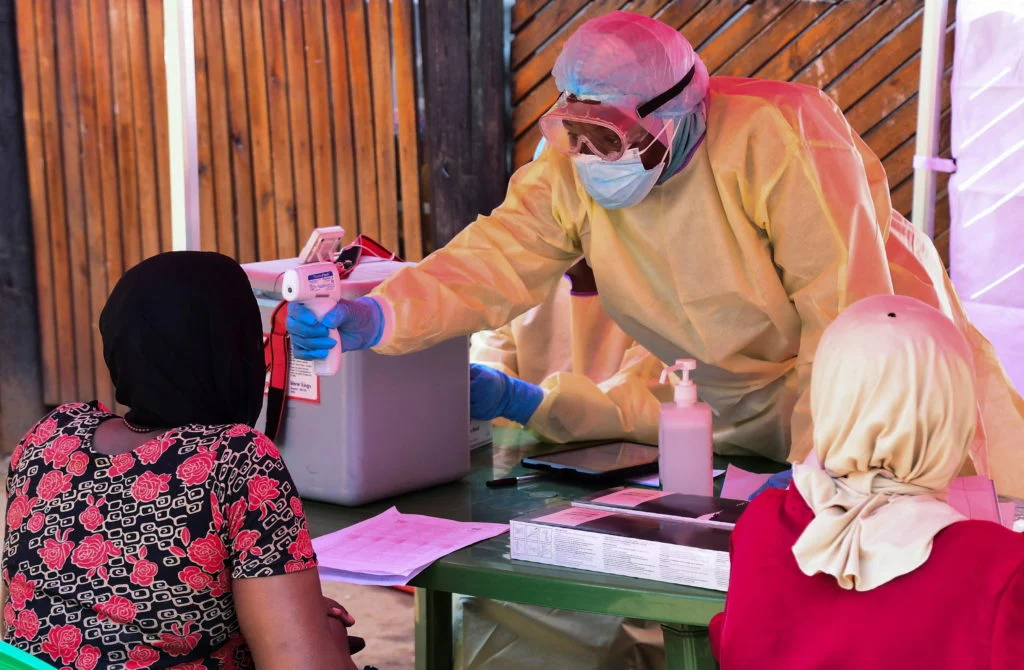
KINSHASA, Congo — The Africa Centres for Disease Control and Prevention (Africa CDC) officially confirmed a new Ebola outbreak in the remote Ituri province of the Democratic Republic of the Congo (DRC) on Friday, sparking immediate concerns among international health organizations. With 246 suspected cases and 65 confirmed deaths recorded in a matter of weeks, the outbreak has already begun to transcend national borders, casting a shadow of instability over the Central African region.
The emergence of this latest strain—now identified as the Bundibugyo virus—serves as a stark reminder of the persistent threat posed by one of the world’s most lethal pathogens. As health workers scramble to contain the spread, the international community is closely watching the borders of Uganda and South Sudan, where mobility and logistical hurdles complicate what is already a high-stakes containment effort.
Main Facts: A Pathogen Re-emerging in Volatile Territory
The current outbreak is primarily concentrated within the Mongwalu and Rwampara health zones of Ituri province. According to data provided by the Africa CDC, the death toll has reached 65, with four of those fatalities confirmed via laboratory testing.
Ebola, a viral hemorrhagic fever, remains one of the most feared diseases globally due to its high mortality rate and ease of transmission through contact with infected bodily fluids—including blood, vomit, and semen. While the medical community has made significant strides in vaccine development, this particular outbreak presents a unique challenge: the virus has been identified as the Bundibugyo variant, a strain for which the commonly stockpiled Ervebo vaccine, effective against the Ebola Zaire strain, is not designed.
The logistical environment in Ituri is unforgiving. The region is characterized by dense forests, poor road infrastructure, and significant insecurity fueled by localized armed groups. These factors hinder the rapid deployment of medical supplies and the ability of health teams to conduct contact tracing—the backbone of any successful Ebola response.
A Chronology of the Outbreak
The timeline of this crisis began to accelerate late last week as international bodies shifted from observation to active intervention.
- Initial Detection: Local health officials in Ituri began reporting clusters of severe illness, initially struggling to distinguish the symptoms from endemic diseases.
- The WHO Investigation: Following initial reports, the World Health Organization (WHO) dispatched an emergency response team to the province to conduct field investigations and collect diagnostic samples.
- Confirmation: After early tests were inconclusive, a breakthrough analysis on Thursday confirmed the presence of the Ebola virus. By Friday, the Africa CDC released an official statement confirming the outbreak.
- Cross-Border Spillover: On Friday, the Ugandan Ministry of Health confirmed a single death in Kampala involving a Congolese national. The patient, who had been hospitalized three days prior to his death, was tested posthumously. Uganda confirmed that this was an "imported" case, and as of now, no local transmissions have been detected within Ugandan borders.
- Containment Efforts: Immediate quarantine protocols were initiated for all known contacts of the deceased in Uganda, and the body was repatriated to the DRC under strict medical oversight.
Supporting Data and Diagnostic Challenges
The science of this outbreak is currently in flux. While Congo has historically been the epicenter for the Ebola Zaire strain—the most lethal and well-studied variant—the current outbreak is driven by the Bundibugyo virus.
The WHO classifies Ebola into three major categories known for causing significant outbreaks: the Ebola virus (Zaire), the Sudan virus, and the Bundibugyo virus. The shift from the Zaire strain to the Bundibugyo variant renders the existing stockpile of 2,000 doses of the Ervebo vaccine largely ineffective. This realization has forced health authorities to pivot their strategy, focusing on aggressive surveillance, isolation, and supportive care rather than immediate mass vaccination.
The diagnostic process has been hampered by the remoteness of the affected zones. The distance from the nation’s capital, Kinshasa—over 1,000 kilometers away—means that every sample collected must undergo a grueling transport process, often through areas with little to no infrastructure.
Official Responses and International Coordination
The global response has been swift, if measured. Dr. Tedros Adhanom Ghebreyesus, the Director-General of the WHO, emphasized during a press briefing on Friday that the DRC possesses a "strong track record in Ebola response and control." To support these efforts, the WHO has authorized $500,000 in emergency funding to bolster local capacity.
Simultaneously, the U.S. Centers for Disease Control and Prevention (CDC) has engaged in direct consultations with health ministers in both Kinshasa and Kampala. Jay Bhattacharya, the acting head of the U.S. CDC, affirmed that the United States stands ready to provide technical, logistical, and material support as requested by local authorities.
Africa CDC is currently spearheading a regional coordination meeting involving health officials from the DRC, Uganda, and South Sudan. The goal is to establish a unified border-monitoring protocol to prevent the further "importation" of the virus, specifically focusing on mining-related mobility, which is a major driver of population movement in the Mongwalu area.
Implications for Regional Stability and Public Health
The emergence of this outbreak marks the 17th time Ebola has struck the DRC since its discovery in 1976. This historical frequency has created a paradoxical situation: while the population and the medical infrastructure are "well-trained" in responding to outbreaks, they are also exhausted by the recurring nature of the crisis.
The Security-Health Nexus
The primary fear for humanitarian agencies is the intersection of the health crisis with the ongoing political and military instability in eastern Congo. The presence of armed factions not only limits the movement of medical personnel but also fosters public distrust, which is a critical impediment to successful contact tracing. If civilians fear that government-led health teams are linked to military operations, they may hide the sick, leading to further community-level transmission.
Logistical and Economic Constraints
The economic impact of an Ebola outbreak in a region reliant on mining and small-scale cross-border trade is severe. Trade restrictions and border closures, while necessary for containment, threaten the livelihoods of thousands. The "mining-related mobility" mentioned by the Africa CDC highlights the difficulty of enforcing movement restrictions in an area where local economies depend on the constant flow of workers across provincial and international lines.
Lessons from the Past
The 2018–2020 outbreak in eastern Congo, which claimed over 1,000 lives, serves as a sobering blueprint of the potential risks. During that time, the international community struggled with the same challenges currently facing the Ituri response: lack of access, misinformation, and the rapid mutation or variation of the virus.
Dr. Gabriel Nsakala, a professor of public health with extensive experience in Congolese outbreak response, noted that while the infrastructure and laboratory capabilities have improved since 2018, the "expertise and equipment need to be delivered quickly" to avoid a repeat of the past.
As the world watches the situation in Ituri unfold, the priority remains clear: strengthening local health systems, ensuring transparent communication with the public to combat misinformation, and maintaining a robust, cross-border surveillance network. With the Bundibugyo virus currently circulating, the path to containment will be long, arduous, and dependent on the sustained cooperation of all regional stakeholders. For now, the people of Ituri, and indeed the entire Central African region, wait to see if this 17th outbreak will be successfully suppressed before it evolves into a wider regional catastrophe.