










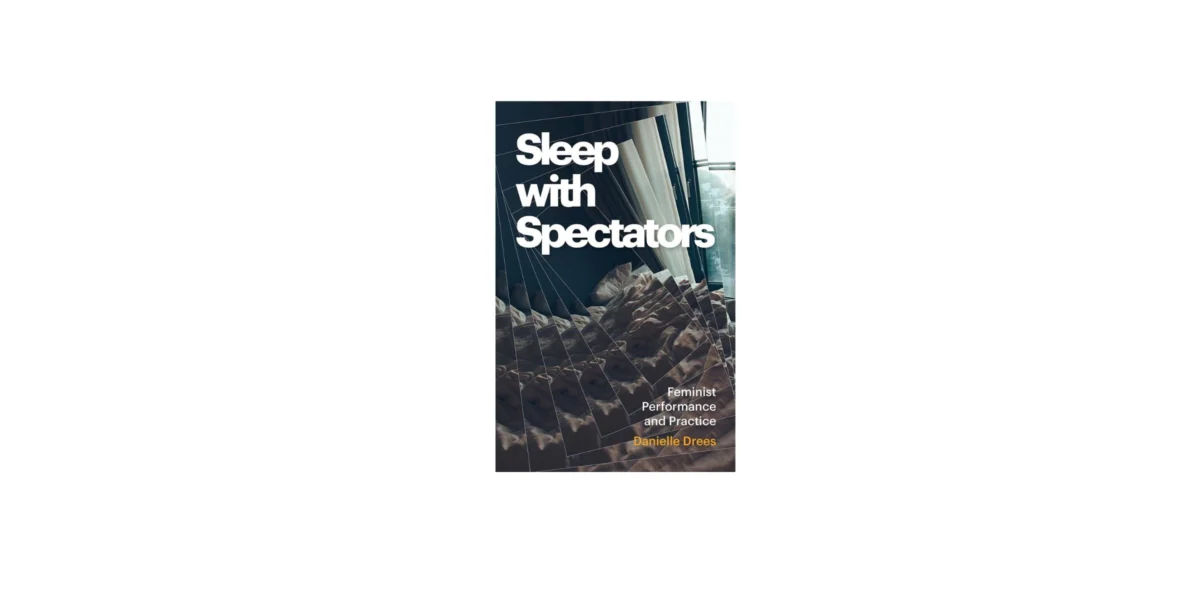
In a world increasingly defined by the "hustle culture" of late-stage capitalism, the act of closing one’s eyes has become a political battlefield. For many, sleep is a luxury, a biological necessity, or an elusive commodity. However, in the forthcoming book Sleep with Spectators: Feminist Performance and Practice, author and scholar Danielle Drees argues that sleep—and its troubled counterpart, sleeplessness—functions as a profound site of feminist resistance.
Published by the University of Minnesota Press and slated for release on September 8, 2026, the book offers a provocative interdisciplinary study. It posits that by centering rest, care, and the unconscious, artists and thinkers are actively constructing a "counterhistory of feminism" that challenges the status quo of modern labor and systemic inequality.
Main Facts: Sleep as a Feminist Instrument
At its core, Sleep with Spectators moves beyond the clinical or biological definitions of rest. Drees, a Marsted Curatorial Fellow at the Wadsworth Atheneum Museum of Art, approaches the subject through the lens of performance studies. She suggests that the theater—an environment historically focused on the "active" body—can be transformed by the presence of the "dormant" body.
The book contends that the act of sleeping is never merely private. In a culture that demands constant productivity and accessibility, choosing to sleep can be a radical, defiant act. Drees examines how performance artists have utilized the stage to highlight the precarity of the body under duress. By centering creative work on the restorative practice of sleep, the text positions rest not as an absence of labor, but as a space for imagining alternative futures—futures that prioritize interdependence over isolation.
Chronology and Scope: A Curated Exploration of Performance
Drees’ research is exhaustive, drawing from a wide array of international archival materials and diverse theatrical traditions, including opera, avant-garde theater, and contemporary queer drama.
The Evolution of the "Sleepless" Narrative
The book traces how the representation of sleep has shifted over the last century. Drees highlights several seminal works that serve as pillars for her argument:
- Sarah Kane’s 4.48 Psychosis: Drees analyzes this searing, free-verse text to explore the intersections of mental health, medication, and the state of consciousness. Kane’s work serves as a primary example of how sleeplessness can articulate the "stress points" of the human experience.
- María Irene Fornés’ Enter THE NIGHT: Through this queer drama, Drees investigates the domestic, intimate, and often fraught nature of the bedroom. Fornés’ work allows for an exploration of how private spaces act as vessels for larger societal anxieties.
- Regina José Galindo’s America’s Family Prison: Perhaps the most visceral example in the collection, this performance piece involved Galindo, her partner, and their infant child spending 24 hours in a "family-sized" cell rented from a private prison corporation. This piece provides a chilling critique of how the state encroaches upon the most basic human need for domestic rest, effectively turning sleep into a commodity controlled by the carceral system.
Supporting Data: Theoretical Frameworks
To bolster her argument, Drees synthesizes complex theoretical frameworks, ensuring the work resonates across multiple academic disciplines. She employs:
- Marxist Feminism: By analyzing the relationship between the worker’s body and the exhaustion imposed by capital, Drees highlights how sleep is frequently sacrificed for economic gain.
- Trans and Queer Studies: The book explores how gender and sexuality inform one’s ability to "rest" safely, acknowledging that for marginalized groups, the ability to sleep undisturbed is often a privilege denied by societal violence.
- Disability Studies: Drees examines the "crip time" inherent in sleep, challenging the normative, clock-driven schedules that govern contemporary life. She suggests that disabled modes of rest provide a blueprint for a more inclusive, caring society.
The synthesis of these lenses allows Drees to illuminate how sleep performances reveal the "fault lines" of modern culture, specifically regarding gender, race, class, and disability.
Official Responses and Expert Commentary
The academic community has already begun to weigh in on the significance of Drees’ work. Jean E. Howard, a distinguished faculty member at Columbia University, lauded the book for its depth and clarity.
"In her brilliant new book, Danielle Drees illuminates the various ways that sleep permeates the world of contemporary theater and performance," Howard stated in a press release. "Sleep and sleeplessness, she argues, reveal the stress points of culture, limning fault lines of precarity."
Howard’s assessment underscores the primary mission of the book: to prove that the theater is not just a place for entertainment, but a laboratory for diagnosing the ills of society. By observing the "spectator" of the sleeper, Drees forces the audience to confront their own exhaustion and the systems that demand it.
Implications: A New Era of Feminist Discourse
The implications of Sleep with Spectators extend far beyond the walls of the theater. As global burnout rates rise and the boundary between work and home continues to dissolve, Drees’ research serves as a necessary intervention.
Challenging the "Productivity Mandate"
The book encourages readers to view their own rest as a form of resistance. If society mandates that we be constantly "on," then reclaiming the right to sleep becomes a revolutionary gesture. Drees suggests that by reclaiming the bedroom—and the unconscious mind—as sites of autonomy, individuals can begin to build a culture of care.
The Future of Performance Art
Drees’ work also sets a precedent for how future performance art might engage with the body. As technology continues to monitor our sleep patterns through wearables and algorithms, the tension between "natural" sleep and "managed" rest will likely grow. Sleep with Spectators provides the intellectual groundwork for artists to continue critiquing the medicalization and surveillance of our private lives.
Intersectional Advocacy
By weaving together Marxist, queer, and disability theory, Drees ensures that the conversation about rest is not exclusionary. She argues that true restorative practice must be accessible to all, not just those with the economic safety net to prioritize it. In doing so, she connects the domestic act of resting to the broader struggle for human rights.
Conclusion: Looking Toward September 2026
As we approach the publication date of September 8, 2026, the discourse surrounding Sleep with Spectators is poised to become a touchstone in humanities departments and arts circles alike. Danielle Drees has succeeded in transforming the "invisible" act of sleep into a vibrant, visible, and urgent subject of study.
Whether she is analyzing the brutal reality of a prison-cell performance or the poetic fragmentation of a Sarah Kane play, Drees maintains a steady focus on the humanity of the sleeper. Her work is a reminder that in an exhausted world, the most radical thing we can do is demand the time to dream, to rest, and to wake up on our own terms.
Sleep with Spectators is not merely a book about theater; it is a manifesto for a world that prioritizes the dignity of the resting body over the demands of the machine. As readers prepare to engage with this text, they may find that their relationship with their own nightly rest is forever altered—transformed from a biological necessity into a quiet, defiant act of feminist power.
About the Author
Danielle Drees is a Marsted Curatorial Fellow at the Wadsworth Atheneum Museum of Art in Hartford, Connecticut. Her scholarship has been featured in several prestigious journals, including Signs, Theatre Journal, TDR: The Drama Review, and the Journal of Dramatic Theory and Criticism. Her work bridges the gap between curatorial practice and critical theory, positioning her as one of the most compelling voices in contemporary performance studies.