











For decades, the fitness industry has championed the image of the "weight room warrior"—an athlete surrounded by towering stacks of iron plates, clanking dumbbells, and complex, cable-driven machines. While these tools have undeniable utility, a prevailing myth suggests that they are the only gateway to muscle definition and functional strength.
For the millions of adults over the age of 60, this misconception often serves as a barrier to entry. Many fear that heavy lifting may lead to injury, or that the gym environment is simply too intimidating to navigate. However, leading experts are now shifting the narrative: you don’t need a gym membership to reclaim your physique. By utilizing your own body weight, you can stimulate muscle growth, improve joint health, and restore the definition that often fades with the passage of time.
The Science of Sarcopenia: Why Muscle Definition Fades
To understand why muscle tone diminishes after 60, one must first understand sarcopenia. This physiological process is characterized by the gradual, age-related loss of skeletal muscle mass and functional strength. As we move into our seventh decade and beyond, our bodies undergo a shift in protein synthesis and hormonal balance that naturally reduces muscle density.
When muscle fibers shrink and lose their structural integrity, the "firm" aesthetic we associate with youth begins to wane. However, sarcopenia is not an inevitable death sentence for your physique. A groundbreaking 2023 meta-analysis published in ScienceDirect underscored a vital truth: resistance training remains the gold standard for combating sarcopenia. Regardless of age, muscle tissue remains plastic—it is highly responsive to the stress of resistance, provided that stress is applied consistently and correctly.
The Professional Perspective: Expert Insight
We spoke with James Bickerstaff, CPT, a seasoned personal trainer at OriGym, to demystify the process of "re-toning" the body. According to Bickerstaff, the beauty of bodyweight training lies in its accessibility and its low-impact nature.
"When you train with your own body weight, you aren’t just building muscle; you’re practicing movement patterns that are essential for everyday longevity," Bickerstaff explains. "The goal after 60 isn’t to bulk up like a bodybuilder; it is to restore the lean, functional muscle that supports your joints and improves your metabolic health."
The Chronology of Rebuilding: A Four-Move Foundation
If you are looking to start your journey today, Bickerstaff recommends four primary movements. These exercises form a comprehensive circuit that hits every major muscle group in the body, ensuring a balanced approach to strength.
1. The Push-Up: The Gold Standard for Upper-Body Integrity
Push-ups have stood the test of time because they are a masterpiece of functional engineering. By engaging the pectorals, deltoids, triceps, and the entire core, the push-up provides a "bang for your buck" that few machines can match.
- How to execute: Start in a high-plank position, hands slightly wider than shoulder-width. Keep your spine neutral—avoid sagging your hips or arching your back. Lower your chest until it is inches from the floor, then press back up.
- Modification: If a full push-up is too strenuous, perform them against a sturdy countertop or utilize your knees to reduce the load.
2. Bodyweight Squats: Preserving Independence
The squat is arguably the most important movement for anyone over 60. It mimics the act of sitting down and standing up, a fundamental movement pattern required for maintaining independence.
- How to execute: Stand with feet hip-width apart. As you descend, drive your hips back as if you are sitting into an invisible chair. Keep your chest upright and your heels planted firmly on the ground. Drive through your heels to return to a standing position.
- The Benefit: Beyond building the quads, hamstrings, and glutes, squats improve mobility in the hips and knees, effectively "greasing the joints" to prevent stiffness.
3. Glute Bridges: Protecting the Posterior Chain
Modern life is sedentary, often resulting in "dormant" glutes and a compromised lower back. The glute bridge is the corrective exercise of choice for restoring the posterior chain.
- How to execute: Lie on your back with knees bent and feet flat on the floor. Engage your core and drive through your heels to lift your hips toward the ceiling. Squeeze your glutes at the top of the movement, hold for one second, and lower slowly.
- The Benefit: By strengthening the glutes, you are providing a direct support system for your lower back, effectively mitigating the common aches and pains associated with aging.
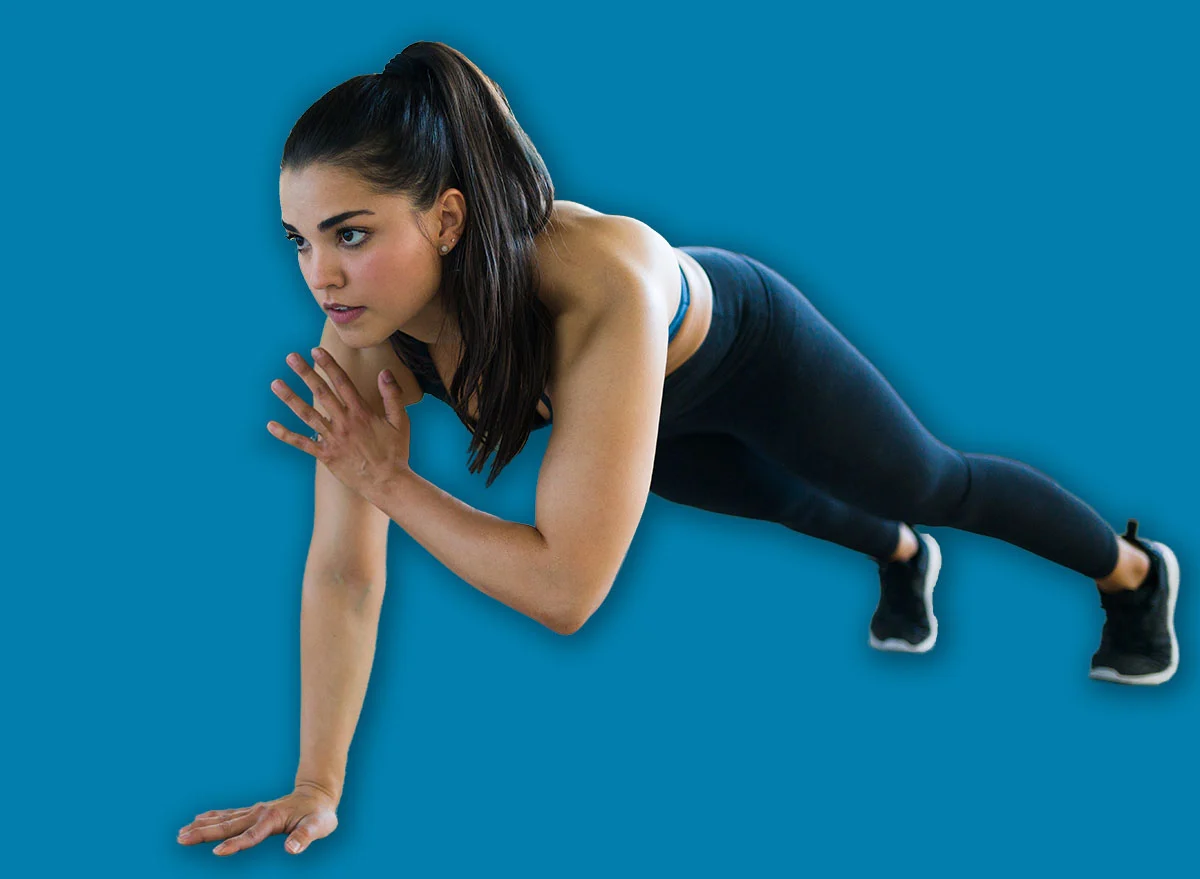
4. Plank Shoulder Taps: Core Stability in Motion
Traditional planks are static, but life is dynamic. Plank shoulder taps force your core to stabilize your body against the force of gravity while one arm is unsupported.
- How to execute: Start in a high-plank position. Keeping your hips as still as possible, lift your right hand and tap your left shoulder. Return it to the floor, then repeat with the left hand to the right shoulder.
- The Benefit: This movement forces the obliques and transverse abdominis to fire, creating a tighter, more defined midsection while improving shoulder stability.
Supporting Data: Why Bodyweight Wins
The 2023 meta-analysis mentioned previously highlights that the quality of the movement often outweighs the quantity of the weight. For older adults, the risk of injury when using heavy, fixed-path machines can be high due to the lack of "freedom of movement."
Bodyweight training forces the body to stabilize itself in three-dimensional space. This "stabilization requirement" recruits smaller, supporting muscles that machines often bypass. Consequently, individuals who utilize bodyweight routines often report better balance, improved posture, and fewer instances of soft-tissue injuries.
Implications for Long-Term Health
The implications of adopting a consistent bodyweight routine extend far beyond vanity. While the visual goal is "muscle definition," the systemic benefits are profound:
- Metabolic Health: Increased muscle mass improves insulin sensitivity, making it easier for the body to manage blood sugar levels.
- Bone Density: Resistance exercise, even using body weight, places healthy stress on the skeletal system, which helps prevent the progression of osteoporosis.
- Functional Longevity: By keeping the glutes and core strong, you reduce the risk of falls and increase your ability to perform household tasks independently.
- Mental Clarity: Exercise is a potent tool for cognitive health. The act of learning new movement patterns—like the coordination required for plank shoulder taps—stimulates neuroplasticity.
Official Responses and Expert Consensus
Fitness professionals across the globe are moving toward a "functional first" philosophy. The consensus is clear: the "no pain, no gain" mentality of the 1980s is being replaced by a more sustainable approach. Organizations like the American College of Sports Medicine (ACSM) now emphasize that resistance training for older adults should focus on major muscle groups, with an emphasis on technique and gradual progression rather than ego-lifting.
Conclusion: Starting Your Routine
Restoring muscle definition after 60 is not about competing with your younger self; it is about honoring the body you have now and providing it with the stimulus it needs to thrive. You don’t need a gym membership, expensive supplements, or hours of free time.
By dedicating just 15 to 20 minutes a day to these four foundational moves, you can reverse the effects of sarcopenia, improve your mobility, and regain the confidence that comes with a strong, capable body. The weight room is an option, but your body—the most sophisticated piece of equipment you will ever own—is all you truly need to succeed.
Disclaimer: Before beginning any new exercise program, it is essential to consult with your physician or a qualified healthcare provider, especially if you have pre-existing health conditions or mobility concerns.