











For many individuals navigating the golden years, maintaining physical independence is inextricably linked to the strength and stability of the lower body. As we age, the cumulative effects of sedentary habits, natural muscle atrophy (sarcopenia), or recovery from injury can make conventional exercise routines—like weighted squats or high-impact gym training—feel daunting or even inaccessible. However, the path to a stronger, more stable foundation may be closer than the nearest gym: it could be right beneath your covers.
Recent shifts in geriatric fitness philosophy have highlighted the profound efficacy of "bed-based" movement. Far from being a "lesser version" of traditional training, these exercises serve as a sophisticated, low-impact bridge to better mobility, circulation, and functional strength.
The Critical Importance of Thigh Strength for Longevity
The quadriceps, hamstrings, and adductor muscle groups that constitute the thighs are the unsung heroes of daily life. They are the primary engines for walking, climbing stairs, and the fundamental act of transitioning from a seated to a standing position. When these muscles weaken, the risk of falls—a leading cause of injury among seniors—increases significantly.
By focusing on controlled, targeted movements performed in a reclined position, older adults can reclaim their stability without the joint strain associated with gravity-heavy standing exercises.
Expert Insight: Building Strength Without the Gym
Meera Watts, Founder and CEO of Siddhi Yoga, emphasizes that the barrier to entry for fitness is often mental rather than physical.
"Bed exercises are a gentle, high-reward way to work the thighs while training neuromuscular control and body awareness," Watts explains. "They aren’t just for the infirm; they are a strategic starting point for anyone rebuilding strength, recovering from inactivity, or simply looking to ease back into a consistent movement practice. The goal is to build capacity while respecting exactly where your body is today."
The Science of Reclaimed Movement: A Five-Step Protocol
Restoring muscle tone requires consistency. The following five exercises are designed to target the thighs from multiple angles—front, back, inner, and outer—while minimizing the stress on the lower back and knees.
1. Reclined Leg Flex and Extend
This foundational movement targets the quadriceps, the muscles responsible for knee extension. By keeping the torso reclined, you eliminate the need for the hip stabilizers to work against gravity, allowing for a concentrated focus on the knee joint’s range of motion.
- The Benefit: It promotes blood flow to the knee and strengthens the quads through a full, pain-free range of motion.
2. Supported Bridge on a Pillow
The gluteal bridge is a staple of physical therapy for a reason. By placing a pillow under the pelvis, you provide an assistive incline that reduces the strain on the lumbar spine while forcing the hamstrings and glutes to engage to stabilize the hips.
- The Benefit: This move builds the posterior chain, which is essential for gait stability and pelvic alignment.
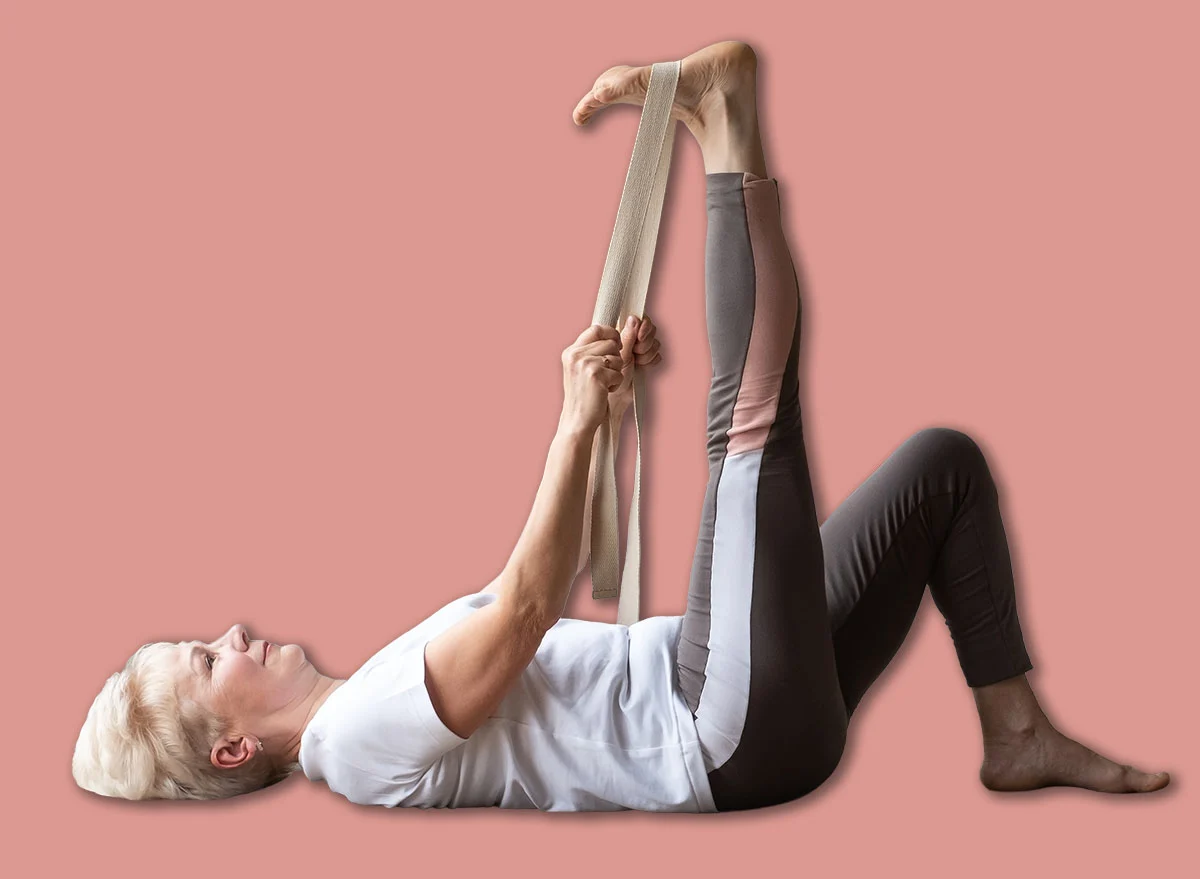
3. Active Supta Padangusthasana (Reclined Hand-to-Big-Toe) Variation
Utilizing a yoga strap or a sturdy belt, this exercise introduces controlled resistance to the hamstrings. By lying on your back, you remove the balance component, allowing you to focus entirely on the lengthening and strengthening of the posterior thigh.
- The Benefit: It provides a deep, safe stretch that simultaneously tones the muscle, preventing the stiffness often associated with aging.
4. Side-Lying Leg Sweeps
To improve lateral stability, one must target the abductors and the Tensor Fascia Latae (TFL). Side-lying leg sweeps isolate these muscles, which are often neglected in front-to-back walking patterns.
- The Benefit: Watts notes, "The TFL assists on the outer thigh to control the sweep forward and backward, which is vital for preventing hip instability."
5. Lying Single-Leg Extension
By isolating one leg at a time, you eliminate muscular imbalances. If one thigh is stronger than the other, this exercise forces the weaker side to work independently, ensuring balanced development.
- The Benefit: It builds focused endurance in the thighs, which translates directly to a more confident stride when you are upright.
Chronology of Recovery: A Strategic Approach
Adopting a new fitness regimen after 60 requires a measured, chronological approach to ensure long-term success.
- Weeks 1-2: The Acclimation Phase. Focus on "Reclined Leg Flex and Extend." The goal here is not exhaustion, but rather establishing the habit of daily movement.
- Weeks 3-4: The Stability Phase. Introduce "Supported Bridge on a Pillow" and "Side-Lying Leg Sweeps." These movements build the foundational stability required for more complex transitions.
- Weeks 5-8: The Strengthening Phase. Incorporate "Active Supta Padangusthasana" and "Lying Single-Leg Extension." At this stage, the body is typically prepared for more sustained tension and deeper muscle activation.
Supporting Data: Why "Bed Workouts" Work
Clinical research into geriatric physical therapy consistently shows that low-impact, high-frequency exercises are superior to high-intensity, low-frequency sessions for this demographic. Bed exercises provide three specific physiological advantages:
- Reduction of Cortisol: By keeping the workout environment familiar and comfortable (the bed), the sympathetic nervous system is less likely to trigger a "fight or flight" stress response, allowing for deeper muscle engagement.
- Pressure Distribution: Lying down ensures that body weight is distributed across a broader surface area, reducing the compressive forces on the ankles, knees, and hips by up to 60% compared to standing movements.
- Proprioceptive Safety: For those with vertigo or balance concerns, the lack of a standing requirement removes the fear of falling, which allows the brain to focus on muscle recruitment rather than balance maintenance.
Official Recommendations and Implications
Health professionals increasingly suggest that "movement snacks"—short bursts of activity throughout the day—are more effective than one long, grueling gym session. The implication of this research is clear: you do not need an hour of heavy lifting to see results. Ten minutes of controlled, bed-based thigh work upon waking or before sleep can provide the cumulative volume necessary to build muscle.
Key Considerations for Safety:
- Consistency over Intensity: It is far better to perform five repetitions of an exercise every day than 50 repetitions once a week.
- Listen to the Joint: If you experience sharp, shooting pain, stop immediately. Mild muscle fatigue is a sign of progress; joint pain is a sign of injury.
- Consultation: Always consult with a primary care physician or a physical therapist before beginning a new exercise program, especially if you have a history of osteoporosis or joint replacements.
The Path Forward
The narrative that physical decline is an inevitable consequence of aging is being challenged by modern fitness experts. By leveraging the comfort and stability of the bed, older adults can reclaim their autonomy, one leg extension at a time. Whether you are recovering from a recent ailment or simply looking to bolster your physical defenses, these exercises provide a dignified, accessible, and scientifically sound path toward a stronger, more mobile future.
The strength required for your next walk, your next transition, and your next adventure starts not in a high-tech fitness facility, but in the quiet, focused practice you can begin tonight before you turn out the lights.