











As we navigate our sixties and beyond, the natural physiological changes in our bodies—most notably the loss of muscle mass known as sarcopenia—often manifest first in our arms. That characteristic "sagging" or loss of skin elasticity is rarely just about the skin itself; it is primarily a reflection of the muscle fibers underneath losing their tone and density.
However, a Certified Strength and Conditioning Specialist (CSCS) suggests that this is not an inevitable decline. By implementing a targeted, standing-based resistance routine, individuals over 60 can rebuild their upper-body frame, improve functional independence, and restore a sense of firmness to their arms in as little as 30 days.
The Anatomy of Arm Strength After 60: Understanding the Shift
When we discuss "sagging arms," we are often looking at the triceps, the large muscle group running along the back of the upper arm. While these muscles receive the most aesthetic scrutiny, a holistic approach to arm health requires a more sophisticated perspective.
The appearance and function of the upper arm are governed by a complex chain of muscles: the biceps (front), the deltoids (shoulders), and the rhomboids and trapezius (upper back). When these muscles lose strength due to inactivity or age-related biological shifts, the "frame" that supports the skin of the arm weakens.
Research indicates that unilateral training—working one side at a time—is particularly effective for older adults, as it corrects muscle imbalances that often develop over decades. By focusing on a comprehensive routine that targets the biceps for pulling, triceps for pushing, and shoulders for structural support, you are not merely chasing aesthetic goals; you are investing in the capability to perform essential daily tasks like lifting groceries, reaching for high shelves, or maintaining stable posture.
Chronology of Progress: The 30-Day Transformation
Building strength after 60 is a process of "progressive overload," a concept that requires consistency rather than intensity. A 30-day window is an ideal timeframe to observe neurological and muscular adaptations.
- Days 1–7 (The Acclimation Phase): Focus on movement quality. The goal is to establish a mind-muscle connection. Do not worry about heavy weights; focus on the "squeeze" at the top of every contraction.
- Days 8–21 (The Engagement Phase): As your nervous system becomes more efficient at recruiting muscle fibers, you will notice increased control. You may find that you can maintain a slower, more deliberate tempo during your repetitions.
- Days 22–30 (The Integration Phase): By this stage, you should feel an increased "tightness" in the musculature. Your range of motion will likely feel smoother, and your grip strength should show signs of improvement.
The Six-Move Standing Protocol
The following exercises are designed to be performed while standing. This is intentional: standing forces the core to stabilize the body, effectively turning an "arm workout" into a "full-body engagement" session.
1. Standing Band Curls
Band curls are superior to many weight-based curls because they provide "accommodating resistance." As you curl the band, the tension increases, forcing the biceps to work harder through the peak of the movement.
- Muscles: Biceps, forearms, core.
- Execution: Step on the band with both feet. Keep your elbows glued to your ribcage. Curl toward your shoulders, squeezing the bicep at the top.
- Volume: 3 sets of 12–15 reps. 45 seconds of rest.
2. Standing Dumbbell Front Raise
This movement targets the anterior deltoids, which are essential for lifting objects away from the body.
- Muscles: Front delts, upper chest, core.
- Execution: With a light dumbbell in each hand, lift your arms straight in front of you until they are parallel to the floor. Do not swing; control the descent.
- Volume: 3 sets of 10–12 reps. 45 seconds of rest.
3. Band Pull-Aparts
Often neglected, the rear shoulders and upper back are the secret to preventing the "slumped" posture that makes arms look less defined.
- Muscles: Rear delts, rhomboids, upper back.
- Execution: Hold a resistance band with hands shoulder-width apart at chest height. Pull the band apart by squeezing your shoulder blades together.
- Volume: 3 sets of 12–15 reps. 45 seconds of rest.
4. Standing Single-Arm Shoulder Press
Pressing one arm at a time introduces an "anti-lateral flexion" challenge, forcing your core to work overtime to prevent you from leaning to one side.
- Muscles: Shoulders, triceps, core.
- Execution: Stand tall, core braced. Press the dumbbell overhead in a straight line. Lower it with complete control.
- Volume: 3 sets of 8–10 reps per side. 60 seconds of rest.
5. Standing Two-Dumbbell Triceps Extensions
To address the back of the arm, you must extend the elbow against gravity.
- Muscles: Triceps, shoulders.
- Execution: Raise dumbbells overhead, keeping elbows tucked close to your ears. Lower the weights behind your head, then extend back up.
- Volume: 3 sets of 10–12 reps. 45–60 seconds of rest.
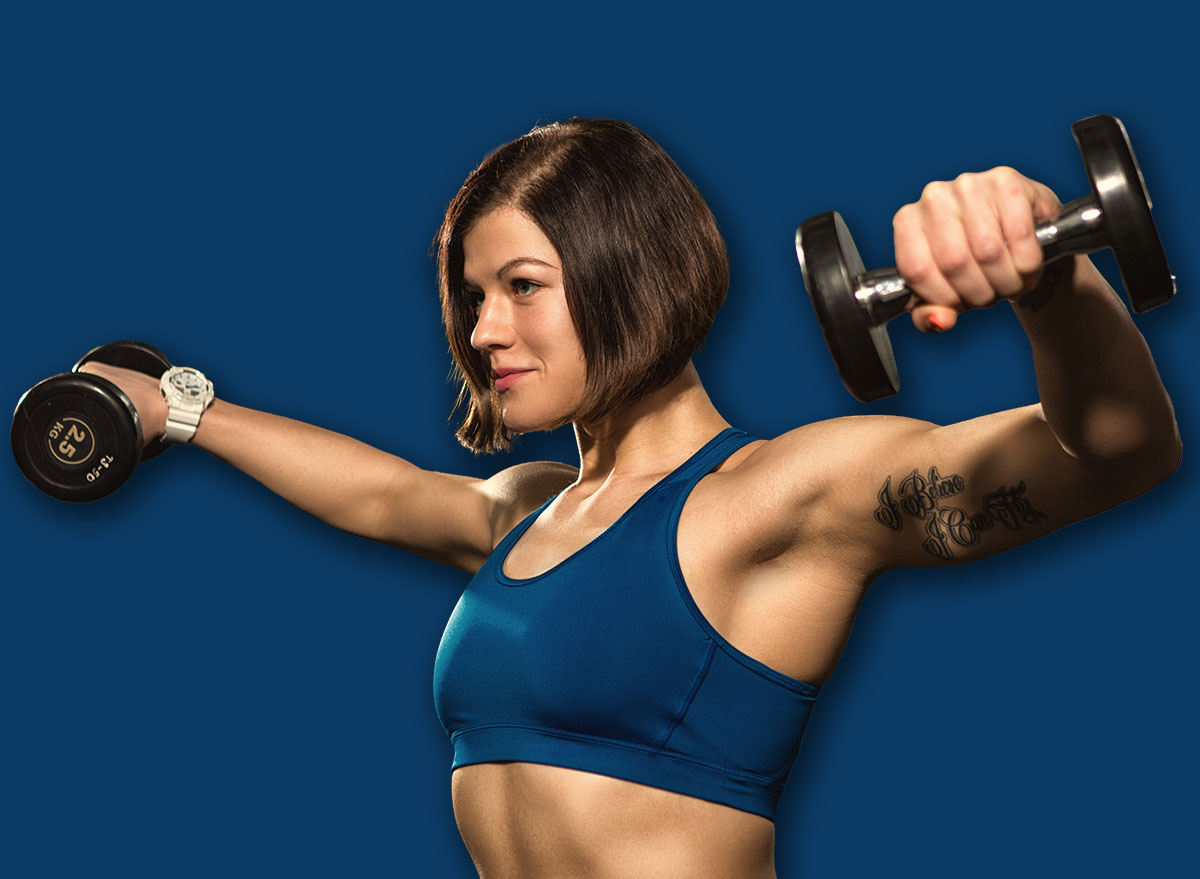
6. Standing Dumbbell Lateral Raise
The side delts provide the "rounded" look of the shoulder, which helps create a visual transition from the shoulder to the arm.
- Muscles: Side delts, upper traps.
- Execution: Raise your arms out to the sides like a bird’s wings. Lead with your elbows rather than your wrists.
- Volume: 3 sets of 12–15 reps. 45 seconds of rest.
Supporting Data and Scientific Context
Recent studies published in journals such as The Journal of Strength and Conditioning Research underscore that muscle quality—not just size—is the primary predictor of physical function in aging populations. Older adults who engage in regular, moderate-intensity resistance training demonstrate higher levels of "motor unit recruitment," meaning their brains become more efficient at activating the muscles they already possess.
Furthermore, the inclusion of resistance bands in this program is supported by research suggesting that elastic resistance provides a unique stimulus to connective tissues. Unlike traditional iron, which has a static weight, bands provide variable resistance that reduces joint impact—a critical consideration for those managing arthritis or joint sensitivity.
Official Recommendations and Expert Guidance
Health organizations, including the American College of Sports Medicine (ACSM), consistently recommend that adults over 65 engage in muscle-strengthening activities at least two days a week. The routine provided here aligns with these global guidelines while adding the specific focus of upper-body hypertrophy (muscle growth).
Expert Tips for Success:
- Mind the Tempo: Never use momentum. If you cannot control the weight on the way down, the weight is too heavy.
- Hydration and Nutrition: Muscle protein synthesis is more difficult after 60. Ensure you are consuming adequate high-quality protein (lean meats, legumes, or shakes) shortly after your workouts to fuel the repair process.
- Consistency over Intensity: It is far better to complete three sets of 10 reps with perfect form three times a week than to perform one "killer" workout that leaves you too sore to move for five days.
Implications: Beyond Aesthetics
The implications of this 30-day program extend far beyond the mirror. When you strengthen the arms and shoulders, you are essentially "future-proofing" your body.
The ability to maintain a strong upper-body frame directly impacts:
- Fall Prevention: If you lose your balance, your ability to reach out and catch yourself—or grab a railing—is dependent on your shoulder and triceps strength.
- Independence: Everyday activities, such as putting away dishes, dressing, or carrying groceries, remain manageable without physical strain.
- Postural Integrity: Stronger back and shoulder muscles pull the chest open, reversing the "hunch" often associated with aging.
By committing to this 30-day protocol, you are reclaiming ownership of your physical capabilities. The process of building muscle is a lifelong endeavor, but the foundations built in these four weeks will provide a baseline of strength that makes daily life easier, safer, and more vibrant.