










In a discovery that promises to reshape the landscape of modern oncology and transplant medicine, an international team of researchers has uncovered a fundamental biological mechanism that challenges a decades-old pillar of immunology. For over fifty years, the scientific community has operated under the assumption that the immune system functions through a strictly compartmentalized "division of labor." Now, that rigid framework is beginning to dissolve, revealing an unexpected—and potentially life-saving—vulnerability in cancer cells.
The study, published in the prestigious journal Nature Immunology, details how the immune system can bypass traditional defense mechanisms to strike cancer cells that were previously thought to be "invisible" to our natural defenses. Led by Dr. Pavan Reddy of the Dan L Duncan Comprehensive Cancer Center at Baylor College of Medicine (BCM), in collaboration with Dr. Arul Chinnaiyan and Dr. Marcin Cieslik of the University of Michigan Rogel Cancer Center, this research suggests that what cancer cells view as an escape route may, in fact, be their ultimate downfall.
The Core Principle: A Long-Held Scientific Dogma
To understand the significance of this breakthrough, one must first look at the traditional understanding of how our immune system identifies threats. Central to this process are proteins known as Major Histocompatibility Complexes (MHC).
For decades, the standard textbook explanation has been clear-cut:
- MHC Class I molecules were understood to be the primary "identifiers" that communicate with CD8+ T cells, commonly referred to as "killer" T cells. These cells scan the body for foreign antigens and direct the destruction of infected or malignant cells.
- MHC Class II molecules were believed to communicate exclusively with CD4+ T cells, or "helper" T cells, which coordinate the immune response and support other immune cells.
This division—Class I for killers, Class II for helpers—has formed the foundation of cancer immunotherapy development for generations. Scientists have long focused on bolstering CD8+ T cell responses, assuming that the two pathways operated in distinct, non-overlapping lanes. The new research, however, reveals that the MHC Class I pathway holds a previously unrecognized role in orchestrating immune responses driven by CD4+ T cells, effectively shattering the "separate lanes" theory.
Chronology of a Breakthrough: A Collaborative Endeavor
The path to this discovery was neither quick nor simple. It was the result of a years-long, cross-institutional collaboration that combined expertise in molecular biology, transcriptomics, and clinical oncology.
The Early Phase: Identifying the Anomaly
The investigation began with a foundational question: What happens to the immune system’s efficacy when cancer cells actively suppress MHC Class I? It is a well-documented survival tactic for tumors to downregulate or eliminate MHC Class I expression to remain invisible to CD8+ T cells. Conventional wisdom suggested this would render the cancer entirely "blind" to T-cell-mediated destruction. However, preliminary data from the research team began to show that while the tumors escaped the "killer" cells, they were paradoxically becoming more sensitive to other forms of immune pressure.
The Experimental Phase: Mouse Models and Transcriptomics
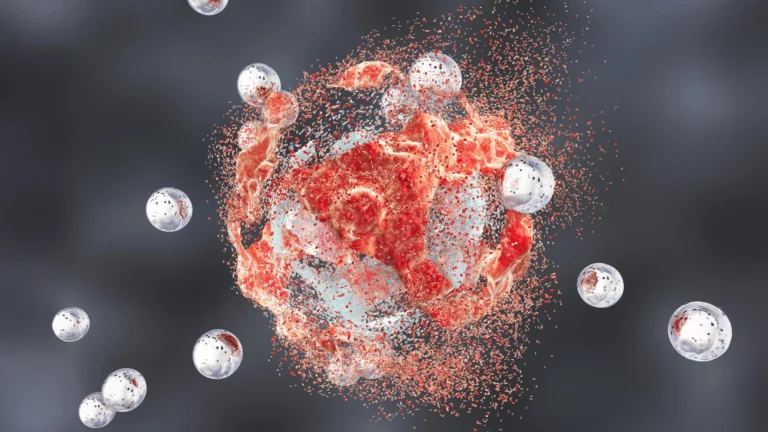
Between 2021 and 2024, the team utilized advanced transcriptomic analyses—mapping the gene expression profiles of immune interactions—to observe these phenomena in real-time. By testing these interactions in both mouse models and human tissue samples, researchers were able to witness a surprising phenomenon: when MHC Class I was absent, the CD4+ T cells were not merely standing by; they were mobilizing a lethal, iron-dependent form of cell death known as ferroptosis.
The Validation Phase: Analyzing Clinical Datasets
The final stage of the research involved validating these findings against real-world patient data. Dr. Chinnaiyan’s team at the University of Michigan analyzed massive datasets from patients treated with checkpoint inhibitors for solid tumors. They found a statistically significant correlation between the newly identified immune mechanism and patient survival outcomes, suggesting that the laboratory findings held profound weight in clinical settings.
Supporting Data: Ferroptosis and the Immune Response
The discovery that CD4+ T cells trigger ferroptosis in MHC-deficient cells is a pivotal shift in understanding cell death pathways. Ferroptosis is a form of programmed cell death characterized by the iron-dependent accumulation of lipid peroxides. Unlike apoptosis, which is a "cleaner" form of cell suicide, ferroptosis is highly inflammatory and can be an incredibly potent tool for the immune system to eradicate high-burden tumors.
Data from the study showed that:
- The MHC I Paradox: Reducing MHC Class I expression makes a cell significantly more vulnerable to CD4+ T cell-mediated ferroptosis.
- Broad Applicability: This is not limited to cancer. The team observed similar mechanisms in models of graft-versus-host disease (GVHD), a devastating complication in bone marrow transplants where donor immune cells attack the recipient’s healthy tissues.
- Correlation with Checkpoint Inhibitors: Patients who exhibited higher activity of this CD4-driven pathway often showed better responses to immunotherapy, suggesting that this mechanism is a major, yet under-utilized, variable in clinical success.
Official Responses and Expert Perspective
The implications of this study are being met with significant interest from the broader immunological community. Dr. Pavan Reddy, the study’s lead, emphasized the transformative potential of these findings during a recent press briefing.
"Our work, if further validated, will have implications for T cell-mediated immune responses beyond cancer and transplant immunology," said Dr. Reddy. "This may allow for the development of novel strategies that target MHC class I and CD4+ T cells to leverage the beneficial side of immunity or mitigate unwanted immune responses."
The collaborative nature of the project—involving graduate students Emma Lauder, Meng-Chih Wu, and Mahnoor Gondal, alongside established experts—highlights the interdisciplinary rigor required to overturn long-standing biological paradigms. By integrating the transcriptomic insights of the Michigan team with the functional modeling at Baylor, the group successfully bridged the gap between basic laboratory science and translational clinical applications.
Implications: A New Era for Immunotherapy and Transplants
The potential for this discovery to influence clinical medicine is vast. Currently, most immunotherapies are designed to "release the brakes" on the immune system to help CD8+ T cells find tumors. However, many cancers are resistant precisely because they have evolved to lose MHC Class I.
Re-engineering Cancer Treatment
If clinicians can develop therapies that specifically exploit the sensitivity of MHC-low cells to CD4+ T cell attack, it could open a new therapeutic window for "hard-to-treat" cancers. By essentially "trapping" the tumor—forcing it to choose between being seen by CD8+ cells or being destroyed by CD4+ cells via ferroptosis—researchers could create a "no-win" scenario for the cancer cell.
Revolutionizing Transplantation
In the context of bone marrow transplantation, the findings offer a double-edged sword. While we want to leverage immune responses to fight cancer, we want to suppress them when they cause GVHD. Understanding that MHC Class I plays a role in CD4+ T cell-mediated tissue damage provides a new target for drug development. Scientists might eventually be able to modulate this pathway to prevent the immune system from attacking healthy donor tissues without compromising the patient’s overall ability to fight infections or lingering cancer cells.
Future Directions
The next steps for the research team involve identifying the specific molecular "switches" that govern this ferroptosis response. If the pathways can be chemically or genetically controlled, it would represent a massive leap forward in precision medicine.
The research was supported by a robust network of funding, including various National Institutes of Health (NIH) grants and the Cancer Prevention and Research Institute of Texas (CPRIT), signaling a strong institutional commitment to moving these findings from the bench to the bedside.
Conclusion: Challenging the Foundation to Build the Future
The history of science is defined by the periodic overturning of "settled" knowledge. The division between MHC Class I and Class II pathways was a useful simplification for decades, but as our tools for molecular analysis have become more refined, the complexity of the immune system has finally come into focus.
By demonstrating that CD4+ T cells possess the capacity to destroy cells through an iron-dependent pathway when the traditional MHC I "security" is bypassed, Dr. Reddy and his colleagues have provided the oncology community with a new blueprint. As clinical trials inevitably begin to explore the modulation of these pathways, the hope remains that this fundamental shift in understanding will lead to more robust, durable, and effective treatments for patients who have exhausted traditional options.
The immune system is far more clever and adaptable than we once imagined; it is only fitting that our medical interventions are finally beginning to catch up.