







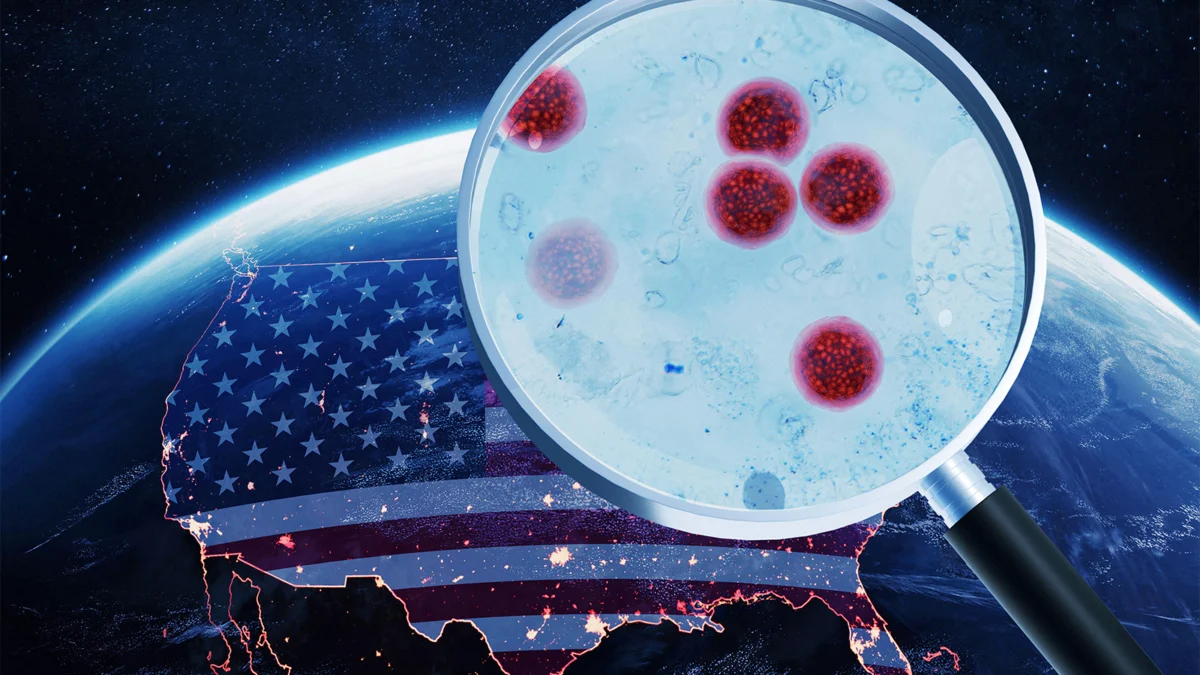
The United States is currently grappling with a severe and widespread foodborne illness crisis, headlined by a massive Cyclospora outbreak linked to iceberg lettuce. While the Taylor Farms investigation has dominated public discourse, it is merely the tip of a much larger, more dangerous iceberg. Behind the scenes, at least six other, distinct Cyclospora outbreaks are simmering across the country, their sources obscured by a lack of investigative clarity.
Public health experts warn that the nation’s ability to track, identify, and contain these pathogens has been significantly degraded. According to epidemiological authorities, the infrastructure tasked with monitoring such outbreaks was systematically gutted last year, leaving the U.S. food safety apparatus effectively blindfolded during a period of unprecedented health risk.
The Scale of the Crisis: A Statistical Anomaly
The primary outbreak, traced to iceberg lettuce processed by Taylor Farms, has reached staggering proportions. Current data indicates 10,930 reported cases across 17 states. The impact has been severe, resulting in 454 hospitalizations and two confirmed deaths. Michigan, in particular, has become the epicenter of this surge, placing immense pressure on regional healthcare facilities.
Beyond this massive cluster, the FDA’s Coordinated Outbreak Response & Evaluation (CORE) team is actively investigating six other, smaller outbreaks. These collective incidents account for an additional 270 cases. Unlike the Taylor Farms incident, where a supply chain link was identified, the sources of these six outbreaks remain unknown, creating a "black hole" of information for regulators.
Historically, Cyclospora—a parasite known for causing prolonged, debilitating gastrointestinal distress—shows seasonal spikes. However, the current numbers represent an alarming deviation from historical norms. For context, CDC FoodNet data recorded 717 cases in 2024, 524 in 2023, and 446 in 2022. The 2025 surge represents an increase of more than an order of magnitude, suggesting a systemic failure in the food supply chain that is currently outstripping the nation’s diagnostic and reporting capacity.
The Erosion of FoodNet: A Regulatory Sunset
At the heart of the current intelligence vacuum is the decline of CDC’s FoodNet (the Foodborne Diseases Active Surveillance Network). Since its inception in 1996, FoodNet served as the gold standard for tracking foodborne pathogens, including Cyclospora, Campylobacter, Listeria, Salmonella, Shiga toxin-producing E. coli (STEC), Shigella, Vibrio, and Yersinia.
However, as of July 1, 2025, a significant policy shift implemented by the Trump administration drastically narrowed the scope of mandatory reporting. The new federal guidelines removed the requirement for states to report cases of six major pathogens, including Cyclospora. Currently, states are only mandated to report Salmonella and STEC.
This policy change has effectively severed the central nervous system of federal food safety monitoring. Becky Smullin Dawson, PhD, MPH, an epidemiologist and professor at Allegheny College, characterizes the current situation as a dangerous experiment in public health.
"We’re weeks and weeks and weeks behind, which is unheard of pre-Trump administration," Dr. Dawson stated. "We’re tempting fate right now. This was a warning that our food safety system isn’t functioning right. We’re not able to piece together what’s causing outbreaks and we don’t know if outbreaks are connected."
Chronology of a Public Health Collapse
To understand the current chaos, one must look at the timeline of the degradation of surveillance.
- Pre-2025: The federal government maintained a robust, centralized system for investigating and reporting foodborne pathogens. Information flowed from state laboratories to the CDC, where it was aggregated to spot trends and identify common sources of infection.
- Early 2025: The shift in federal reporting mandates took effect, removing Cyclospora from the list of nationally reportable conditions.
- Mid-2025 (The Outbreak Period): As temperatures rose and the summer parasite season began, reports of "explosive diarrhea" began to spike. Because clinical laboratories and state health departments were no longer required to report Cyclospora specifically, these cases began to disappear into the noise of seasonal norovirus or rotavirus.
- Present Day: Regulatory bodies are struggling to perform basic contact tracing. The investigation into the Taylor Farms outbreak is moving at a glacial pace compared to historical standards, and the six "unidentified" outbreaks continue to circulate, potentially infecting thousands more without triggering a single national public health alert.
The Data Deficit: Why Accuracy Matters
The removal of reporting requirements has created a massive blind spot for clinicians and researchers. Because hospitals are no longer mandated to report cases, many instances of cyclosporiasis go unconfirmed or simply unrecorded. This lack of data makes it impossible for the CDC to distinguish between an outbreak of Cyclospora and other common gastrointestinal illnesses.
"Since states are no longer required to report Cyclospora cases, it’s harder to tell if reports of ‘explosive diarrhea’ are tied to the ongoing outbreaks or signal other pathogens," Dr. Dawson explained.
Furthermore, the absence of federal coordination has forced public health officials to rely on fragmented, local reporting—most notably from the Michigan Department of Health. While the Michigan data is praised for its precision, it lacks the national context necessary to track produce distribution chains that cross state lines. Without the federal "big picture," localized data cannot confirm if a cluster in Michigan is linked to a smaller, unidentified cluster in a neighboring state.
Official Responses and Institutional Silence
The breakdown in communication is not limited to the reporting of data; it extends to the transparency of federal agencies. As the crisis deepens, inquiries regarding the utilization of FoodNet during these specific outbreaks have been met with silence.
The CDC, which previously provided definitive, real-time guidance during foodborne crises, has been noticeably reticent regarding whether the FoodNet infrastructure is even being leveraged to its full potential. This lack of response suggests that the agency may be hampered by the very administrative changes that have stripped away its reporting mandates.
The FDA’s CORE team remains the only active federal unit addressing these issues, yet they are reportedly overwhelmed. Industry observers note that in previous years, the federal machine would have initiated multiple coordinating calls between federal health officials and state departments, centralized media briefings, and provided clear, actionable advice to consumers. Instead, the current landscape is a scramble of journalists, public health advocates, and local officials piecing together data fragments from disparate government websites.
The Long-term Implications
The implications of this surveillance failure are profound. Food safety is not merely a matter of individual health; it is an economic issue that relies on consumer trust. When the government cannot identify the source of a parasite, the public loses confidence in the food supply, leading to mass recalls and economic instability for farmers and retailers.
Dr. Dawson warns that while Cyclospora is generally not lethal, the current situation sets a dangerous precedent. "There’s ‘no way on earth’ to know how many Cyclospora outbreaks or cases there are in the U.S. right now," she noted. "We’re not able to piece together what’s causing outbreaks."
The silver lining—if it can be called that—is that Cyclospora is less lethal than pathogens like E. coli or Salmonella. However, health experts fear that if a more virulent pathogen were to emerge during this period of reduced surveillance, the consequences would be catastrophic. The current crisis is a test of a system that has been stripped of its essential defenses.
As the investigations continue into the six unidentified outbreaks, the public is left with more questions than answers. Without a return to rigorous, mandatory, and centralized reporting, the United States remains vulnerable to silent epidemics, unable to see the threats until they have already taken their toll on the health of the nation.