











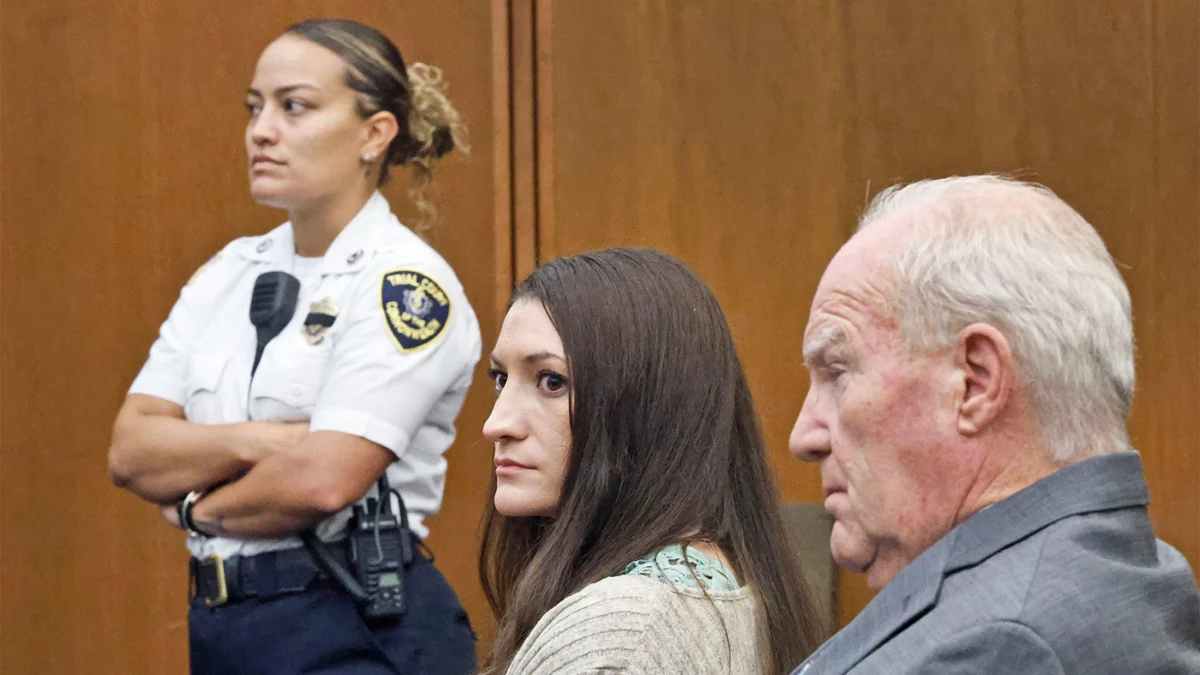
The trial of Lindsay Clancy, a case that has captivated the American public and ignited a fierce debate regarding the intersection of severe mental health crises and the criminal justice system, reached a fever pitch this week. As the jury concluded a grueling sixth day of deliberations on Thursday, the panel remained deadlocked, leaving the fate of the 36-year-old former labor and delivery nurse hanging in the balance.
The proceedings took a dramatic turn when defense attorney Kevin Reddington alerted Judge William Sullivan to a note received from the jury foreperson. The communication alleged that a single juror was refusing to adhere to the court’s strict instructions regarding "reasonable doubt," effectively stalling the deliberation process. This disclosure exposed deep-seated tensions within the jury room, prompting an emergency intervention by the court and raising the specter of a mistrial in one of the most closely watched murder cases in recent Massachusetts history.
The Core of the Dispute: Criminal Responsibility vs. Mental Illness
At the heart of the trial is not the question of whether Lindsay Clancy killed her three children—Cora, 5; Dawson, 3; and 8-month-old Callan—but rather her mental state at the time of the tragedy in 2023.
Clancy, who suffered catastrophic injuries after jumping from a second-story window following the incident, leaving her paralyzed, does not deny the physical acts. Instead, the defense argues that she was in the throes of a severe episode of postpartum psychosis—a rare, life-threatening psychiatric condition. Defense experts testified that Clancy was experiencing auditory hallucinations, including a voice that commanded her to end her children’s lives to facilitate her own suicide.
Conversely, the prosecution has painted a calculated picture of the events. They argue that Clancy’s actions were premeditated, citing evidence that she deliberately sent her husband, Patrick Clancy, on errands to ensure he was out of the house. Prosecutors have challenged the severity of her subsequent suicide attempt and insist that she understood the nature and consequences of her actions on that day. The jury’s struggle to reconcile these two opposing narratives has pushed the deliberations into uncharted, contentious territory.
A Chronology of the Tragedy and Legal Proceedings
The Lead-up to the Incident
The events of 2023 were preceded by a documented decline in Clancy’s mental health. Throughout the trial, jurors heard harrowing testimony from relatives and medical professionals describing her deteriorating state in the months leading up to the tragedy. Her treatment regimen, which included multiple psychiatric medications and a brief hospitalization, failed to prevent the eventual collapse.
The Trial Process
The trial, which has been livestreamed to a global audience, has become a lightning rod for public opinion. Supporters of the defense argue that the justice system is ill-equipped to handle cases involving postpartum mental health disorders, viewing the prosecution as an archaic response to a medical tragedy. Opponents, however, emphasize the finality of the children’s deaths and the necessity of accountability, regardless of the perpetrator’s mental health history.
The Deliberation Standoff
The current deadlock is not the first time the jury has signaled an impasse. On Wednesday, Judge Sullivan addressed the court, confirming that the jury was struggling to reach a unanimous decision. He provided a "Tuey-Rodriguez" charge—an instruction urging jurors to reconsider their positions without abandoning their core convictions—and reminded them that there was no guarantee a future jury would be better equipped to reach a verdict.
By Thursday, the situation had escalated. Following the foreperson’s note regarding the holdout juror, Judge Sullivan summoned each of the 12 jurors individually for private questioning. He subsequently reread the instructions on reasonable doubt and mandated that deliberations continue on Friday. This led to an impassioned objection from the defense, with Reddington formally requesting the removal of the problematic juror—a request the judge flatly denied.
Supporting Data and Medical Expert Discrepancies
The trial has been characterized by a "battle of the experts," with both sides presenting vastly different interpretations of psychiatric data.
- Defense Stance: Medical professionals for the defense pointed to the physiological and psychological markers of postpartum psychosis, noting the rapid onset of symptoms and the total detachment from reality. They argue that such a condition renders the subject incapable of forming the "malice aforethought" required for a first-degree murder conviction.
- Prosecution Stance: The prosecution’s experts argued that while Clancy was undoubtedly suffering from depression, she retained the capacity to plan and execute a complex task. They point to the logistical details of the day—the errands and the communication with her husband—as evidence of a mind that was not fully lost to psychosis.
The emotional weight of the trial is compounded by the stance of Patrick Clancy. In interviews, the father of the deceased children has expressed forgiveness toward his ex-wife, describing her not as evil, but as a woman lost to a profound illness. This perspective has resonated with many observers, adding a layer of public empathy that contrasts sharply with the state’s cold legal pursuit of a murder conviction.
Official Responses and Judicial Maneuvering
Judge William Sullivan has navigated a minefield of procedural hurdles. His decision to maintain the jury’s composition despite the defense’s objections underscores the high threshold required to remove a juror once deliberations have commenced. In the eyes of the law, the sanctity of the deliberation process is paramount, and a judge’s interference must be minimal to avoid the appearance of coercion.
However, the defense’s frustration is palpable. Kevin Reddington has characterized the holdout as a violation of the jury’s mandate, arguing that a refusal to follow instructions on reasonable doubt constitutes a failure of duty. As the case continues, the tension between the court’s desire for a verdict and the necessity of ensuring a fair, impartial process remains the primary friction point.
Implications: The Future of the Case and Public Policy
If the current jury remains deadlocked, the most likely outcome is a mistrial. This would force the prosecution into a difficult position:
- Retrial: The state could opt to start the entire process over, forcing the grieving families and the public to endure another grueling trial.
- Plea Deal: The prosecution and defense could negotiate a resolution, potentially involving a plea to a lesser charge such as manslaughter, which would avoid further litigation.
- Dismissal: The state could choose to drop the charges, though this is considered unlikely given the gravity of the crime.
Beyond the specific outcome for Lindsay Clancy, the trial has broader implications for the American legal system. It has brought the "postpartum defense" into the spotlight, prompting a national conversation about whether the legal system needs specialized protocols for cases where severe, biologically driven mental illness plays a role in violent crimes.
Furthermore, the public’s intense interest and the letters of support arriving from around the world indicate a significant cultural shift. There is a growing movement advocating for a more nuanced understanding of maternal mental health, one that moves away from strictly punitive measures and toward a more comprehensive, medicalized approach to justice in cases involving extreme postpartum psychiatric episodes.
As the court reconvenes on Friday, the nation watches with bated breath. Whether a verdict is reached or the case ends in a mistrial, the Lindsay Clancy trial has already secured its place as a landmark moment in the discussion of how society balances the cold letter of the law with the complexities of the human mind.
EDITOR’S NOTE: This story includes discussion of suicide. If you or someone you know is struggling or in crisis, help is available. You can call or text 988 or chat at 988lifeline.org in the U.S. and Canada, or contact your local emergency services.