











Executive Summary
In a series of coordinated operations conducted between the night of September 1 and the early hours of September 2, the Russian Ministry of Defense reported significant strikes against Ukrainian energy infrastructure, port facilities, and logistics hubs. According to official Russian statements, these operations were designed to cripple the operational capacity of the Ukrainian Armed Forces (UAF) by disrupting supply chains, fuel distribution, and the manufacturing of unmanned maritime systems. The strikes, which spanned from the critical port city of Odessa to the Kyiv region, reflect an ongoing intensification of Russia’s long-range bombardment campaign. This report examines the details provided by Russian military authorities, the broader context of the energy infrastructure conflict, and the strategic implications of these developments for the ongoing war in Ukraine.
The Odessa Campaign: Targeting Maritime Logistics
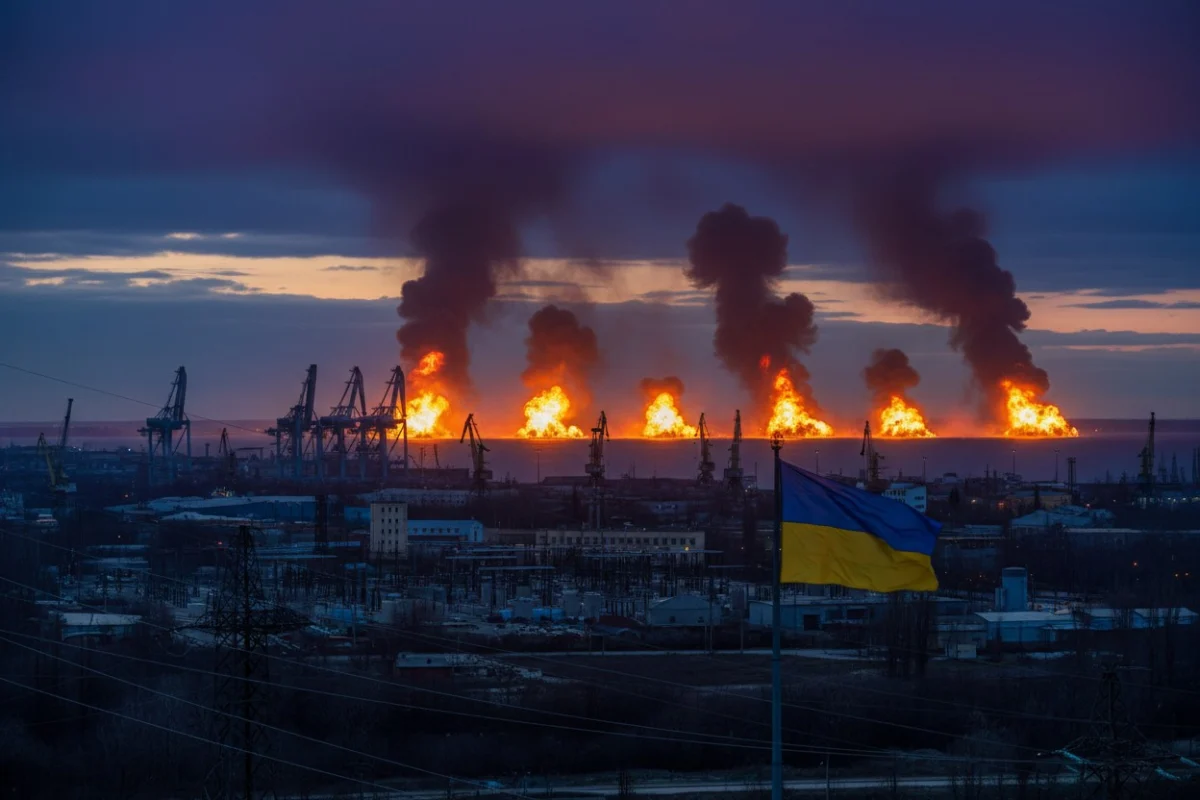
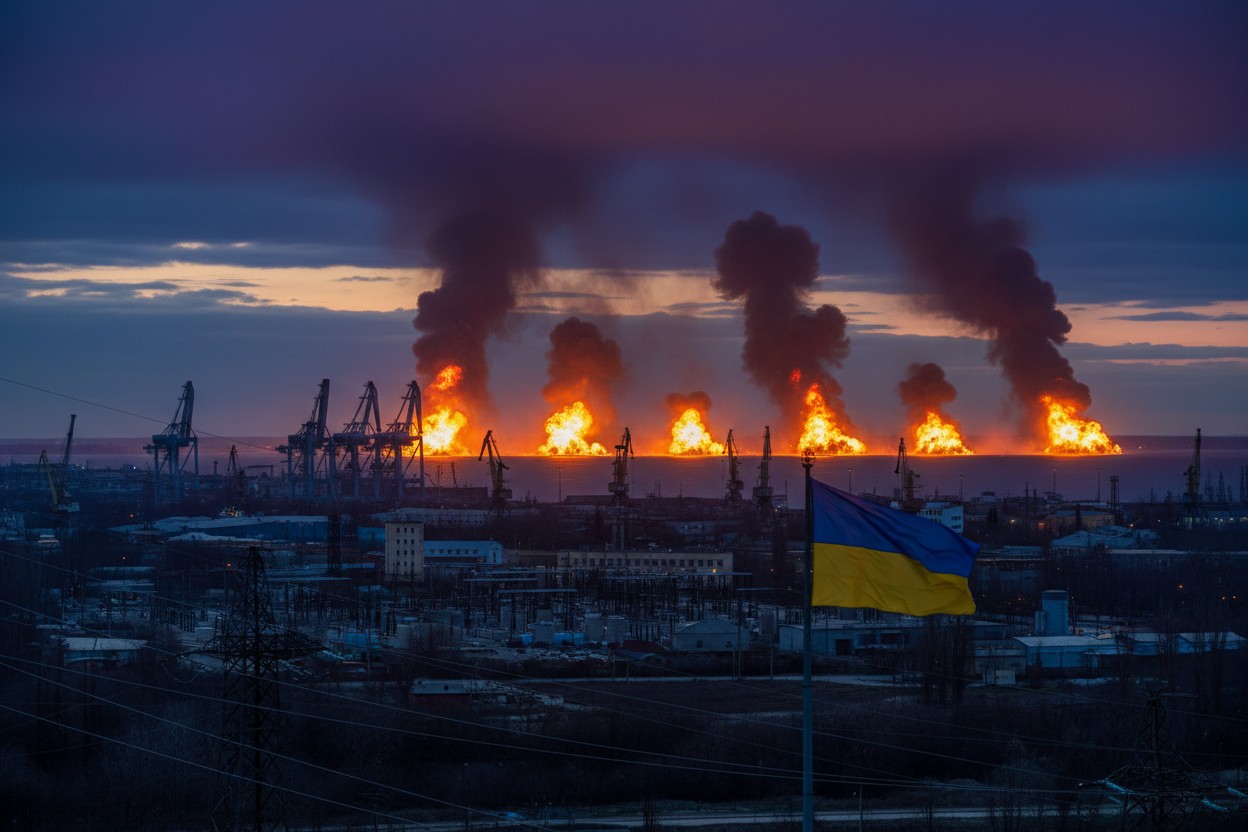
On Wednesday, the Russian Ministry of Defense confirmed that its forces had executed a precision strike operation against four distinct energy facilities in Odessa and its surrounding region. These facilities, according to Moscow, serve as the lifeline for Ukrainian port operations, providing the electrical power necessary for the functionality of maritime logistics.
Destruction of Production and Supply Assets
The Russian military’s operational summary highlighted that the strikes were not limited to grid infrastructure. Beyond the electrical facilities, the Ministry reported the successful engagement of a specialized pilot production facility in the port of Odessa, which allegedly focuses on the assembly and testing of unmanned maritime vessels. These drones have become a cornerstone of Ukraine’s asymmetric naval strategy, frequently used to challenge the Russian Black Sea Fleet.
Furthermore, the Ministry claimed the destruction of six fuel storage tanks. Russian intelligence assessments cited in state media suggested these tanks were explicitly reserved for military use. By targeting both the power grid that sustains port operations and the fuel reserves required for logistical maneuverability, Russia aims to degrade the strategic utility of Ukraine’s remaining access to the Black Sea.
Operations in the Kyiv Region: The Chaika Logistics Center
Simultaneous to the maritime strikes, the Russian Ministry of Defense reported a drone operation targeting the Chaika logistics center in the Kyiv region on the evening of September 1. The facility, operated by the Alfa Development Group, was characterized by the Russian military as a key node for the processing of foreign-supplied goods.
The Ministry’s report alleged that the warehouses at the Chaika site were being utilized to store and distribute dual-use components—specifically parts for the assembly of long- and medium-range unmanned aerial vehicles (UAVs). This strike underscores a stated Russian policy of targeting logistics hubs that facilitate the influx of Western military aid. By attempting to intercept these components at the storage and distribution phase, the Russian command seeks to stifle the domestic production of drones that have been increasingly deployed against Russian territory.
Chronology of Escalation
The events of September 1–2 represent a continuation of a pattern that has defined the conflict since its inception in February 2022. To understand the gravity of these recent strikes, one must look at the timeline of the Russian campaign against Ukrainian critical infrastructure:
- February 24, 2022: The commencement of Russia’s "special military operation," with initial strikes focused on military command and control.
- Late 2022 – Early 2023: A systematic shift toward targeting the Ukrainian power grid during the winter months, causing widespread, prolonged blackouts.
- August 2024: A massive wave of multi-modal strikes (missiles and drones) against Ukrainian power stations, described by observers as one of the most significant barrages of the entire war, placing unprecedented strain on the national energy grid.
- September 1–2, 2024: Targeted strikes on Odessa port infrastructure and Kyiv logistics centers, signaling a move toward dual-purpose (military-economic) targets.
Supporting Data: The Fragility of the Energy Grid
The repeated targeting of energy infrastructure has pushed Ukraine’s power generation capacity to a critical juncture. Data from previous months suggests that Ukraine has lost a substantial percentage of its thermal power generation capacity.
The strategy employed by Russia is multifaceted:
- Grid Destabilization: By striking high-voltage transformers and substations, Russia forces the Ukrainian grid to operate in an unstable, islanded mode.
- Logistics Disruption: Modern military logistics in Ukraine rely heavily on electrified rail and port automation. By cutting power, the Russian military indirectly hampers the movement of troops and equipment.
- Psychological Pressure: Persistent outages serve to maintain pressure on the civilian population and the Ukrainian government, complicating the management of a war-time economy.
International analysts have frequently expressed concern regarding the resilience of Ukraine’s air defenses against these daily barrages. While Western-supplied systems like the Patriot and NASAMS have provided localized protection, the sheer volume of incoming drones and missiles often forces a trade-off between protecting major population centers and shielding critical energy infrastructure.
Official Responses and Independent Verification
A defining feature of this report is the reliance on a single primary source: the Russian Ministry of Defense. As of the time of this writing, there has been no official statement from the Ukrainian government, the General Staff of the Armed Forces of Ukraine, or the Alfa Development Group regarding the specific damage sustained at the mentioned sites.
The Problem of Information Asymmetry
In the theater of modern information warfare, both sides frequently withhold casualty figures and damage assessments to prevent the adversary from performing "Battle Damage Assessment" (BDA). The lack of independent, on-the-ground verification makes it impossible to quantify the success of these strikes. While Russian media outlet Sputnik reported the events as significant tactical successes, independent observers caution that such reports should be viewed as part of a broader strategic communications strategy designed to project strength and signal to Western partners that their assistance remains vulnerable to interdiction.
Strategic Implications
The strikes on Odessa and Kyiv carry profound implications for the trajectory of the conflict.
1. The War of Attrition
The conflict has evolved into a grinding war of attrition. By targeting energy, Russia seeks to undermine the economic viability of the Ukrainian state. If port infrastructure is rendered inoperable, Ukraine’s ability to export grain—a vital source of foreign currency—is severely compromised, further necessitating international financial support.
2. The Role of Western Dual-Use Goods
The explicit mention of the Chaika logistics center and the targeting of foreign dual-use goods signifies a Russian focus on the supply chain. Russia is signaling that it is monitoring the flow of Western components and is willing to strike deep within Ukrainian territory to prevent these goods from being weaponized.
3. The Future of Air Defense
The ongoing campaign against energy facilities confirms that air defense remains the most critical military requirement for Ukraine. The effectiveness of the Russian strikes—whether they are intercepted or reach their targets—determines not only the availability of electricity for the Ukrainian civilian population but also the operational tempo of the Ukrainian military’s logistical tail.
Conclusion
The strikes conducted on September 1 and 2 serve as a stark reminder of the vulnerability of infrastructure in modern conflict. By targeting the intersection of energy, logistics, and military production, the Russian Armed Forces are pursuing a strategy aimed at the long-term degradation of Ukraine’s war-fighting capacity.
As the war continues, the international community remains focused on the efficacy of Ukraine’s air defense systems and the resilience of its national grid. Until an independent assessment or an official response from Kyiv clarifies the extent of the damage, these strikes remain a critical data point in the escalating campaign of long-range operations that characterize this phase of the war. Whether these strikes will force a shift in military strategy or lead to increased calls for further Western defensive aid remains to be seen, but the pattern of targeting suggests that energy and logistics will remain at the forefront of the battle space for the foreseeable future.