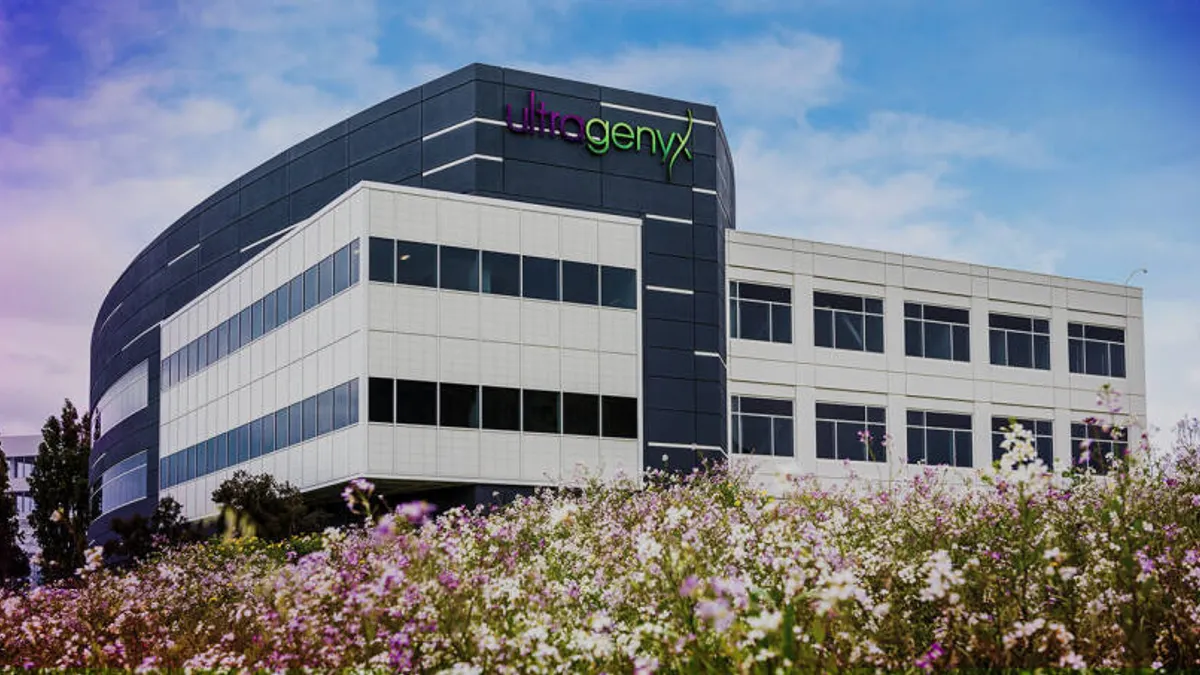
The landscape of rare disease biotechnology was shaken this week as Ultragenyx Pharmaceutical announced the disappointing failure of its Phase 3 clinical trial for its Angelman syndrome candidate, GTX-102. Once heralded as a potential blockbuster therapy with peak sales projections exceeding $1.8 billion, the drug’s inability to meet primary endpoints has sent shockwaves through the investment community and forced the company into a period of aggressive fiscal reassessment.
For a company that has spent years cultivating a reputation as a high-growth, pipeline-heavy innovator, the news represents a fundamental shift. Ultragenyx is now grappling with the harsh reality that its "pipeline execution" narrative has stalled, leaving management to pivot toward a strategy defined by commercial discipline and cost-cutting measures.
Main Facts: The Collapse of a Blockbuster Hopeful
The clinical failure of GTX-102 is a significant blow to the medical community’s efforts to treat Angelman syndrome, a rare, complex neurogenetic disorder characterized by developmental delays, speech impairment, seizures, and severe motor coordination issues. There are currently no FDA-approved treatments specifically for the condition, leaving patients and their families with limited options for symptomatic management.
The Phase 3 data, which failed to demonstrate the clinical efficacy required to support a regulatory filing, has effectively sidelined the program. Leerink Partners analyst Joseph Schwartz noted that the language surrounding the trial’s failure leaves "very little room for an optimistic interpretation." Unlike some study failures that offer a silver lining through subgroup analysis or secondary endpoint success, the GTX-102 results appear to be a comprehensive miss.
As a result, the company’s valuation has been recalibrated by Wall Street, with analysts shifting their focus away from the potential of the drug pipeline and toward the company’s existing commercial portfolio and its ability to manage operational expenses.
Chronology of a High-Stakes Development
The trajectory of GTX-102 has been defined by high expectations and subsequent volatility.
- Early Promise: Following positive data in early-stage trials, GTX-102 became a central pillar of the Ultragenyx investment thesis. The drug, an antisense oligonucleotide designed to address the underlying cause of Angelman syndrome, was viewed as a revolutionary approach to a condition that has historically stymied pharmaceutical researchers.
- Previous Industry Failures: The road to an Angelman treatment is paved with historical setbacks. Other firms, including Ovid Therapeutics, have previously attempted to bring therapies to market, only to see their programs fail in clinical development. This context heightened the stakes for Ultragenyx.
- February 2025 Restructuring: Recognizing the need to preserve cash while awaiting key data, Ultragenyx initiated a significant restructuring in early 2025, which included layoffs and a streamlining of its research and development operations.
- August 2025 Milestone: The company received FDA approval for its first gene therapy, providing a rare piece of positive news. However, this success was tempered by the looming anticipation of the GTX-102 readout.
- The Current Setback: The failure of the Phase 3 study marks the latest and most significant chapter in this timeline, forcing an immediate pivot in corporate strategy.
Supporting Data: The Economic and Clinical Implications
To understand the magnitude of this failure, one must look at the financial models that previously underpinned the company’s growth. Analysts had projected that if successful, GTX-102 would reach peak annual sales of roughly $1.8 billion. In comparison, the company’s other near-term hope, UX111—a treatment for Sanfilippo syndrome—is expected to generate only $120 million to $240 million in peak sales.

The disparity between these figures highlights the "shape-shifting" nature of the company’s investment case. Investors were betting on a blockbuster; they are now left with a company that has five approved products but has yet to reach profitability.
Furthermore, the failure has broader implications for the biotech sector. Ionis Pharmaceuticals and Oak Hill Bio are both working on Angelman therapies that utilize similar mechanisms of action. While Ionis shares fell 4% following the announcement, some analysts remain cautiously optimistic that these competitors could succeed by employing higher dosing regimens or different delivery technologies. Nevertheless, the entire field is now under increased scrutiny.
Official Responses and Analyst Sentiment
In the wake of the news, the leadership at Ultragenyx has remained largely focused on the path forward, emphasizing a "commercial and expense story." This shift in rhetoric from the C-suite signals a move away from the aggressive R&D spending that characterized the company’s previous five years.
Market analysts have been blunt. Joseph Schwartz’s note to clients explicitly stated that the investment case for Ultragenyx has "changed shape." He noted that while the company possesses a portfolio of five marketed products, none of these drugs are currently positioned to reach the blockbuster status that GTX-102 was intended to achieve.
The sentiment across the industry is one of caution. While Ultragenyx continues to advance its pipeline, the "pipeline execution" narrative—the idea that the company could reliably move drugs from the lab to a billion-dollar market—is currently on hold.
Implications: A New Era for Ultragenyx
The failure of the GTX-102 program forces three major implications for the company and the broader rare disease space:
1. Shift Toward Commercial Discipline
Ultragenyx must now prove that its existing portfolio can carry the company toward profitability without the "blockbuster" safety net of a major new drug. This requires a laser focus on sales execution, market access, and managing the overhead costs that the company struggled with during its expansionary phase.

2. The High-Risk/High-Reward Reality of Rare Diseases
The failure highlights the inherent risks of working in orphan drug development. Because these diseases are often genetically complex and poorly understood, the biological targets are difficult to validate. When a program fails in this space, it doesn’t just affect one company; it impacts the entire scientific community’s understanding of the disease pathway.
3. Re-evaluating the Pipeline
With the loss of the GTX-102 revenue potential, the company’s remaining pipeline assets—including the upcoming potential approval of UX111 for Sanfilippo syndrome—must now work harder to justify the company’s valuation. Investors are no longer willing to pay for "potential"; they are demanding tangible, bottom-line performance.
4. Competitive Contagion
The ripple effect on Ionis Pharmaceuticals and Oak Hill Bio cannot be ignored. While these companies may argue that their drug candidates differ in potency or administration, the "read-through" from the Ultragenyx failure creates a psychological barrier for investors. These companies will likely face tougher questions from shareholders about the validity of their underlying mechanisms of action in the coming months.
Conclusion
The failure of the GTX-102 trial is more than a clinical disappointment; it is a corporate turning point. Ultragenyx, once the darling of the rare disease pipeline, must now navigate a new, more difficult environment. The focus has transitioned from the excitement of scientific discovery to the rigor of commercial sustainability.
For patients living with Angelman syndrome, the setback is a profound tragedy, delaying the hope of a potential treatment. For the biotech industry, it is a reminder that in the search for cures for rare diseases, the path is rarely linear, and even the most promising candidates can fall short. As Ultragenyx looks to the future, its success will depend on its ability to prove that it can be a profitable, sustainable commercial entity, even in the absence of its most anticipated drug.