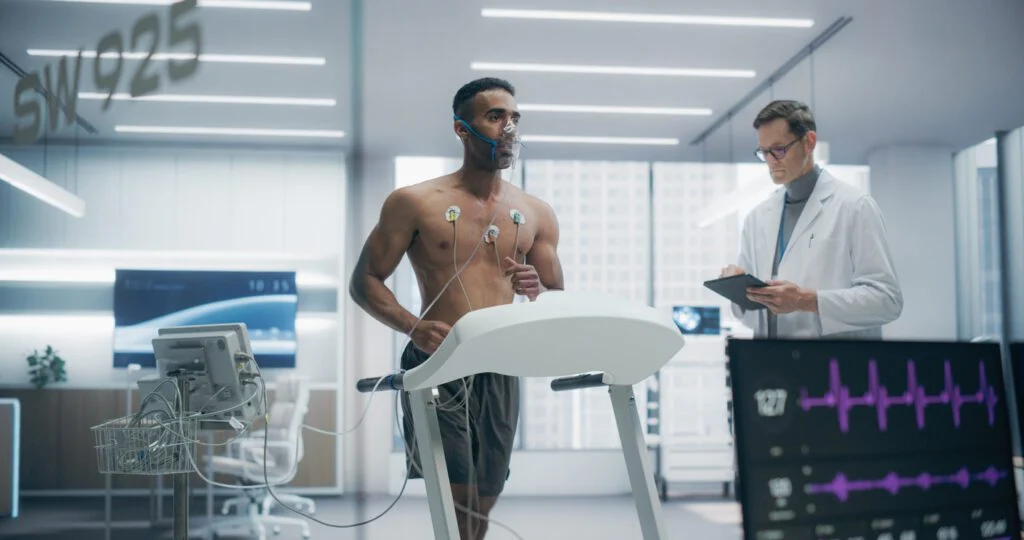
In the high-stakes world of longevity science, billionaire Bryan Johnson has become the face of a radical movement. Featured in the Netflix documentary Don’t Die, Johnson is currently the most prominent advocate for “biological age” (bio age) testing—a metric that purports to measure the internal clock of your cells rather than the years you have spent on Earth.
Johnson reportedly spends millions annually on an aggressive protocol that includes dozens of daily supplements, hyperbaric oxygen therapy, weekly acid peels, and, most controversially, plasma infusions from his own teenage son. He claims these interventions have successfully reversed his biological age by over five years. Yet, the scientific community remains deeply divided; a recent New York Times exposé challenged his data, suggesting that, in reality, his biological age may have actually increased by a decade.
As the "don’t die" crusade gains momentum, bio-age testing has moved from fringe scientific journals to mainstream podcast discourse, championed by figures like Peter Attia, Joe Rogan, and Andrew Huberman. With mail-order kits flooding the market at increasingly affordable price points, the question remains: Is this the dawn of a new era in preventative medicine, or are we simply buying expensive numbers that offer little actionable insight?
The Science of the Biological Clock
To understand the hype, one must first distinguish between chronological age and biological age. Chronological age is fixed—the number of candles on your birthday cake. Biological age, however, is a measurement of how your cells are functioning relative to their capacity.
Consider two 50-year-old men: "Chang" and "Jabari." Chang lives in a polluted urban environment, maintains a sedentary desk job, smokes, and consumes a diet high in processed sugars. Jabari, by contrast, prioritizes strength training, eats a nutrient-dense diet, lives in a clean environment, and practices mindfulness. Even before genetic variables are considered, it is statistically probable that Jabari’s cellular health—and thus his bio age—is significantly younger than Chang’s.
Bio-age tests attempt to quantify this difference by analyzing specific biomarkers. These are physiological indicators of health, such as telomere length—the protective caps at the ends of chromosomes—or DNA methylation, a process where chemical tags on your DNA change as you age. While these tests provide a snapshot of cellular wear and tear, they are often marketed as definitive prognostic tools, a claim that remains a subject of intense scientific scrutiny.
The Case for Proactive Biomarker Tracking
If you visit a doctor regularly, you are already participating in biomarker testing. Standard metrics like blood pressure, cholesterol levels, and fasting blood glucose are the original “bio-age” tests. They are clinically validated predictors of cardiovascular disease—the leading cause of premature mortality worldwide.
The primary value of these tests lies in their ability to move patients from reactive to proactive care. Instead of waiting for a disease to manifest, biomarker data allows for early intervention. For many, these numbers serve as a powerful psychological motivator. Learning that you have the bone density of someone 20 years your senior can be the necessary catalyst to commit to a consistent strength training program. Furthermore, data provides an objective feedback loop: it allows individuals to quantitatively evaluate the efficacy of lifestyle modifications, such as seeing how a late-afternoon energy drink negatively impacts resting heart rate or blood glucose stability.
Five Underappreciated (and Free) Biomarker Tests
You do not need a billionaire’s budget to track your aging process. Before the advent of high-tech blood-based diagnostics, researchers relied on physical performance markers to estimate an individual’s "pace of aging."
1. The Sitting-Rising Test (SRT)
Fitter and stronger individuals tend to live longer, primarily because muscles are active endocrine organs that secrete anti-inflammatory substances and regulate blood sugar. The SRT assesses both strength and balance: lower yourself to the floor into a cross-legged position and then stand back up without using your hands or knees for leverage. A 12-year study of 4,200 adults found that lower scores on this test were directly correlated with an increased risk of cardiovascular death.
2. Grip Strength
Often viewed as a proxy for total-body strength, grip strength is a remarkably reliable indicator of longevity. A weak grip is associated with higher risks of frailty, falls, and metabolic decline. Using a simple tennis ball squeeze test—aiming for 90 seconds—or a digital dynamometer can provide a clear picture of your neuromuscular health compared to your peers.
3. One-Leg Balance
Balance requires the seamless integration of your eyes, inner ear, muscles, and brain. The ability to stand on one leg for a specific duration—varying by age—is a predictor of fall risk, a major cause of injury-related mortality in older adults. If you cannot stand on one leg for at least 10 seconds, it may be a warning sign of systemic health erosion.
4. The Pittsburgh Fatigability Scale
Fatigue is not merely being tired; it is a persistent, systemic exhaustion. Researchers at the University of Pittsburgh Medical Center developed a scale to measure "fatigability"—how worn out you feel after specific activities. High scores on this scale are linked to faster declines in gait speed and overall functional health.
5. Body Composition (Tape Measure Method)
Weight is a misleading metric. Body composition—specifically the ratio of muscle to body fat—is far more predictive of health outcomes. While DEXA scans are the gold standard, research indicates that using a simple tape measure to track waist-to-hip ratios and overall circumference, when combined with a free calculator, provides a highly accurate estimate of your risk profile.
Clinical Gold Standards: When to See a Doctor
For a more comprehensive look at your health, focus on doctor-ordered blood panels and bone density scans.
- Blood Panels: Annual testing of lipids (Apo B, HDL, LDL, Triglycerides) and metabolic markers (HbA1c, fasting glucose) is the bedrock of longevity. These markers can be influenced within weeks by changes in diet and exercise, making them ideal for tracking progress.
- Bone Density (DEXA): As we age, our bones act as reservoirs for minerals and hormones like osteocalcin, which supports muscle function and brain health. A DEXA scan provides a T-score that reveals if you are trending toward osteopenia or osteoporosis, allowing for early intervention before a life-altering fracture occurs.
Navigating Commercial Bio-Age Tests
The market is currently saturated with expensive, proprietary kits. While these can be fascinating, they come with significant caveats.
- DNA Methylation (Horvath Clock/DunedinPACE): These tests analyze the chemical "clock" on your DNA. While useful for research, they offer only a snapshot of blood cell aging, which may not reflect the aging of your heart or brain.
- Telomere Analysis: Publicly available qPCR tests are often criticized for their lack of clinical utility. Unlike the "flow-FISH" tests used in specialized medicine to diagnose genetic disorders, consumer telomere tests should be viewed with healthy skepticism.
- VO2 Max: This measures your body’s ability to utilize oxygen during exercise. High VO2 max is strongly correlated with increased longevity. While lab-based metabolic testing is the most accurate, the 12-minute Cooper Run test is a validated, cost-free alternative that correlates well with lab results.
The Pitfalls of Modern Longevity
The most common mistake individuals make is ignoring "evergreen" strategies in favor of trendy supplements or high-tech tests. No amount of plasma infusion or expensive DNA sequencing can offset the damage caused by smoking, chronic sleep deprivation, or a lack of physical activity.
Furthermore, data without action is meaningless. Treating your health data like a mirror—acknowledging a problem but failing to "remove the spinach"—is a waste of resources. Your biological age is not a permanent sentence; it is a fluid reflection of your current habits.
If you choose to pursue biomarker testing, do so as an information-gathering exercise to inform behavior change. Use the numbers to hold yourself accountable to the basics: quality sleep, strength training, fiber intake, and stress management.
For health and fitness professionals, the takeaway is clear: clients are often overwhelmed by the "noise" of the longevity industry. By helping them focus on evidence-based lifestyle foundations—such as the skills taught in certifications like the Level 1 Sleep, Stress Management, and Recovery Coaching—you can solve the biggest barriers to their progress. The goal is not just to live longer, but to live better—a objective that remains rooted in the timeless principles of human biology, regardless of what any new test kit might claim.