



In the age of biohacking, the line between medical necessity and obsessive self-optimization has blurred. Billionaire Bryan Johnson, the face of the "Don’t Die" movement, has captured the public imagination—and triggered intense debate—by documenting his multi-million-dollar quest to reverse his biological age. Whether through daily supplement regimens, hyperbaric oxygen therapy, or controversial plasma infusions, Johnson claims to have shaved over five years off his biological clock. Yet, as The New York Times and other outlets have highlighted, the science remains fraught with inconsistency, with some reports suggesting his biological age may actually be trending in the opposite direction.
As the concept of "biological age" (bio age) moves from niche scientific literature to the mainstream, it has become a staple topic for health influencers like Peter Attia and Andrew Huberman. With the market flooded by mail-order blood and urine test kits, the question for the average person—and their health professional—is no longer just "can we test?" but "should we?"
Understanding Bio Age: Your Cells vs. Your Calendar
To navigate this trend, one must first distinguish between chronological age—the years since your birth—and biological age, which serves as a snapshot of how your cells are actually functioning.
Consider two 50-year-olds. Person A lives a sedentary, high-stress life in a polluted urban center with poor dietary habits. Person B, living at a higher altitude, prioritizes strength training, a nutrient-dense diet, and consistent recovery. While their birthday cakes hold the same number of candles, their cellular landscapes are vastly different. Biological age testing attempts to quantify these differences by measuring specific biomarkers—indicators of systemic health and cellular wear-and-tear.
A Chronology of the Longevity Boom
The obsession with quantifying aging did not appear overnight. It is the result of decades of research into cellular senescence and molecular biology.
- 1990s–2000s: Researchers began identifying that telomeres—the protective caps on the ends of chromosomes—shorten as cells divide. This became one of the first "clocks" for biological aging.
- 2013: The "Horvath Clock" was introduced by Dr. Steve Horvath, using DNA methylation patterns to estimate biological age with unprecedented accuracy.
- 2018–2020: The rise of consumer-grade testing kits. As sequencing costs dropped, companies began packaging complex research markers into direct-to-consumer products.
- 2023–Present: The "Bryan Johnson Effect." The mainstreaming of extreme, data-driven lifestyle optimization has turned bio age testing into a viral phenomenon, sparking a surge in demand for DIY testing kits.
Supporting Data: What Do These Tests Actually Measure?
Most commercial tests rely on a few specific biological markers to derive an "age" score:
- DNA Methylation: This process chemically alters DNA. Because methylation patterns change predictably as we age, they serve as a reliable, albeit complex, indicator of systemic aging.
- Telomere Length: While promising in lab settings, consumer-grade qPCR telomere tests remain controversial, as telomere length can vary significantly between different types of cells, making a single blood-based result an incomplete picture.
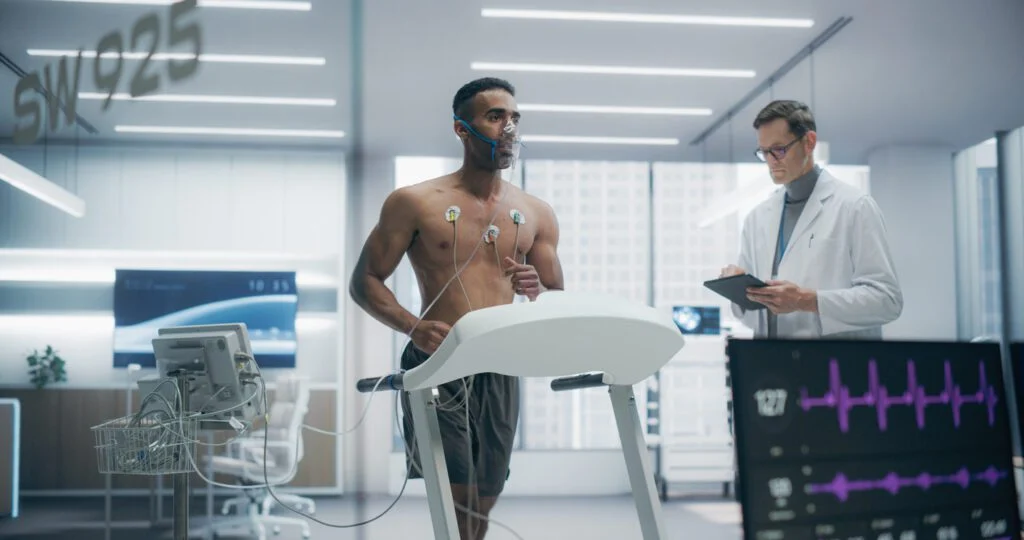
- VO2 Max: Increasingly viewed as a "gold standard" for functional aging, VO2 max measures the body’s ability to utilize oxygen during intense exercise. Data shows a strong inverse correlation between VO2 max and all-cause mortality.
The "Free" Biomarkers: Self-Assessment Without the Price Tag
You do not need a million-dollar budget or a proprietary blood test to assess your longevity. Several scientifically validated, low-cost assessments can provide actionable data on your physical decline or resilience:
The Sitting-Rising Test (SRT)
This test evaluates balance, mobility, and strength. To perform it, cross your legs and lower yourself to the floor, then stand back up without using your hands or knees for support. Difficulty performing this maneuver is strongly linked to higher risks of cardiovascular mortality in middle-aged and older adults.
Grip Strength
Handheld dynamometers are inexpensive, and even a simple "tennis ball squeeze" test can be revealing. Weak grip strength is a potent predictor of future frailty, difficulty with daily activities, and overall longevity.
Balance and Stability
The ability to stand on one leg for 10–60 seconds (depending on age) is a powerful indicator of neurological and muscular health. A decline in balance is often a precursor to falls, which are a leading cause of injury-related mortality in the elderly.
Fatigability
Using the Pittsburgh Fatigability Scale, individuals can track how "worn out" they feel after daily tasks. High scores on this scale serve as an early warning sign for underlying health issues, including metabolic disorders or chronic inflammation.
Official Responses and Medical Perspectives
The medical community remains cautious. While preventative care is vital, many physicians argue that "bio age" is a marketing term rather than a standard clinical diagnosis.
The primary concern among health professionals is the "hard sell." Many commercial testing kits are bundled with subscriptions to proprietary supplements that lack rigorous, long-term clinical validation. Furthermore, experts warn that biological age is not uniform; your liver may be aging faster than your heart, and a single test cannot capture this nuance.
Standard medical practice still favors traditional, evidence-based screenings:
- Lipid Panels: Monitoring Apo B, LDL, and triglycerides remains the most effective way to prevent cardiovascular disease.
- Glucose and HbA1c: Essential for tracking metabolic health and diabetes risk.
- DEXA Scans: The gold standard for assessing bone mineral density, which is critical for preventing fractures that significantly decrease life expectancy in later years.
Implications: Moving from Data to Action
The most significant danger of the current bio-age craze is the "data-only trap." If a test reveals you are aging faster than you’d like, but you don’t adjust your lifestyle, the data is useless.
True longevity is not achieved through snapshots of blood work; it is built on the "boring" foundations of health:
- Consistency in Movement: Regular, high-intensity and resistance training.
- Nutritional Density: Minimizing ultra-processed foods in favor of whole, plant-forward nutrition.
- Sleep Hygiene: Prioritizing 7–9 hours of quality sleep, which is non-negotiable for cellular repair.
- Stress Management: Mitigating the chronic cortisol spikes that accelerate cellular wear.
Conclusion: A Tool, Not a Destination
If you decide to invest in commercial bio age testing, treat the results as a starting point—not a verdict. Use the data to hold yourself accountable for the "big rock" lifestyle changes that have been proven to work: exercising, eating well, sleeping, and managing stress.
If you are a health professional, the rise of these tests represents an opportunity to guide clients toward evidence-based habits. By focusing on behavior change, stress management, and sleep, you can help clients achieve the "age reversal" they seek without the need for expensive, unproven, or extreme interventions.
In the end, you don’t need a billionaire’s bank account to slow the clock. You need the discipline to perform the foundational habits that science has championed for decades. Your body is a reflection of your daily actions; ensure those actions are moving you in the right direction.
References
For a comprehensive list of the studies regarding muscle strength, grip strength, VO2 max, and DNA methylation cited in this discussion, please visit the original research databases at NIH.gov or consult with your primary care physician to review your specific biomarker profile.