








By Jackie Keating, LCSW
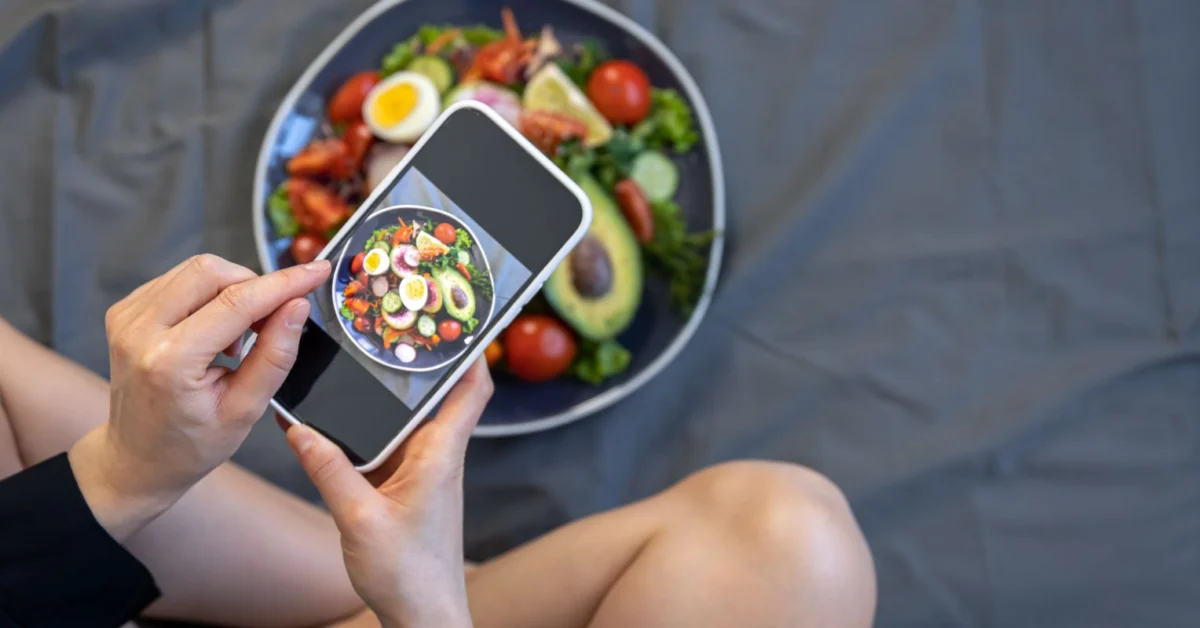
It is a familiar Sunday night ritual: you are lying in bed, the blue light of your smartphone illuminating your face as you scroll through social media, seeking a moment of digital escapism. Within minutes, the algorithm delivers a curated reality. An influencer appears in a “What I Eat in a Day” video, showcasing a series of low-carb, calorie-restricted meals that appear both aesthetically perfect and suspiciously sparse. Swipe again, and a different influencer is humorously documenting a night of heavy drinking, while a “relatable” parent posts a meme about needing wine to survive the stresses of child-rearing. Finally, a targeted ad for a fitness program flashes across your screen, promising that you can “fix your life” in three simple, transformative steps.
The pressure is relentless. The next morning, a colleague discusses a restrictive new diet, a friend texts about “getting summer-ready,” and a celebrity makes headlines for a trendy, highly specific plant-based regimen. These messages are not merely incidental; they are the pervasive, digital manifestation of modern diet culture—a force that has woven itself into the very fabric of our online lives.
The Mechanics of Diet Culture in the Digital Age
Social media was designed to foster connection, yet it has simultaneously become the primary engine for propagating unrealistic beauty ideals and toxic dietary narratives. Diet culture, which markets itself under the guise of “wellness” and “self-care,” often delivers the opposite of health: it breeds shame, chronic guilt, and pervasive anxiety regarding body image and food choices.
The wellness industry has exploded into a global behemoth, with market reports indicating it reached $160 billion in 2024 and is projected to soar to $360 billion by 2034. This financial incentive drives an ecosystem of digital creators who profit by exploiting user insecurities. By demonizing specific food groups, promoting dangerous “hacks,” and fat-shaming those who do not adhere to the latest trend, these influencers create a false equivalence between physical appearance and personal happiness. The underlying message is seductive: if you mirror their habits, you will achieve their life.
In reality, the “perfect” images on our feeds often mask a darker truth. Behind the polished aesthetics lie lives frequently defined by extreme caloric restriction, compulsive fasting, and high levels of psychological distress. The data is sobering: nearly 46% of teens aged 13–17 report feeling significantly worse about themselves after engaging with social media. Furthermore, research from the REACH Institute (2025) suggests that individuals spending more than three hours a day on social media are twice as likely to develop clinical eating disorders compared to those with lower screen time.
The Intersection of Eating Disorders and Substance Use
While eating disorders (EDs) and substance use disorders (SUDs) may appear distinct to the casual observer, they are deeply linked through the psychology of coping. Both disorders often emerge as maladaptive attempts to manage unaddressed stress, trauma, emotional volatility, or a desperate need for control.
The National Eating Disorders Association (NEDA) reports that approximately 50% of individuals struggling with an eating disorder also misuse alcohol or other substances. This is not a coincidence; it is an interdependent relationship. Emerging research by Xi and Galaj (2025) underscores that each condition can act as a catalyst for the other, creating a cycle of physiological and psychological degradation.
Social media platforms like TikTok and Instagram play a central role in this intersection by simultaneously glamorizing extreme dietary restriction and normalizing alcohol and drug use as “necessary” coping mechanisms for the stresses of adulthood. When a platform normalizes both the suppression of appetite and the use of substances to “take the edge off,” the threshold for sliding into harmful behavior is drastically lowered. For many, this transition occurs almost invisibly, masked by the cultural acceptance of “wine culture” and “fitness culture.”
A Chronology of the Crisis
The rise of this crisis can be traced alongside the evolution of the smartphone and the democratization of content creation:
- 2010–2015: The Rise of the “Fitspo” Era: As Instagram grew, the “fitspiration” movement took hold. This era shifted the focus from simple weight loss to muscular, lean perfection, setting the stage for the commodification of wellness.
- 2016–2020: The Influencer Industrial Complex: During this period, the influencer economy matured. “What I Eat in a Day” videos became a staple of YouTube and Instagram, normalizing disordered eating patterns under the banner of “clean eating.”
- 2021–2023: The Pandemic Effect: Global lockdowns led to a massive surge in social media usage. Simultaneously, reports of eating disorders and substance misuse among adolescents and young adults skyrocketed as physical isolation increased reliance on digital validation.
- 2024–Present: The Algorithmic Normalization: Today, AI-driven algorithms prioritize content that keeps users engaged, which often means promoting polarizing, extreme, or body-focused content. The line between wellness advice and predatory marketing has effectively dissolved.
Supporting Data and Clinical Perspectives
The clinical implications of these trends are catastrophic. Anorexia nervosa maintains the highest mortality rate of any mental health condition, and the presence of a co-occurring substance use disorder significantly elevates this risk. A landmark study by Mellentin et al. (2022) found that individuals with both an ED and a substance use disorder are nearly four times more likely to face fatal consequences compared to those with an eating disorder alone.
The Substance Abuse and Mental Health Services Administration (SAMHSA) notes that the high rates of suicide, psychiatric comorbidities, and mood disorders among this demographic highlight a systemic failure in current treatment models. Despite the obvious biological and behavioral overlap, modern healthcare remains largely fragmented. Patients are frequently forced to navigate a “game of whack-a-mole,” where they are treated for one disorder in a vacuum, only for the other to manifest or worsen once they enter a different treatment facility.
The Call for Integrated Care
The current model of care is often insufficient because it fails to address the root causes of these co-occurring disorders. Effective treatment must be integrative, acknowledging that an individual’s relationship with food and substances is often inextricably linked to their environment, their cultural influences, and their emotional regulation strategies.
Experts in the field are now calling for a paradigm shift. Clinical care must address both EDs and SUDs simultaneously, rather than separating them into distinct treatment silos. This requires a trauma-informed approach that helps patients develop healthy coping mechanisms to replace the restrictive or substance-seeking behaviors they have adopted.
Implications for the Future
We are living in a world that profits from our collective insecurity. The wellness market is not merely selling products; it is selling an identity that relies on the perpetual feeling that we are “not enough.” To combat this, we must promote greater media literacy, hold platforms accountable for the content their algorithms amplify, and demand a healthcare system that treats the whole person rather than just the symptoms.
The journey toward recovery begins with the realization that health is not a commodity to be purchased via a 3-step program or a restricted meal plan. It is a state of being that is unique to every individual. As we continue to navigate the digital landscape, the most radical act of self-care may be to step away from the screen, silence the influencers, and reclaim our autonomy from a culture that thrives on our struggle.
References
- Dane, A., & Bhatia, K. (2023). The social media diet: A scoping review to investigate the association between social media, body image and eating disorders amongst young people. PLOS Global Public Health.
- Finklea, K. (2025). The wrong influence: The link between diet culture and eating disorder. HopeHealth.
- Gordon, K. H., et al. (2023). Co-occurring substance use and eating disorders. Psychiatric Times.
- Hambleton, A., et al. (2022). Psychiatric and medical comorbidities of eating disorders. Journal of Eating Disorders.
- Mellentin, A. I., et al. (2022). The impact of alcohol and other substance use disorders on mortality in patients with eating disorders. The American Journal of Psychiatry.
- Pierce, S., Joy, J. M., & Wiss, D. A. (2025). Abstinence-based treatment of comorbid eating disorders and ultra-processed food addiction. Frontiers in Psychiatry.
- SAMHSA (2025). Breaking the silence: What everyone should know about eating disorders.
- The REACH Institute (2025). How social media is impacting teens.
- Xi, Z.-X., & Galaj, E. (2025). Novel potential pharmacological approaches in treating eating disorders comorbid with substance use disorders. Biomedicine & Pharmacotherapy.