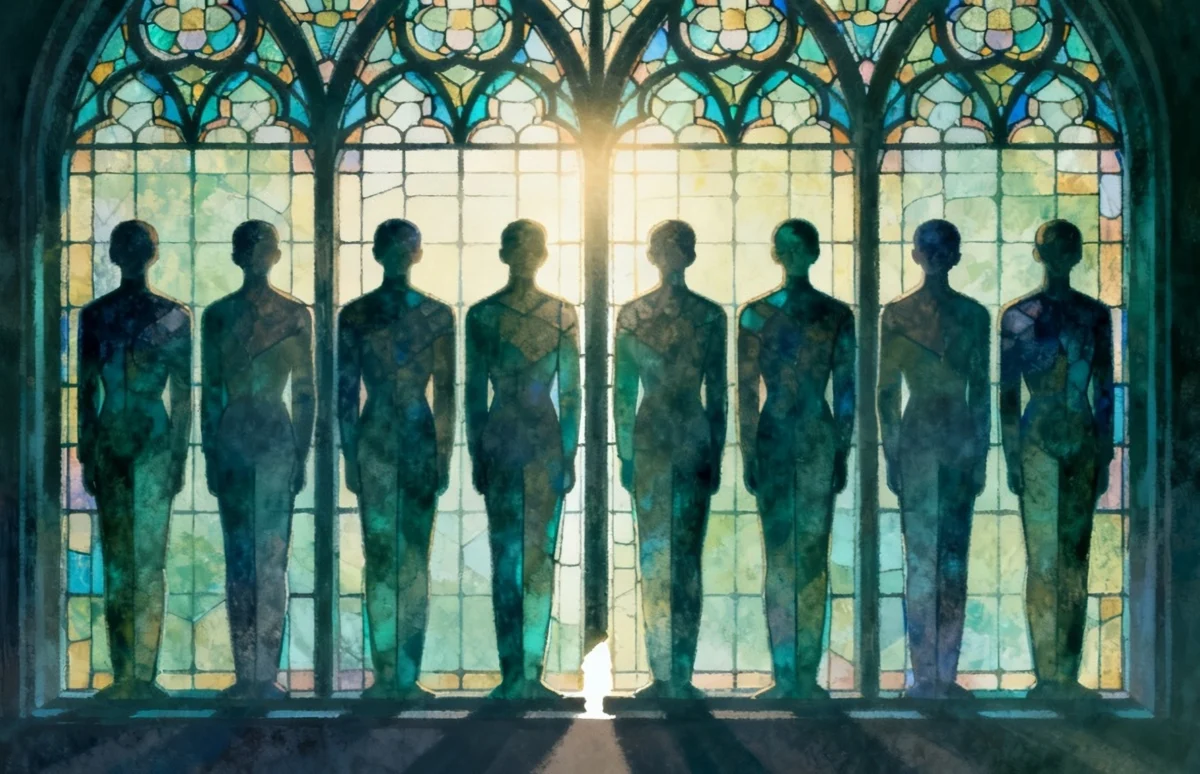
The psychological blueprint of a cult is defined by a precise and devastating mechanism: the monopolization of power and the systematic control of the individual. By isolating members, enforcing rigid moral binaries, and pathologizing boundary-setting, these structures reframe submission as safety and dissent as a psychological or spiritual defect. While often associated with fringe religious movements, these dynamics frequently permeate mainstream institutions.
In a recent analysis of systemic gaslighting, a veteran social worker and therapist has come forward to detail how the Christian church and the American psychiatric system often function as "coercive psychological traps." Her journey reveals a disturbing mirror between the authoritarian church and the rigid medical model of mental health—both of which, she argues, demand the surrender of autonomy to maintain institutional authority.
Main Facts: The Monopolization of the Mind
The core of the argument posits that "cult dynamics" are not exclusive to secretive or unorthodox groups. Instead, they are embedded in the very fabric of societal systems that govern how we perceive morality and mental wellness.
For many practitioners working within the intersection of faith and therapy, the realization is stark: the church and the psychiatric establishment often operate on the same premise. Both systems tend to isolate the individual as a problem to be "fixed" or "cleansed," demanding compliance while eradicating "symptoms" such as unhappiness or dissent. By framing human struggles as personal spiritual failures or internal chemical imbalances, these institutions absolve themselves of the responsibility to address the broken, oppressive environments that cause the distress in the first place.
The narrative of the "Christian therapist" serves as a case study in this systemic overlap. It highlights how spiritual warfare is frequently used in the same manner as diagnostic labeling: as a tool to police behavior, enforce conformity, and frame existential distress as an individual defect rather than a sane response to a fractured world.
Chronology: A Lifelong Journey of Compliance and Rebellion
The Early Foundation: "Creaster" Catholicism
The subject’s experience began in the Catholic Church, where her family were "Creasters"—attending Mass only on Christmas and Easter. Despite this sporadic attendance, the weight of the institution’s rules was felt early. Sunday school was a mandatory requirement, even as her parents remained at home, illustrating a common cultural phenomenon: the desire to provide children with a "home base" or a moral anchor, even if the parents themselves are disconnected from the practice.
The College Years: The Drive for Social Affiliation
In early adulthood, the subject sought out Christian groups on campus, driven not by theological conviction but by the comfort of familiarity. This behavior aligns with Social Attachment Theory and Evolutionary Psychology, which suggest that humans possess a biologically ingrained urge to belong to a "pack" for survival. This "herd mentality" is often preay upon by religious institutions to ensure member retention. During this period, the subject began to internalize harmful teachings: that being a "good person" was secondary to public declarations of faith, and that her physical disability and childhood trauma were part of a "divine plan."
The Professional Trap: The Christian Clinical Practice
As her career as a social worker progressed, the subject found herself embedded in a private Christian therapy practice. This environment merged religious paranoia with clinical practice. Staff meetings involved "spiritual warfare" formulations where "The Enemy" (Satan) was cited as the cause of non-compliant behavior.
A pivotal moment occurred during an after-hours meeting where clinicians were instructed not to support or endorse same-sex relationships, regardless of professional ethics. The subject reports being gaslit into conceding her ethical concerns to remain "in the fold." For seven years, she marketed herself as a "Christian therapist," a label that eventually pigeonholed her practice and forced her to choose between the "status quo" of the church and the well-being of her clients.
The Breaking Point: Divorce and Departure
The collapse of the subject’s marriage became the catalyst for her exit. Within the "pack," divorce was viewed as a primary sin, and the reasons for the separation—including feeling unsafe at home—were ignored in favor of pathologizing the woman seeking the exit. Upon leaving the marriage and the practice, the subject faced significant blowback, including accusations that she was abandoning her faith. This final act of "professional rebellion" marked the beginning of her journey toward authentic practice.
Supporting Data: The Psychology of Belonging and Trauma
The intersection of faith and mental health is increasingly scrutinized through the lens of Religious Trauma Syndrome (RTS), a term coined by Dr. Marlene Winell. RTS describes the condition experienced by people who are struggling with leaving an authoritarian, dogmatic religion.

Evolutionary Mechanisms
The subject’s reliance on the "herd" is supported by Social Attachment Theory. Humans have evolved to prioritize social affiliation because, historically, being cast out of the tribe meant death. Authoritarian systems—whether religious or medical—exploit this vulnerability by threatening "excommunication" or "non-compliance" labels, which trigger deep-seated survival fears.
The Pathologization of Dissent
Data from the "Mad in America" community suggests that the medical model of psychiatry often mirrors religious dogma. The DSM-5 (Diagnostic and Statistical Manual of Mental Disorders) functions as a "rigid manual" that reduces complex human suffering to pathology. When a person’s distress is labeled as a "chemical imbalance" rather than a response to systemic poverty, racism, or abuse, the system performs the same function as a church blaming "sin" for a member’s depression. Both protect the status quo by focusing on the individual’s "defect."
Official Responses and Institutional Perspectives
While the individual’s narrative focuses on the harm caused by these systems, institutional responses typically fall into two categories:
The Theological Defense
Mainstream Christian organizations often argue that their structures provide necessary moral clarity and community support. They maintain that "divine plans" and "biblical counseling" offer a framework for meaning that secular psychology cannot provide. However, critics argue that when these frameworks are used to suppress LGBTQ+ identities or ignore domestic abuse, they violate the fundamental "do no harm" principle of healthcare.
The Psychiatric Defense
The American Psychiatric Association (APA) generally defends the medical model as a means of providing standardized care. They argue that diagnostic labels are essential for insurance reimbursement and targeted treatment. However, a growing movement of "Critical Psychiatry" and social workers argues that this model is too narrow and often ignores the "Social Determinants of Health"—the external factors that cause internal distress.
Implications: De-Centering Institutions for True Healing
The implications of this therapist’s journey are profound for the future of mental health care. Her transition from a "Christian therapist" to a practitioner who views distress as a "sane response to a broken world" represents a paradigm shift.
1. Professional Rebellion
For clinicians, the primary implication is the need to prioritize ethics over institutional "packs." This involves questioning whether clinical protocols are designed to help the patient thrive or simply to make them "manageable" and "compliant" for society.
2. Redefining Spirituality
The subject distinguishes between "faith" and "the church." She argues that spirituality can be a healthy guide for an authentic life, but only when it is stripped of the "weaponization of power and control." True healing requires de-centering institutions that claim to be the sole arbiters of truth or normalcy.
3. Addressing Moral Injury
The "moral injury" caused by living inauthentically within a cult-like system requires specific therapeutic attention. Recovery involves unlearning the habit of "masking"—the process of portraying a false self to remain in good standing with a group.
4. Systemic Advocacy
Finally, the narrative suggests that the goal of therapy should not be to "fix" the individual so they can return to a toxic environment. Instead, the focus must shift toward changing the environment itself. Whether it is the church, the workplace, or the healthcare system, true wellness is impossible as long as dissent is treated as a disease.
As the subject concludes, "Walking away wasn’t just a change of faith; it was a refusal to comply with a system designed to keep me manageable." Her story serves as a call to action for both providers and patients to recognize the "invisible cults" within mainstream society and to reclaim the autonomy necessary for genuine healing.