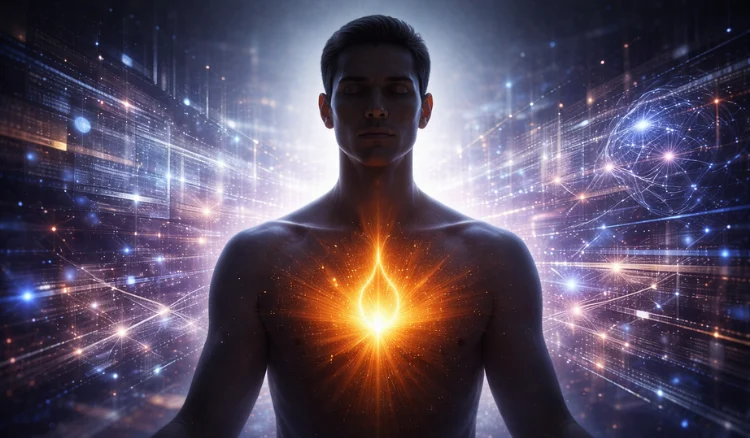










In the modern landscape of wellness, where health is often reduced to blood panels and caloric intake, the ancient science of Ayurveda offers a more profound perspective. It views the human body not merely as a biological machine, but as a dynamic, energetic reflection of the cosmos itself. At the heart of this system lie the doshas—the foundational biological organizers that govern everything from our temperament to our cellular structure.
The Elemental Blueprint: What Are the Five Elements?
To understand Ayurveda, one must first understand the Pancha Mahabhuta, or the five great elements: ether (space), air, fire, water, and earth. Ayurveda posits that these elements are the building blocks of all matter, both in the macrocosm (the universe) and the microcosm (the human body).
The term "dosha" itself is derived from the Sanskrit root dush, which shares a linguistic lineage with the English prefix "dys-," as in dysfunction. While this may suggest a negative connotation, in Ayurvedic philosophy, a dosha is primarily a protective barrier—a mechanism that bridges the gap between the infinite cosmos and the finite human form.
The three doshas—Vata, Pitta, and Kapha—are the functional manifestations of these five elements:
- Vata (Ether + Air): Governs movement, communication, and the nervous system. It is the force of flow and change.
- Pitta (Fire + Water): Governs transformation, digestion, and metabolism. It is the force of heat and intellect.
- Kapha (Water + Earth): Governs structure, stability, and lubrication. It is the force of cohesion and grounding.
These three forces are ubiquitous, present in every cell and tissue of the body. They act as a sophisticated surveillance system, providing premonitory signs—subtle imbalances—long before a disease manifests in physical form.
Chronology: From Ancient Roots to Modern Understanding
The study of doshas is not a modern fad; it is a legacy spanning thousands of years.
The Vedic Foundations
In ancient India, Vedic scholars observed that the human experience was inextricably linked to the cycles of nature. They noted that just as wind moves leaves (Vata), fire cooks food (Pitta), and water sustains the earth (Kapha), these same principles operate within the human body.
The Parallel of the Humors
Interestingly, this concept of "biological organizers" is not unique to Eastern medicine. Hippocrates, the father of modern medicine, developed a remarkably similar system known as the "four humors": blood, yellow bile, black bile, and phlegm. Hippocrates viewed these humors as the waste products of the five elements, essentially serving as containers for the non-physical essences that sustain life. Both Ayurveda and early Western medicine recognized that without these governing forces, human existence would be physically impossible.
The Genetic Blueprint: Prakruti and Vikruti
Every individual is born with a unique genetic "constitution" known as Prakruti. This is the specific ratio of Vata, Pitta, and Kapha determined at the moment of conception, influenced by the parental and ancestral genetic information passed down to us.
The Ideal State: Prakruti
Well-being is defined in Ayurveda as the state of perfect balance between the doshas, aligned with this original genetic code. Most individuals are born with one or two dominant doshas, creating a unique physiological and psychological signature.
The Evolving Reality: Vikruti
While our Prakruti remains constant, our daily state of health—known as Vikruti—is in a constant state of flux. Throughout our gestational development and our subsequent lives, our doshas are "bombarded" by external and internal influences:
- Temporal Cycles: Changes in the time of day and the passing of the seasons.
- Developmental Stages: The transition from childhood to adulthood and into aging.
- Environmental Factors: The geography of where we live and the climate.
- Lifestyle & Diet: Our relationships, emotional state, and dietary choices.
- Cosmic Influence: Even the position of the planets and luminaries are believed to exert subtle pressure on the balance of our doshas.
When life happens, our current state (Vikruti) shifts away from our baseline (Prakruti). Disease, in this context, is simply the manifestation of an extreme divergence between these two states.
The Mechanics of Imbalance: Why We Get Sick
In a balanced state, the doshas work in harmony, leading to proper digestion, clear comprehension, well-formed tissues, and a joyful mind. However, when digestion is compromised, the body’s "intelligence" falters, and the doshas begin to lose their equilibrium.
The Migration of Disease
When a dosha is suppressed—falling below its necessary level—the body suffers a severe, often life-threatening depletion. Conversely, when a dosha becomes excessive, it doesn’t stay confined to its "home site" in the gastrointestinal tract. Instead, it overflows, entering the circulatory system and migrating to "weak spaces" (khavaigunya) in the body. Once lodged in these weak points, the excess dosha alters the tissue structure, eventually leading to clinical disease.
Supporting Data: The Need for Individualized Wellness
Modern research into personalized medicine is finally catching up to these ancient concepts. While standard medicine focuses on population-wide averages, Ayurveda advocates for the "individual paradigm."
Reading "Your Own Book"
To maintain health, one must learn to read their own physiological "book." This involves recognizing when one’s unique constitution is shifting due to environmental stressors. For instance, a person with a Vata-dominant constitution may find that the dry, cold air of autumn triggers anxiety or joint pain—classic signs of Vata aggravation. By recognizing these premonitory signs early, one can implement lifestyle adjustments to counteract the excess before it becomes a systemic illness.
The Role of Conscious Rhythm
Unlike plants and animals, which possess an innate, instinctual sync with the cycles of the earth, humans have evolved to a level of consciousness that often disrupts our natural rhythm. We stay up past our circadian windows, eat out of season, and consume processed foods that bear little resemblance to the elements from which we are built. Ayurveda suggests that if we wish to thrive, we must consciously construct rhythms that mirror the cosmos.
Implications: Seasonal Cleansing and Future Health
The most significant implication of Ayurvedic theory is that health is not a passive state but an active, daily practice.
Seasonal Cleansing
One of the most effective tools for maintaining balance is seasonal cleansing. Because doshas naturally accumulate at specific times of the year, periodic "detoxification" allows the body to purge the excess that has built up through daily living. This is not a radical starvation diet, but a deliberate process of aligning the internal environment with the external shifts of the seasons.
The Mind-Body Connection
Perhaps the most profound insight is that the doshas govern not just our digestion, but our awareness. When the doshas are balanced, the mind is "well-contained in awareness." There is a sense of clarity, happiness, and peace. Ayurveda teaches that by tending to our biological organizers, we are not just fixing a body; we are creating the necessary conditions for the mind to exist in a state of joy and love.
Conclusion: Returning to the Source
The study of the doshas is a journey of self-remembrance. In a world that is increasingly loud and disconnected, the Ayurvedic approach invites us to look inward and acknowledge the five elements that make up our very fabric. By understanding our unique Prakruti, respecting the inevitability of Vikruti, and proactively managing the rhythms of our lives, we can navigate the complexities of modern existence with greater resilience.
Ultimately, the doshas remind us that we are not observers of nature; we are participants in it. When we protect the balance of these forces, we protect our well-being, ensuring that our inner microcosm remains in a state of harmonious resonance with the macrocosm. To master the doshas is to master the architecture of our own lives.