










Published: May 7, 2026
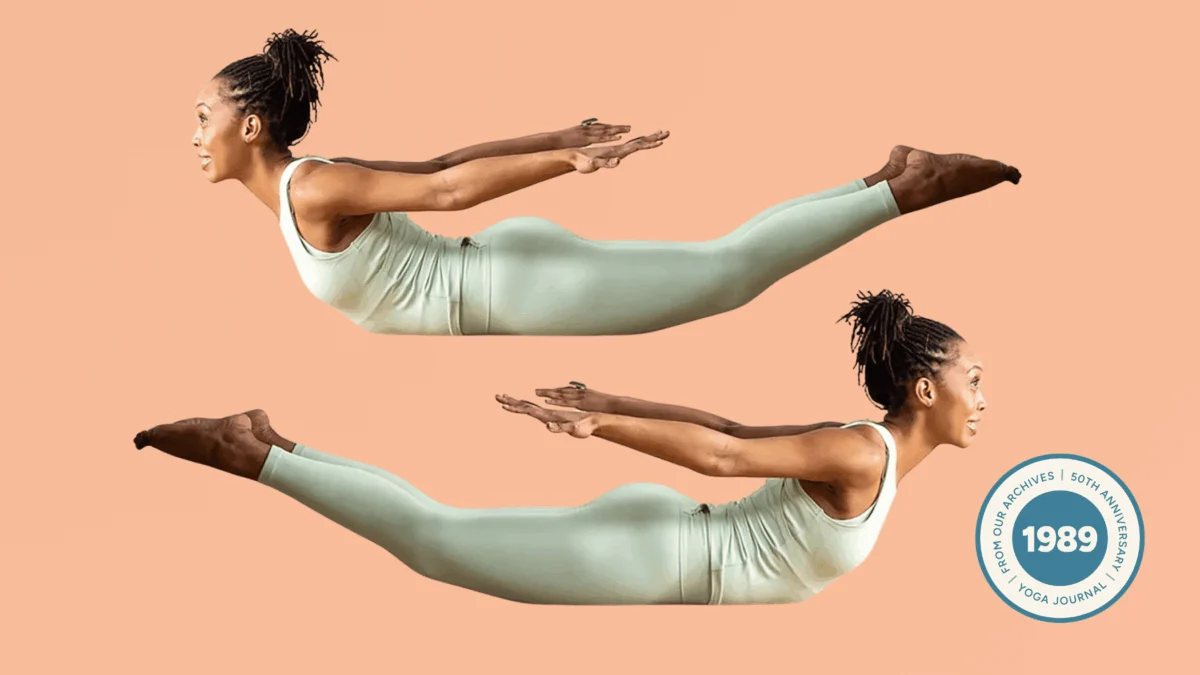
Since its initial publication in the September-October 1989 issue of Yoga Journal, the study of Salabhasana (Locust Pose) has remained a cornerstone of structural yoga practice. As part of our ongoing archival series, we revisit this foundational exploration of movement. By dissecting the pose into its constituent elements—the activation of the posterior chain, the engagement of the triceps, and the stabilization of the pelvis—practitioners can discover a roadmap to a healthier, more liberated spine.
The Foundation: Understanding the Mechanics of Locust Pose
At its core, Salabhasana is not merely an act of lifting; it is a complex coordination of the buttocks, back thighs, upper back, and inner thighs. When performed with precision, these muscle groups act in concert to create space within the vertebral column.
The primary objective of the pose is to cultivate a "longitudinal stretch" that facilitates the health of the spine. Unlike more aggressive backbends that can compress the lumbar region, Salabhasana emphasizes the elongation of the torso, acting as a corrective mechanism for the sedentary habits of modern life.
The Initial Variation: Building Strength in the Posterior Chain
To safely approach the full expression of the pose, beginners should start by isolating the legs. By lying prone with arms extended and palms facing upward, one creates a neutral starting position. Pressing the tops of the feet into the floor and lifting one leg at a time allows for the development of strength in the buttocks and hamstrings without overwhelming the lower back. This systematic approach ensures that the pelvis remains stabilized, preventing the hips from tilting or rotating during the lift.
Chronology and Evolution of the Practice
The practice of Salabhasana has evolved from simple floor-based repetitions to a sophisticated system involving props, partners, and anatomical awareness.
1. Tending to Lower Back Discomfort
A critical development in the history of this pose is its application as a remedy for sacroiliac (SI) joint pain. Many students find that traditional forward bends can exacerbate lower back tension. By using a bench or a wall to anchor the feet, practitioners can manually place their thumbs on the sacroiliac joints. This tactile feedback allows the practitioner to firm the buttocks—without clenching—and draw the sacrum deeper into the body. This specific alignment effectively decompresses the lumbar spine, offering a therapeutic contrast to the strain caused by excessive flexion.
2. The Art of Lifting: The Role of Support
A common hurdle in Salabhasana is the difficulty of lifting the legs effectively. Historical practice notes suggest that the use of a firm blanket roll placed under the upper thighs acts as a fulcrum. By lifting the thighbones away from the roll while simultaneously opening the chest, the practitioner learns to engage the posterior chain more efficiently. This method encourages a balanced lift, ensuring that the strain is distributed across the entire spine rather than concentrated solely in the lower back.
Supporting Data: The Vital Importance of the Triceps
One of the most profound revelations in the study of Salabhasana is the critical role of the triceps. The strength of the upper back—specifically the trapezius and latissimus dorsi—is inextricably linked to the engagement of the backs of the arms.
Strengthening the Triceps for Structural Integrity
When a student stands in Tadasana (Mountain Pose) with arms hanging loosely, the shoulders often hunch forward, causing the shoulder blades to lift away from the rib cage. By contrast, when the triceps are firmed and lengthened toward the little fingers, the shoulder blades are drawn downward and anchored against the back rib cage.

This mechanical principle is not limited to Salabhasana; it is essential for the entire canon of yoga asanas:
- Warrior Poses (Virabhadrasana I & II): Firming the triceps reduces shoulder tension and facilitates an open chest.
- Downward-Facing Dog (Adho Mukha Svanasana): Pressing the backs of the arms into the bone stabilizes the joint, allowing the practitioner to lift out of the shoulder girdle.
- Headstand (Sirsasana): The extension of the arms from the outer armpits prevents excessive weight from collapsing onto the neck.
- Shoulderstand (Sarvangasana): Lengthening the triceps toward the elbows enables the shoulders to roll under, protecting the cervical spine.
To cultivate this awareness, practitioners are encouraged to use a pole while in the prone position. With assistance, the arms are held parallel, and the weight of the torso is allowed to hang, creating a "prow of a boat" effect. This elongates the thoracic spine and conditions the muscles to sustain the pose with greater ease.
Implications for Modern Sedentary Lifestyles
In our modern age, desk work has led to a plague of "forward-rounded shoulders" and a thickened ridge of muscle at the base of the neck. The archives highlight specific, unobtrusive variations for office workers.
Addressing Shoulder Tension and Desk-Related Strain
By utilizing a door frame or an iron ring, practitioners can lean forward while holding the grip, lengthening the backs of the arms. This simple act keeps the shoulder blades flat against the ribs, counteracting the effects of hunching over a keyboard. Whether dropping the chin to stretch the neck or letting the head drop back to massage the upper back muscles, this variation serves as an essential "reset" button for the musculoskeletal system.
Further, using a chair as a support allows for a deep, controlled stretch of the shoulder joints. By resting the forearms on the seat, the practitioner creates space in the shoulders, lengthening the front of the spine and preventing the "collapsing" sensation that often occurs in traditional backbends.

Official Guidance: Protecting the Lumbar Spine
A recurring theme in the 1989 Yoga Journal archives is the warning against the "lumbar trap." Many students, eager to increase the height of their chest, push the abdomen into the floor. This forces the lower back to bear the brunt of the movement, potentially aggravating disc issues and tightening the paraspinal muscles.
The Final Approach to Salabhasana
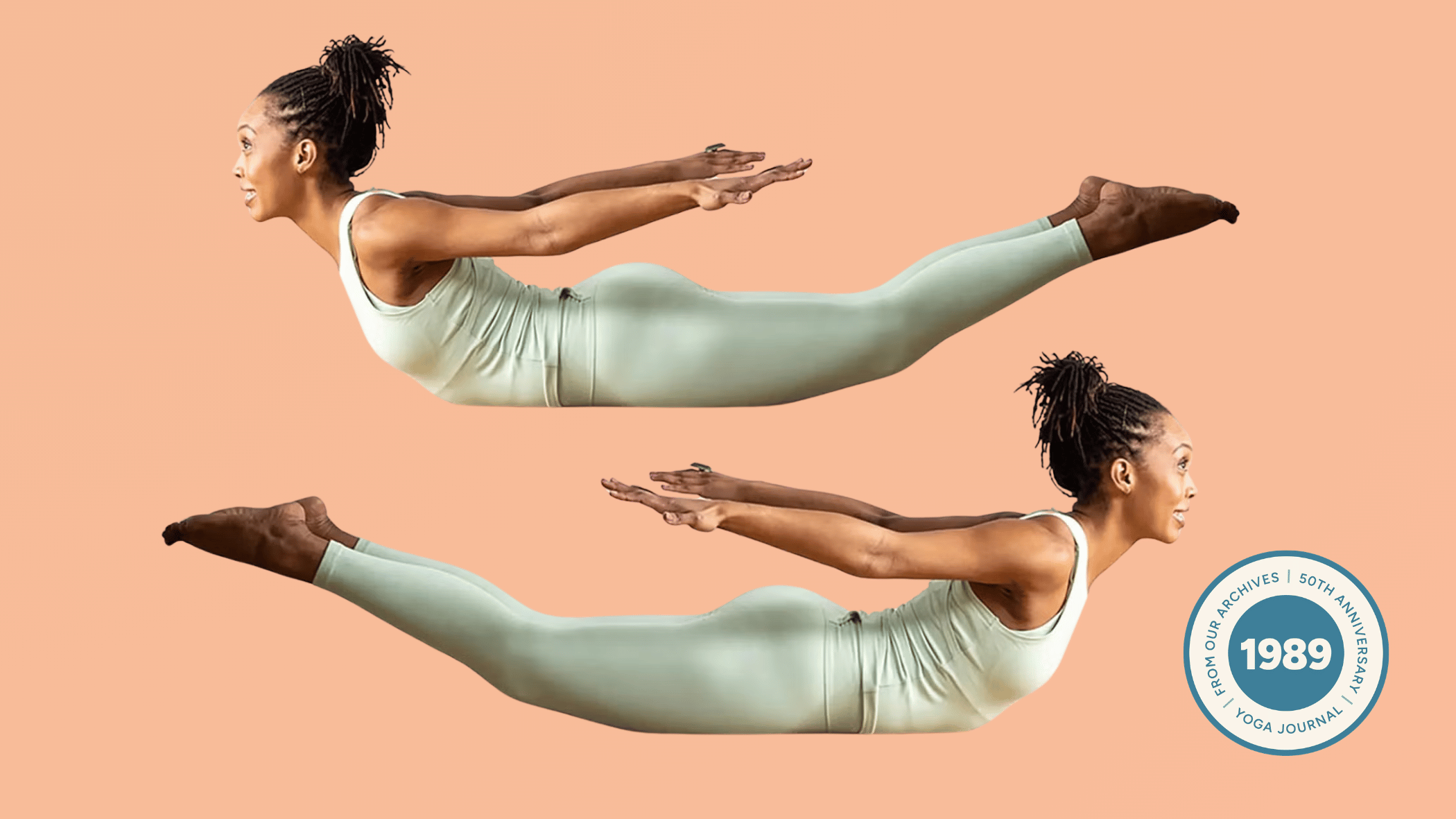
To perform the pose correctly, one must prioritize the thoracic (upper back) lift over the lumbar extension. The final, recommended technique is as follows:
- Preparation: Lie face-down with the forehead on the floor. Extend arms back with palms facing the ceiling.
- Activation: Without lifting the head, roll the shoulders back and raise the forearms until they are parallel to the floor.
- The Lift: Firm the triceps to draw the shoulder girdle up, simultaneously lifting the legs.
- Extension: Instead of throwing the head back, visualize the spine lengthening through the crown of the head.
By keeping the lower abdomen slightly drawn away from the floor, the practitioner protects the lower back and ensures the work is distributed evenly across the entire length of the spine.
Conclusion
The enduring relevance of Salabhasana lies in its ability to teach the practitioner how to work with the body’s natural architecture. Whether through the use of props like straps and blocks to engage the inner thighs, or through the diligent strengthening of the triceps to open the chest, Salabhasana serves as a profound reminder that true strength in yoga comes from alignment and awareness. By focusing on the lengthening of the spine rather than the height of the lift, the student transitions from mere exertion to a refined, sustainable practice.