Originally published in the January-February 1982 issue of Yoga Journal, this archival feature explores the profound physiological benefits of conscious relaxation—a practice more relevant today than at any point in the last four decades.
Introduction: The Prescience of the Quiet Student
When I began teaching yoga in Austin, Texas, in 1971, I encountered an unusual student who would alter my entire perspective on the practice. Each evening, this man would enter the studio, move silently to the periphery, and lie down in Savasana (Corpse Pose). He would remain there for the entire hour. While the rest of the class engaged in vigorous asana practice, he lay perfectly still. At the end of the session, he would offer a cordial thank you and depart.
This routine continued for weeks before he eventually began participating in the physical postures. When I finally asked him why he chose to spend his time exclusively in stillness, he explained that his high-pressure career left him on the brink of burnout. Yoga, he noted, was the only environment where he felt permitted to truly "switch off." He found the mere act of listening to the class and imagining the movements of others to be profoundly soothing.
In my youthful exuberance, I initially dismissed him as an eccentric. Today, I realize he was, in fact, remarkably prescient. His intuitive understanding of his own nervous system predated the current, widespread medical acknowledgment of stress as a primary driver of chronic disease.
Chronology of a Stress Epidemic
The history of stress research has evolved significantly since the early 1980s. In the 1970s and 80s, pioneering researchers like Herbert Benson, M.D., chief of the behavioral medicine division at New England Deaconess Hospital, began to bridge the gap between ancient Eastern wisdom and Western clinical science.
Benson coined the term "the relaxation response" to describe the physiological and mental shifts that occur when we consciously move from a state of "fight or flight" to one of deep, intentional rest. According to Benson’s Wellness Workbook, the relaxation response is defined as "a physiological state characterized by a slower heart rate, metabolism, rate of breathing, lower blood pressure, and slower brain wave patterns."
Following Benson’s work, Dr. Dean Ornish, a visionary in the field of cardiovascular health, integrated yoga, meditation, and structured relaxation into his "Opening the Heart" program. His research provided the clinical data to support what yogis had known for millennia: that daily periods of deep relaxation are essential for reversing the progression of atherosclerotic heart disease and preventing future cardiac events.
Supporting Data: The Science of Psychoneuroimmunology
Modern medicine has since formalized the link between the mind and the body through the field of psychoneuroimmunology. This discipline operates on the fundamental premise that the psyche and the soma are not separate entities; they are deeply interconnected. Stress, therefore, is not merely a mental construct but a whole-organism phenomenon.
The tension associated with stress is frequently stored in the musculoskeletal system, creating a physical "memory" of past traumas or sustained pressures. When we employ deep relaxation techniques—such as those described in this article—we are not merely "resting"; we are actively signaling the nervous system to release this stored tension.
Furthermore, deep relaxation has a profound impact on circulation. Chronic tension constricts blood flow; conversely, the release of this tension improves systemic circulation, which is a hallmark of physical health. It is vital to distinguish this state from sleep. While sleep often involves dreaming and, occasionally, nocturnal muscular tension, the deep relaxation of yoga is a state of "conscious rest," where there is no movement, no effort, and the brain remains profoundly quiet yet aware.
Implications for Modern Wellness
In our contemporary, high-speed culture, the ability to consciously relax is a skill that is rarely taught in academic or professional settings. We are trained to achieve, to produce, and to process, but we are seldom trained to disconnect.
The implication for the average individual is clear: if we do not intentionally build "off-ramps" into our daily lives, our bodies will eventually force a stop through illness or burnout. The following 10 asanas, when practiced with proper support, offer a pathway to systemic recovery.
The Essential Toolkit for Relaxation
To practice these poses effectively, one must move away from the "no pain, no gain" mentality. These are not stretches; they are methods of opening. You will need:
- Five to seven firm wool blankets.
- A yoga belt (6 feet long) with an adjustable buckle.
- A bolster (approx. 2′ x 15" x 6").
- A thin pillow and a smooth cloth for the eyes.
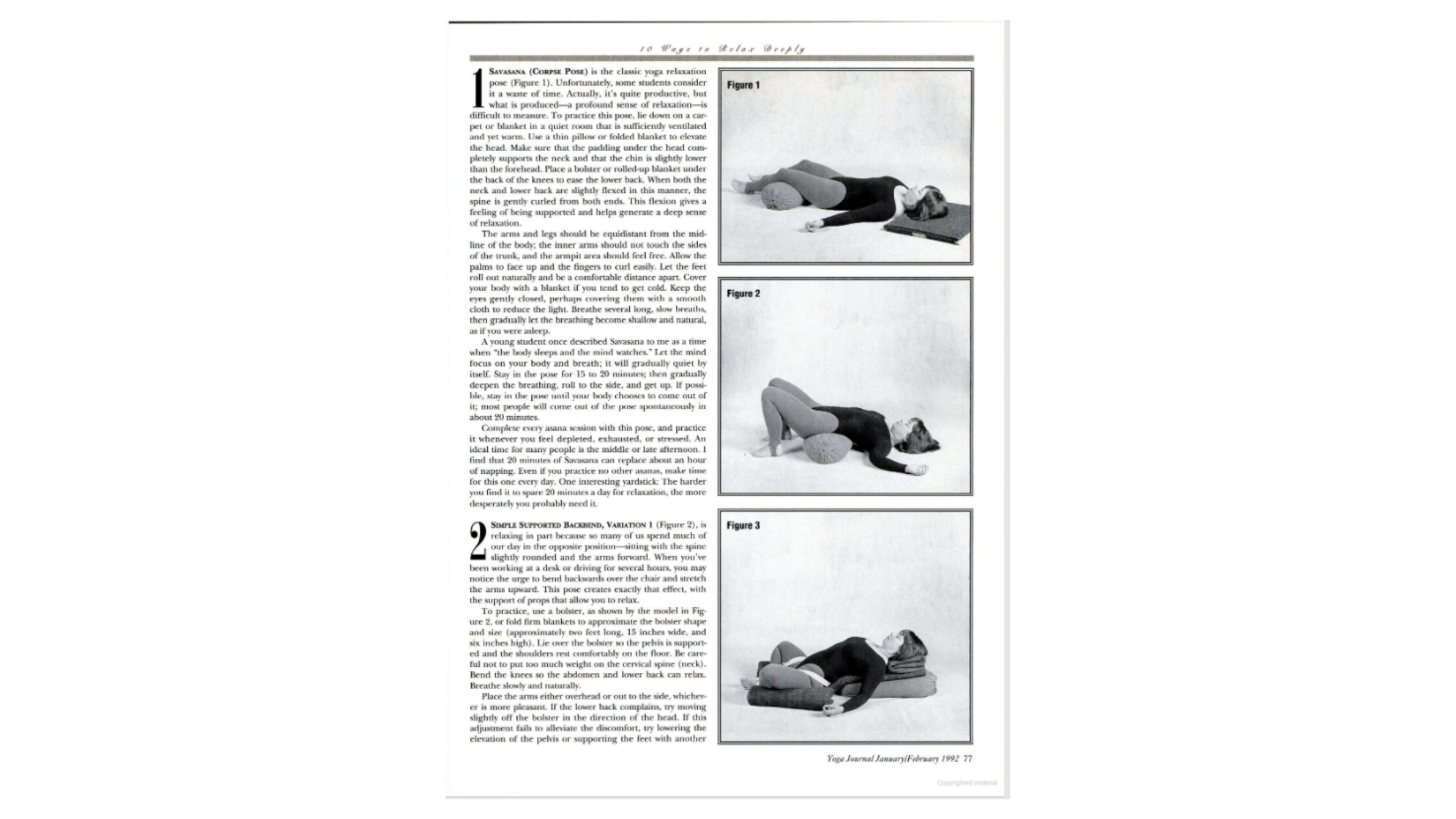
1. Savasana (Corpse Pose)
Often misunderstood as a "break" rather than a pose, Savasana is the cornerstone of yoga practice. By elevating the head and placing a bolster under the knees, you allow the spine to curl gently from both ends, relieving pressure on the lower back. Stay for 15–20 minutes. If you find you cannot spare this time, that is exactly why you need it most.
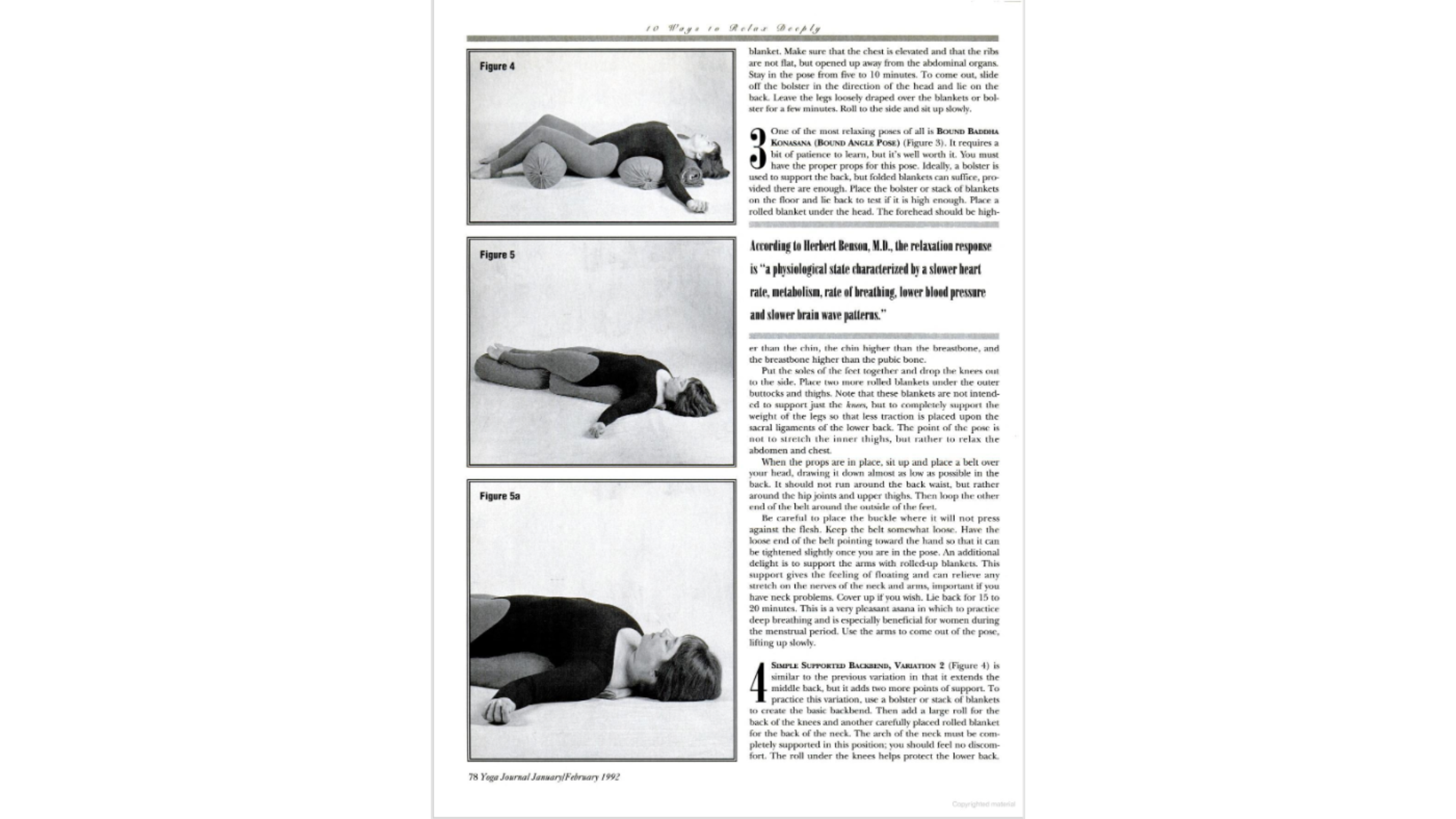
2. Simple Supported Backbend, Variation 1
Designed to counteract the "hunched" posture of desk work, this pose opens the chest and ribs. By lying over a bolster with the pelvis supported, the abdominal organs are liberated from the compression of sitting.
3. Bound Baddha Konasana (Reclining Bound Angle Pose)
This pose is a powerful restorative tool, particularly for women. By supporting the thighs with blankets and using a belt to maintain the position, you remove all traction from the sacral ligaments, allowing the abdomen and chest to soften.
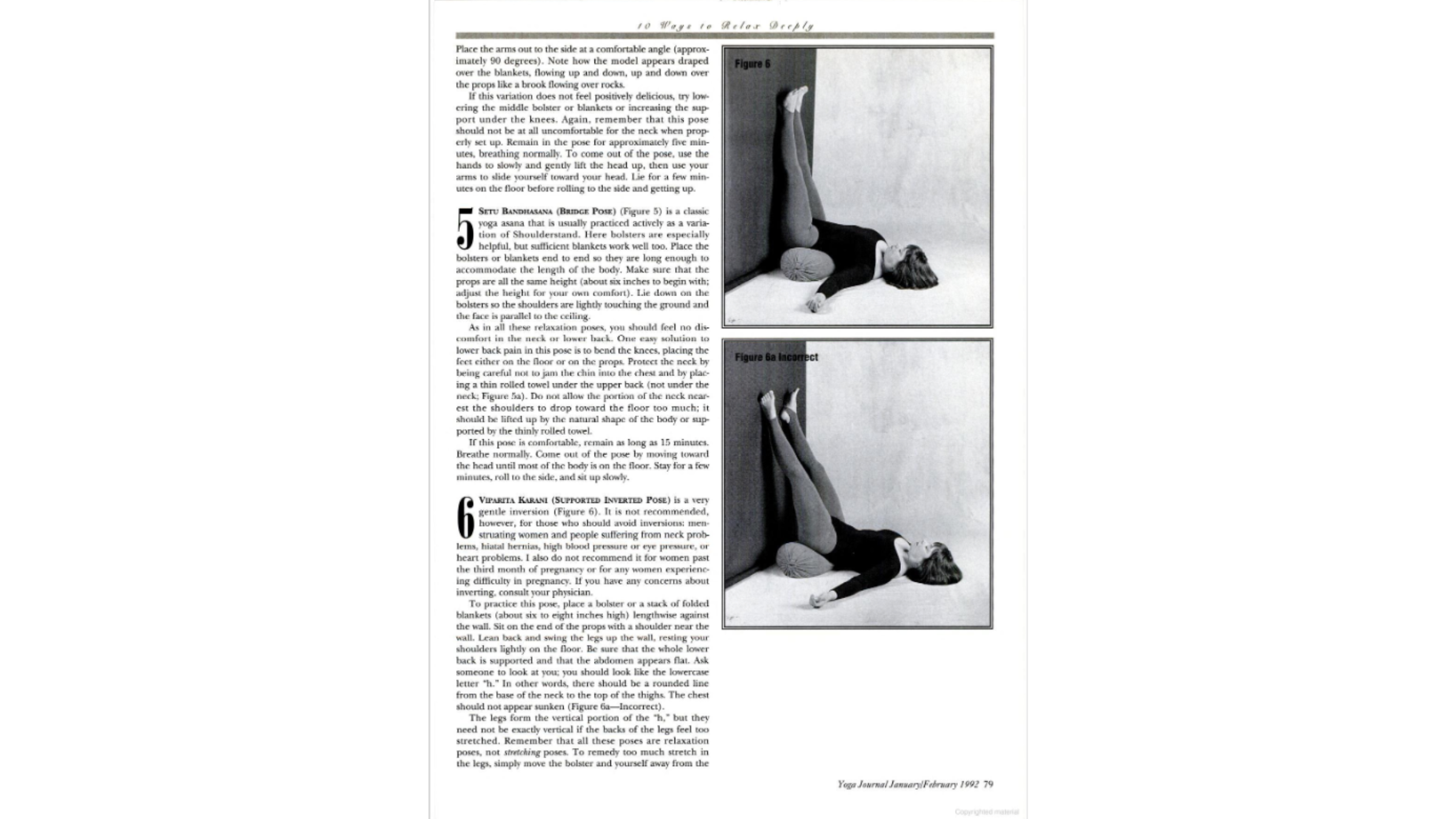
4. Simple Supported Backbend, Variation 2
Building on the first variation, this pose adds support for the knees and neck. It encourages a "flowing" sensation, as if the body were water moving over stones. It is an ideal pose for calming the sympathetic nervous system.
5. Setu Bandhasana (Bridge Pose)
When practiced with bolsters, Bridge Pose becomes a gentle inversion that encourages blood flow toward the heart. By ensuring the chin remains in a neutral relationship with the throat, one can hold this position for up to 15 minutes to facilitate profound hormonal and muscular balance.
6. Viparita Karani (Supported Inverted Pose)
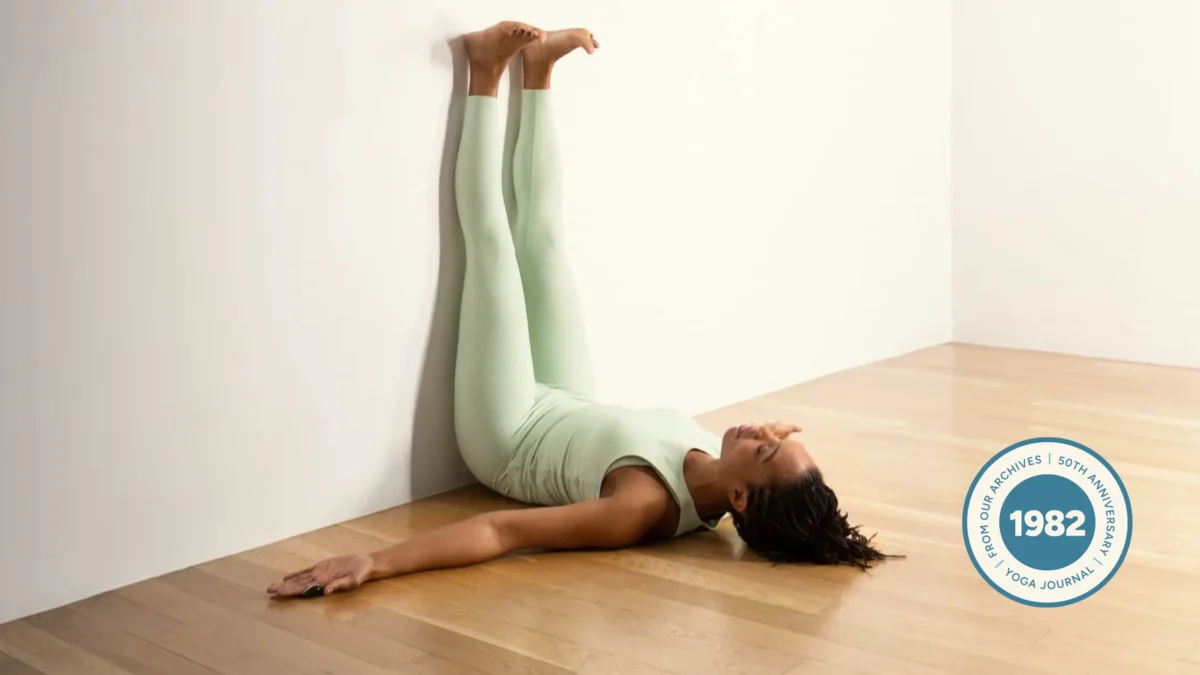
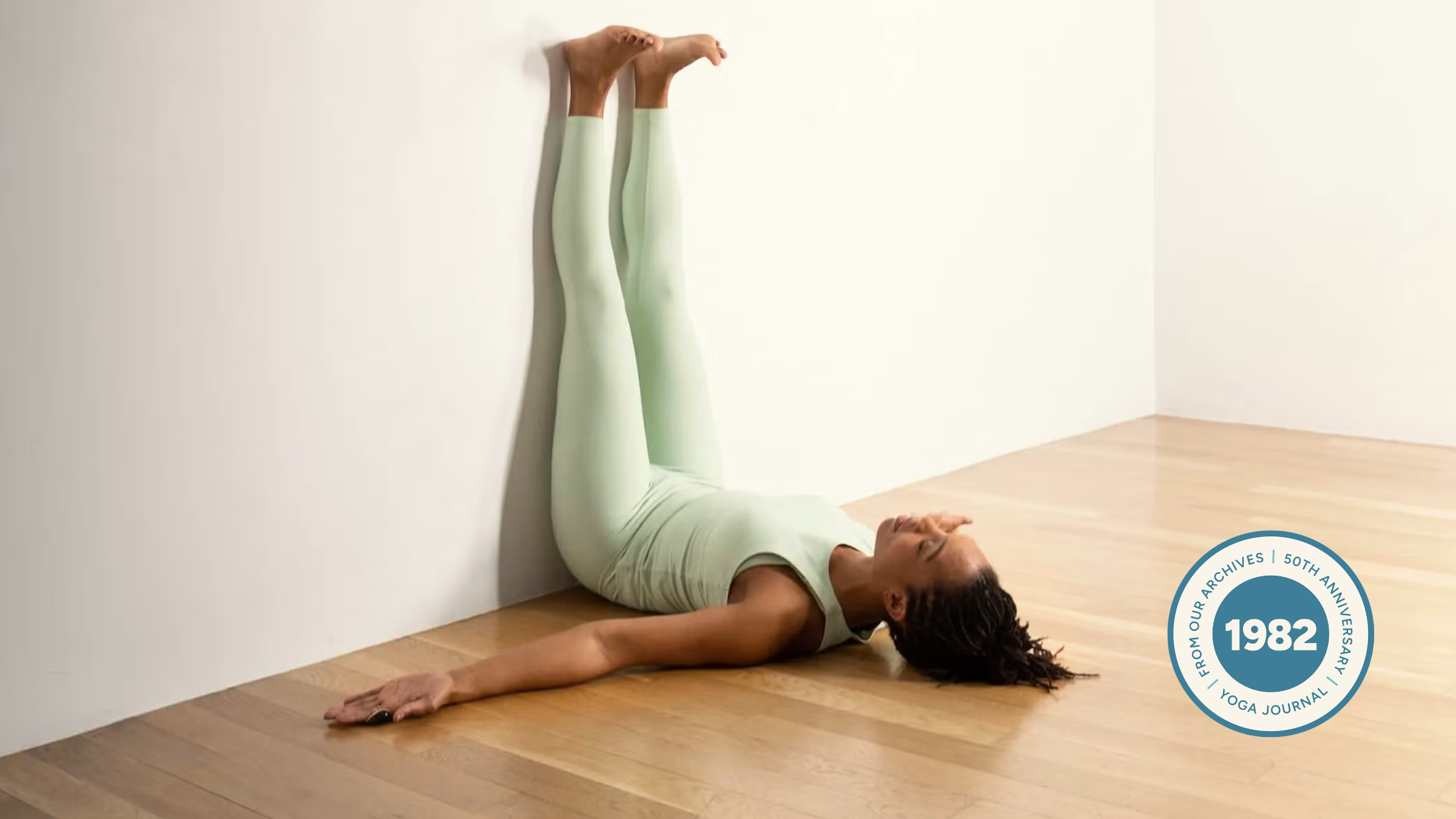
This is the "gold standard" for leg fatigue and nervous system regulation. By resting the legs against a wall with the pelvis elevated, you encourage venous return. Caution: This pose is not recommended for those with high blood pressure, glaucoma, or those in the first stages of pregnancy.
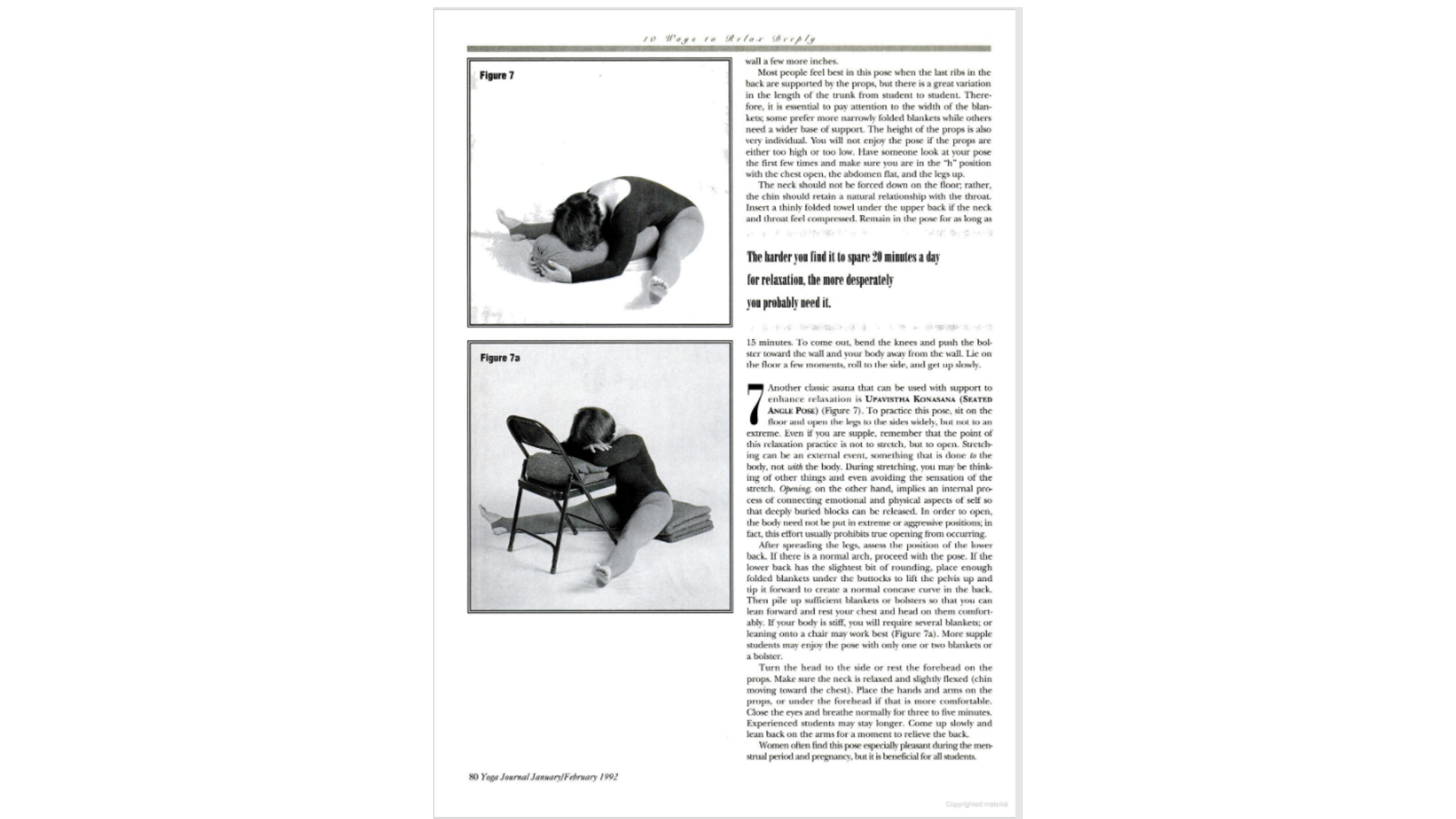
7. Upavistha Konasana (Seated Angle Pose)
By using props to support the chest and forehead, this pose transitions from a stretch to an "opening." It allows for the release of emotional and physical blocks stored in the hips and lower back.
8. Simple Supported Cross-Legs
A gentle forward fold that can be held for 3–5 minutes. It is an accessible way to release the lower back and transition into a meditative mindset.
9. Halasana (Plow Pose)
For experienced students, supported Halasana offers a deep release for the upper back and neck. It should be approached with caution and ideally under the guidance of an instructor to ensure the cervical spine is fully protected.
10. Supported Savasana
By elevating the lower legs parallel to the floor, this variation provides the ultimate relief for the lumbar spine. It serves as an introduction to pratyahara (withdrawal from the senses), a meditative state that offers a healthy, restorative "escapism" from the modern world.
Conclusion
The student in my 1971 Austin class recognized something that science has taken decades to quantify: we are not built for constant stimulation. Whether you practice one pose or the full sequence, the goal is the same—to provide the body with the deep rest it requires to function in a high-stress world. Relaxation is not a luxury; it is a physiological necessity for long-term health.