The final weeks of a bodybuilding contest preparation—often referred to in the industry as "peak week" or the "final stretch"—represent one of the most grueling physical and psychological trials an athlete can endure. The objective is deceptively simple: strip away the final layers of subcutaneous body fat to reveal maximum muscularity, vascularity, and separation, all while maintaining the fullness and density built over years of heavy lifting.
However, the reality of this phase is far more complex. Athletes are forced to operate in a state of deep caloric deficit, battling extreme fatigue, hormonal fluctuations, and the constant threat of muscle catabolism. It is a tightrope walk between being "stage-ready" and falling into a state of depletion that leaves a physique looking "flat" or stringy.
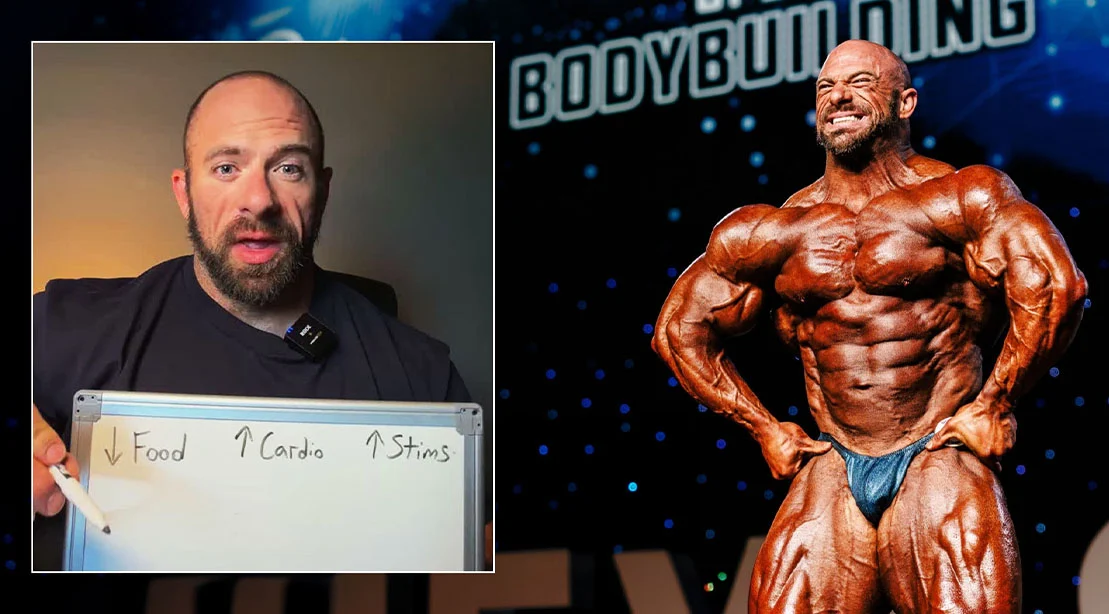
John Jewett, a multiple-time Olympia finalist and one of the most respected coaches in the IFBB Pro League, has emerged as a leading voice in the science of conditioning. In a recent educational breakdown, Jewett demystified the chaotic nature of contest prep, advocating for a surgical, rather than a sledgehammer, approach to fat loss. His philosophy centers on a singular, critical principle: the "least evil" approach to creating a caloric deficit.
The Danger of the "Sledgehammer" Approach
Why Pulling Every Lever Simultaneously Destroys Progress
The most common mistake among amateur bodybuilders—and even some seasoned pros—is the "all-in" mentality. When progress stalls, the instinct is often to panic. The athlete suddenly slashes calories by another 500, adds an extra hour of fasted cardio, and doubles their intake of pre-workout stimulants.
According to Jewett, this is a recipe for disaster. "It’s about choosing the strategy that creates the least fatigue while preserving recovery," Jewett explains. When an athlete pulls all three levers—diet, cardio, and stimulants—at once, they effectively bypass the body’s ability to adapt. This leads to a systemic crash: sleep quality plummets, cortisol levels spike, and the body, perceiving a state of starvation, may actually cling to body fat while sacrificing muscle tissue to meet energy demands.
The result is a physique that fails to display the "pop" required for the stage. Instead of looking hard and full, the athlete appears soft, depleted, and tired. The hours spent in the gym are effectively erased by poor, reactive management of the final phase.
The Anatomy of a Prep: A Chronological Look at Metabolic Adaptation
To understand Jewett’s methodology, one must view a bodybuilding prep not as a static event, but as a dynamic, chronological progression.
Phase 1: The Initial Cut
At the start of a prep (16–20 weeks out), the goal is to establish a base. Calories are high enough to support heavy training, and cardio is minimal. The body is responsive; small adjustments yield significant changes in body composition.
Phase 2: The Maintenance Plateau
As the athlete enters the middle phase (8–12 weeks out), the metabolic rate begins to slow. The body adapts to the current caloric intake and activity level. This is where most athletes begin to feel the pressure. It is the period where "intelligent coaching" becomes mandatory, as the margin for error narrows significantly.
Phase 3: The Refinement Stage
In the final 4–6 weeks, the goal shifts from fat loss to "stage conditioning." This is where Jewett’s strategic rules become the primary toolset. The focus is no longer on how much weight is lost on the scale, but rather how the body responds to specific stressors.
John Jewett’s Three Rules for Strategic Adjustment
Jewett proposes a system of self-audit, where the athlete must honestly assess their current state before making any changes. By categorizing adjustments into Food, Cardio, and Stimulants, an athlete can make calculated, incremental moves rather than desperate, uncoordinated ones.
1. The Food Rule: The Hunger Threshold
"If you are hungry and struggling with your diet, do not reduce food further," Jewett advises.
Nutrition is the primary driver of performance. If an athlete is already at a point where hunger is causing sleep disruption or excessive irritability, cutting calories further will only exacerbate the issue. If the diet is already "tight," further restriction is likely to lead to a breakdown in training intensity.
2. The Cardio Rule: Assessing Physical Fatigue
"If you already have heavy, sore legs, and you’re not hungry, then don’t reduce cardio," says Jewett.
Cardiovascular training is a tool for energy expenditure, but it is also a recovery drain. For a bodybuilder, the legs are the foundation of the physique. If the legs are inflamed, tired, or stalling in their recovery, adding more cardio will compromise the quality of leg training sessions. If the athlete is not struggling with hunger, cardio is an excellent lever to pull, provided the central nervous system (CNS) can handle the volume.
3. The Stimulant Rule: Guarding the Nervous System
"If you’re already using stimulants and experiencing low sleep, do not increase stimulants," cautions Jewett.
Stimulants (thermogenics, caffeine, pre-workouts) are often used to suppress appetite and increase output. However, they mask fatigue rather than eliminating it. If an athlete is struggling with sleep, increasing stimulants is a dangerous game that leads to chronic elevation of cortisol—a hormone that, in high levels, can cause water retention and muscle breakdown.
Data-Driven Decision Making: Finding the "Least Evil"
The genius of Jewett’s approach lies in the "least evil" principle. It is a decision-making matrix that prioritizes the health of the athlete while ensuring continued progress.
- Scenario A: If calories are low and the athlete is miserable, but cardio is manageable, the athlete should increase cardio duration or frequency.
- Scenario B: If the diet is easy to follow and the athlete feels energized, reducing calories is the most efficient, "least evil" path to fat loss.
- Scenario C: If diet and cardio are already at their theoretical limits, only then should an athlete consider the moderate use of stimulants, provided sleep quality is maintained.
This approach forces the athlete to act like a scientist, observing data points rather than acting on emotional frustration. It minimizes unnecessary systemic stress and keeps the athlete in a position to push heavy iron until the final week of the show.
The Physiological Implications of Proper Prep Management
When an athlete listens to their body, the physiological implications are profound. By maintaining a consistent, manageable level of stress, the body remains in an anabolic-leaning state for as long as possible.
Preservation of Muscle Tissue
Muscle is metabolically expensive. By not "crashing" the diet or overtraining, the athlete prevents the body from triggering a severe catabolic response. This preserves the dense muscle fibers that define a top-tier physique.
Vascularity and "Stage Lean"
True "stage lean" is not just about a low body fat percentage; it is about the interplay between thin skin and muscle fullness. If an athlete is dehydrated or depleted due to over-adjustment, the skin loses its tension, and the muscles look flat. Proper management allows the athlete to keep their glycogen stores topped up, ensuring the muscles look full and round even while the body fat is at an absolute minimum.
Expert Consensus: The Industry Perspective
Jewett’s advice resonates with a broader shift in the bodybuilding industry toward "smarter, not harder" training. Veteran coaches often note that the best bodybuilders in history were not the ones who suffered the most, but the ones who managed their metabolism with the most precision.
In professional bodybuilding circles, there is an increasing emphasis on the role of cortisol management. Chronic stress is the enemy of the stage-ready look. Coaches like Jewett advocate for "recovery-based programming," where the success of a week is measured as much by the athlete’s sleep and heart rate variability (HRV) as it is by the mirror.
Conclusion: The Path to the Podium
The pursuit of the perfect physique is a marathon, not a sprint. John Jewett’s methodology serves as a reminder that the final weeks of prep should be defined by control, not chaos. By choosing the "least evil" lever, athletes can navigate the treacherous final weeks with their health, their sanity, and their muscle mass intact.
For those aspiring to step on stage, the lesson is clear: stop looking for the magic bullet that will strip fat overnight. Instead, look at your current recovery, your hunger levels, and your sleep. Make the smallest, most strategic adjustment necessary to move the needle. By doing so, you don’t just get lean—you get stage-ready.
As Jewett succinctly puts it, "Getting that last bit of fat off to get stage lean is not about pulling all the levers at once." It is about understanding the delicate relationship between your body’s physiology and the demands of the sport. Success on the stage is merely the result of the intelligence you applied in the months leading up to it.
For more insights into professional contest preparation, training, and nutrition, you can follow John Jewett on Instagram.