





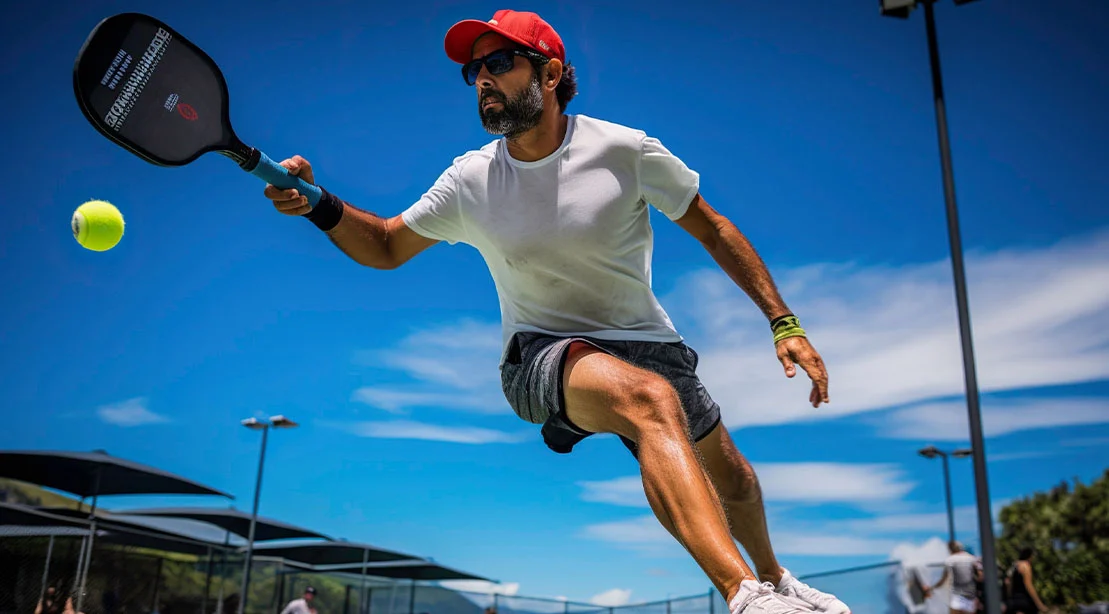
Pickleball has a funny way of pulling people in fast. One week, you’re playing a casual, recreational game with friends to enjoy the sunshine. A few weeks later, you find yourself obsessively researching the best carbon-fiber paddle, agonizing over the nuances of "dinking," and wondering why your calves feel like lead after just a few intense rallies.
From the outside, pickleball looks deceptively simple. It is played on a compact court with lightweight equipment, making it highly accessible to beginners of all ages. However, once you graduate from social play to competitive matches, the sport reveals its true nature. The game is a rapid-fire sequence of quick-twitch movements, sudden stops, lateral lunges, and sustained balance, all while maintaining the core control required to place a ball precisely.
If you’ve ever finished a weekend tournament wondering why your hips, knees, and shoulders feel as though they’ve survived a grueling five-set professional tennis match, you aren’t alone. The physical toll of the sport is becoming increasingly evident, and for the modern pickleball enthusiast, the era of "just showing up and playing" is rapidly drawing to a close.
The Rapid Rise of America’s Fastest-Growing Sport
Pickleball’s ascent is not merely anecdotal; it is a statistical phenomenon. According to the latest participation data from the Sports & Fitness Industry Association (SFIA), the sport has seen an unprecedented explosion in popularity. In 2025, approximately 24.3 million Americans hit the courts, a staggering increase that represents 479% growth since 2020.
This growth isn’t just limited to the "COVID-era" surge. Between 2022 and 2025 alone, participation grew by 171.8%. This velocity has transformed pickleball from a niche recreational pastime into a cultural and athletic juggernaut. As the sheer number of players increases, so does the level of competition. The "country club social" vibe is being replaced by high-intensity, strategy-driven play where points are extended, and rallies are won by the player who can best manage their body under fatigue.
Needs Analysis: The Athletic Demands of the Court
A "needs analysis" is a common tool used in sports science to bridge the gap between an athlete’s current physical state and the demands of their sport. In the context of pickleball, the analysis reveals a surprising degree of athletic complexity.
"Many recreational players underestimate how physically demanding pickleball becomes once the rallies get longer and the movement speeds up," says Cedric Scotto, MS Kinesiology and founder of Notace Footwear. "The sport is defined by high-frequency, low-amplitude movements. You are constantly shifting your center of gravity, performing quick cuts, and executing sudden stops. This places a massive amount of cumulative stress on the feet, ankles, and kinetic chain—especially for those who play multiple times a week."
To play well—and to play without injury—a pickleball player must possess a specific cocktail of physical qualities:
- Lateral Agility: The ability to move side-to-side efficiently and recover to the center of the court.
- Rotational Power: The ability to generate force through the hips and core to add pace to drives and volleys.
- Deceleration Capacity: The strength to stop on a dime, preventing joint strain and ensuring a stable platform for the next shot.
- Muscular Endurance: The capacity to maintain form and focus through two or three hours of play, where fatigue often leads to a breakdown in technique.
A Performance-First Training Framework
You don’t need to train like a professional athlete on a world tour to benefit from a structured program. However, implementing a "performance-first" approach ensures that your body remains an asset rather than a liability. By dedicating just two days a week to specific off-court training, you can build the durability needed to thrive.
The Foundation: The Warm-Up
A proper warm-up is the most overlooked component of the recreational player’s routine. It is not merely about "getting loose"; it is about nervous system activation. Your warm-up should prioritize:
- Ankle Mobility: Ensuring the feet can handle rapid directional changes.
- Hip Hinge Mechanics: Opening the hips to allow for deeper, more stable lunges.
- Thoracic Mobility: Loosening the upper back to facilitate the rotation required for backhands and forehands.
- Scapular Stability: Activating the muscles around the shoulder blades to protect the rotator cuff.
Sample Warm-Up Routine:
- 5 minutes of light cardio (jogging or jumping rope).
- 10 Lateral Leg Swings per side.
- 10 World’s Greatest Stretches (lunge with thoracic rotation).
- 15 Banded Pull-Aparts.
- 20 Calf Raises (focusing on the eccentric/downward phase).
Training Day 1: Acceleration, Power, and Strength
This session focuses on building the "engine" of your game.
Plyometric Prep:
- Pogo Jumps: 2 sets of 20 reps to prime the tendons.
- Lateral Line Hops: 2 sets of 30 seconds to wake up the ankles.
Superset A (Power):
- Box Jumps: 3 sets of 5 reps (focusing on soft, quiet landings).
- Medicine Ball Rotational Throws: 3 sets of 8 reps per side (mimicking the force of a swing).
Superset B (Strength):
- Goblet Squats: 3 sets of 10 reps (builds lower-body stability).
- Single-Arm Dumbbell Rows: 3 sets of 10 reps (builds postural strength).
Superset C (Core/Stability):
- Plank with Shoulder Taps: 3 sets of 45 seconds.
- Bird-Dogs: 3 sets of 12 reps to ensure trunk stability during movement.
Training Day 2: Lateral Movement and Deceleration
This day is designed to prepare your body for the unique "stop-and-start" nature of pickleball.
Plyometric Prep:
- Broad Jumps: 2 sets of 5 reps.
- Lateral Shuffles: 2 sets of 30 seconds.
Superset A (Agility):
- Lateral Bounds (Skater Jumps): 3 sets of 6 reps per side (the gold standard for lateral court movement).
- Dumbbell Split Squats: 3 sets of 8 reps per leg (strengthens the legs in a staggered stance, just like a lunge).
Superset B (Deceleration):
- Forward-to-Reverse Shuffles: 3 sets of 10 yards.
- Push-Ups: 3 sets to failure (maintaining core tension).
Superset C (Posterior Chain):
- Glute Bridges: 3 sets of 15 reps.
- Face Pulls: 3 sets of 15 reps (crucial for shoulder health).
Implications for Long-Term Health
The implications of this training go far beyond winning more games. As the population of pickleball players continues to skew toward older demographics, the risk of acute injury—such as ankle sprains or Achilles strains—increases.
By prioritizing strength and mobility, you aren’t just "training for a sport"; you are engaging in "longevity training." A body that is capable of producing power is usually a body that is well-protected against the wear and tear of repetitive motion.
Essential Recovery Habits
Even the best training plan will fail if it isn’t paired with intelligent recovery. To keep your body functioning at its peak, consider the following:
- Footwear: Do not play in running shoes. Use dedicated court shoes that provide lateral support and stability to prevent ankle rolls.
- Hydration and Electrolytes: Pickleball is deceptively dehydrating. Consistent electrolyte intake during matches is vital for muscle function.
- Soft Tissue Maintenance: Spend 5–10 minutes post-game foam rolling the calves, hamstrings, and thoracic spine to encourage blood flow.
- Listen to the "Warning Signals": Persistent joint pain is not a badge of honor. If you feel sharp, localized pain, take a rest day. Consistent, low-intensity movement over the long term is superior to a cycle of injury and forced inactivity.
Conclusion: Playing the Long Game
Pickleball is undeniably fun, but it is also a sport that rewards the prepared. By acknowledging the athletic demands of the game and integrating a basic, performance-focused training routine, you move from being a casual participant to a durable, agile competitor. Whether your goal is to dominate the local park’s "King of the Court" session or simply to enjoy the game pain-free for years to come, the secret is clear: the most important work happens away from the net. Start small, stay consistent, and let your improved athleticism handle the rest.