










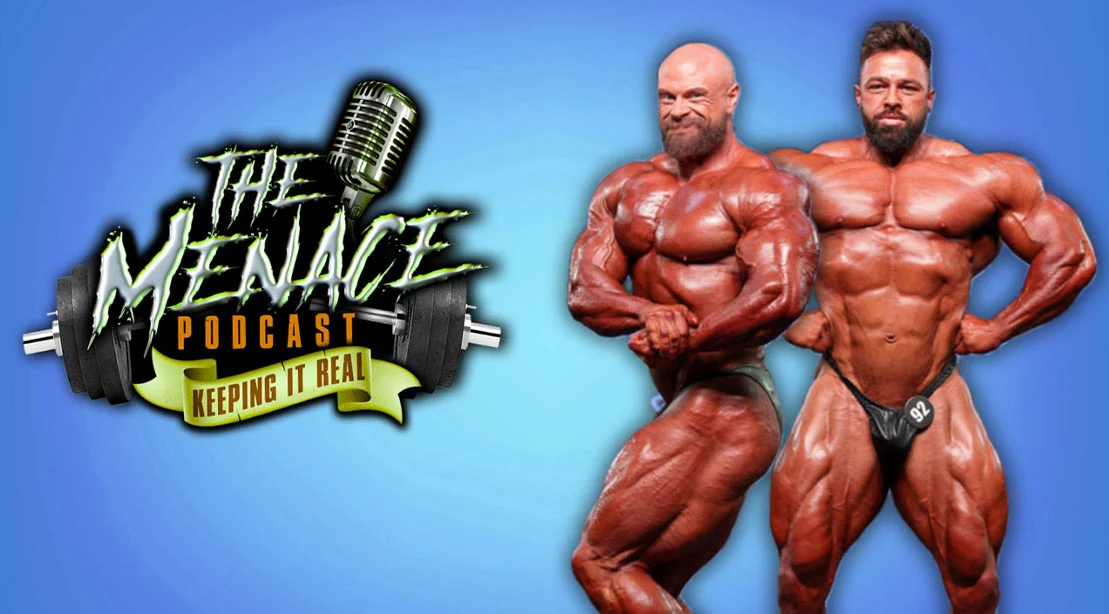
The landscape of professional bodybuilding is defined by the relentless pursuit of perfection, where the stage serves as the final, unforgiving arbiter of an athlete’s year-long commitment. Recently, the 2026 Atlanta Pro served as a pivotal flashpoint in the IFBB Pro League, crowning James Hollingshead as the champion and securing his path to the Olympia stage in Las Vegas. However, the post-show discourse—led by industry legends Dennis James, Milos Sarcev, and Chris Cormier on Episode 298 of The Menace Podcast—transcended the typical analysis of scoresheets. Instead, it ignited a heated debate regarding the modern intersection of athletic discipline and digital brand building, specifically centering on the career trajectory of runner-up Regan Grimes.
The Atlanta Pro: A Decisive Victory for James Hollingshead
The Atlanta Pro was widely anticipated as a battleground for athletes hungry for Olympia qualification. James Hollingshead’s victory was not merely a result of luck; it was a testament to a calculated, dense, and physically dominant package that commanded the judges’ attention.
Milos Sarcev, an icon of bodybuilding coaching, did not mince words when assessing the victor. “This is the best James has ever looked in his history,” Sarcev noted during the podcast. While Sarcev championed this as the pinnacle of Hollingshead’s career, the panel engaged in a nuanced disagreement regarding the Brit’s historical comparisons. Both Dennis James and Chris Cormier contended that while Hollingshead was indeed the class of the field in Atlanta, his previous showing in China featured a higher degree of conditioning and detail.
Regardless of the historical comparison, the consensus was clear: Hollingshead brought the most complete package. Chris Cormier emphasized the specific attributes that separated the victor from the rest of the pack, particularly the lower body. “I thought his legs helped him win,” Cormier remarked. “That’s what stood out to me the most—the distance between these guys: the density and the lower body.” By securing his ticket to Las Vegas, Hollingshead has cemented his status as a legitimate contender on the world stage, proving that when the grit of the gym meets the execution of the stage, the rewards follow.
The "Grimes Conundrum": Analyzing the Runner-Up’s Plateau
While Hollingshead celebrated, the conversation quickly pivoted to the man who stood beside him in the runner-up position: Regan Grimes. Grimes has long been touted as a bodybuilder with the "IT factor"—a classic aesthetic, good structure, and immense potential. Yet, his inability to convert that potential into consistent victories has become a recurring theme in professional circles.
The critique leveled against Grimes is not one of physical lack, but of professional prioritization. Following his performance in Atlanta, Grimes was further challenged by Patrick Moore at the Texas Pro, where he once again found himself relegated to the second spot. This string of runner-up finishes has led to a growing frustration among his peers and mentors. Dennis James, in particular, expressed bewilderment at the judging criteria versus the optics of the show. “I don’t quite see how he did not place higher, to be honest,” James stated. “I mean, what are you looking for?”
Yet, the frustration with the judging quickly shifted to a critique of the athlete himself. The panel began to dissect the widening gap between the version of Regan Grimes seen on social media and the version that presents himself to the IFBB judges under the bright lights of the stage.
Content vs. Commitment: The Instagram Illusion
The most controversial segment of the Menace Podcast discussion centered on the perceived "social media distraction." In the modern era, athletes are often incentivized to grow their personal brands to secure sponsorships and relevance. However, the panel argued that for Grimes, this pursuit may be cannibalizing his competitive edge.
"Here’s the thing with Regan," Dennis James began, echoing a sentiment he claims to have held for two years. "He loves to pose a rear lat spread and get the camera in the right angle to make it look like he’s unbeatable from the back. And he never, not once, looked like that on stage."
This discrepancy between the "Instagram physique"—curated through lighting, angles, and filters—and the "stage physique"—which demands absolute, 360-degree muscular maturity and conditioning—is where the panel believes Grimes is losing his way. The implication is that Grimes is essentially "curating" a reality that he is not yet capable of sustaining under the scrutiny of the judges. "If he would bring what he shows on Instagram, yeah," James continued. "But that’s the camera angle. That’s not what he is on stage."
The "Coach’s Perspective": A Lack of Focus?
The most damning piece of anecdotal evidence came from Chris Cormier, who shared a firsthand account of a training session that highlights a potential misalignment in priorities. Recalling a visit to Las Vegas where he and Milos Sarcev intended to train with the rising star, Cormier was taken aback by Grimes’ apparent lack of focus.
"He was two weeks out from that Italy show," Cormier recounted. "I go over there, thinking, ‘Okay, let’s go check out Regan.’ Regan wants to do some content instead of training and doing posing. I’m like, ‘Bro, really? You got two guys that have been there and done that… we have 170 shows between us. You mean to tell me you want to just do content?’"
For veterans like Cormier and Sarcev, who built their legacies in an era before social media, the refusal to utilize the expertise of two legends in favor of filming content was a red flag. While Sarcev offered a more measured perspective, suggesting that the issue might be rooted in performance anxiety or "nerves" rather than a lack of desire, the consensus remained that Grimes is struggling to reconcile the demands of a social media influencer with the singular, monastic focus required of an Olympia-level bodybuilder.
Financial Motivation and the Hard Truth
Dennis James posited a pragmatic, if uncomfortable, theory: perhaps Grimes focuses on content because it provides a more reliable revenue stream than the unpredictable nature of winning professional bodybuilding titles. "Hey, but don’t go on stage acting like you’re that guy," Cormier retorted. "Because you’ve got to do it in the gym. That’s where it is."
The panel reached a sobering conclusion: the transition from "promising prospect" to "champion" requires a psychological shift. It requires moving away from the validation of the digital world and returning to the quiet, grueling, and often un-filmed work in the weight room.
The Road Ahead: Can the "IT Factor" Prevail?
Despite the harsh critiques, the panel did not write off Regan Grimes. In fact, they doubled down on their belief in his raw, physical ceiling. Milos Sarcev, often referred to as "The Mind," noted that Grimes’ back development is consistently underrated, and Cormier pointed to the athlete’s calf development as a rare, often overlooked asset.
The overarching sentiment is one of "tough love." The panel believes that Grimes possesses the "IT factor"—the genetic blueprint, the aesthetic lines, and the structural integrity—required to dominate. The barrier to entry, however, is now entirely internal.
"He has a body for it," Cormier concluded. "But you’ve got to be willing to do that from your mind and your heart."
Implications for the Future of Bodybuilding
The debate surrounding Regan Grimes is a microcosm of a larger trend in professional bodybuilding. As the sport continues to merge with the creator economy, the line between "athlete" and "personality" has blurred. The 2026 Atlanta Pro served as a reminder that while followers, engagement, and video production are vital components of a modern athlete’s career, they cannot serve as a substitute for the physiological requirements of the stage.
For athletes like James Hollingshead, the focus remains on the density, the conditioning, and the fundamental mechanics of the sport. For others, the challenge lies in learning that the camera lens is no substitute for the judge’s eye. As the road to the 2026 Olympia continues, the bodybuilding world will be watching to see if Regan Grimes can pivot—reclaiming his training intensity and proving that his physical reality can finally match the image he portrays to his millions of followers. Until then, the stage remains the ultimate truth-teller, and it demands nothing less than an athlete’s full, undivided commitment.