By Shannon Firth, Enterprise & Investigative Writer
August 19, 2026
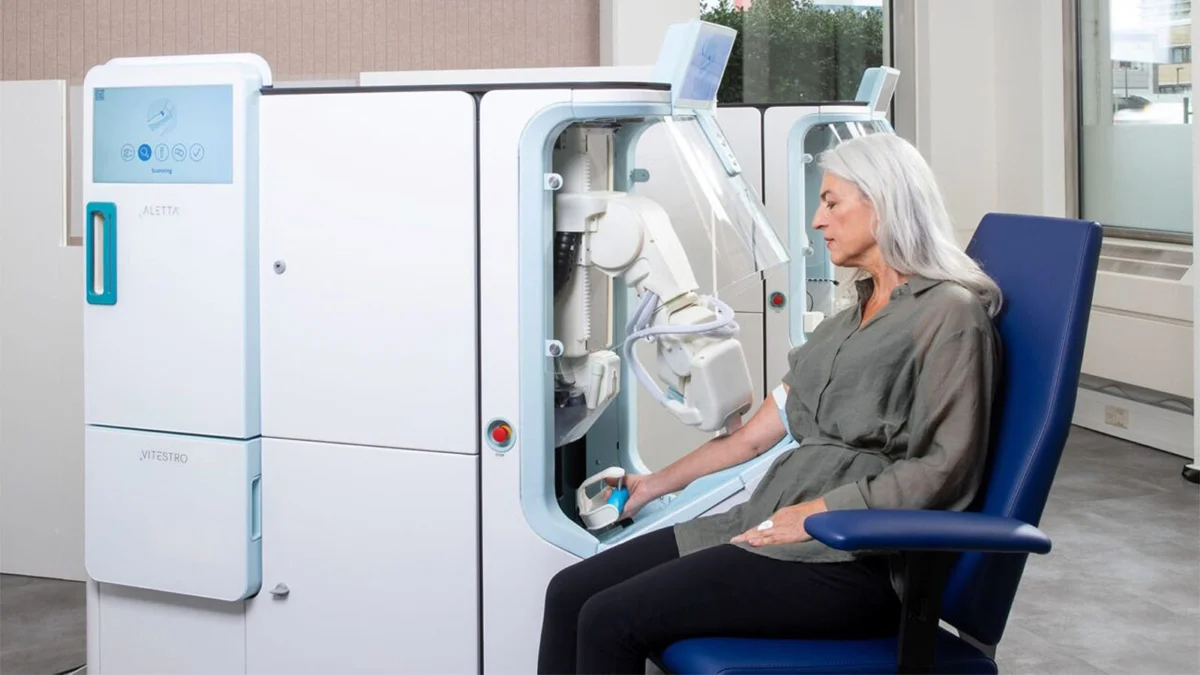
In a milestone development for clinical laboratory medicine, the U.S. Food and Drug Administration (FDA) has officially granted authorization for the Aletta, a groundbreaking robotic system capable of performing autonomous venipuncture. Announced Wednesday, the move marks the first time the agency has sanctioned a device designed to independently draw blood, a procedure that has remained fundamentally unchanged in its manual execution for over a century.
The Aletta system integrates advanced near-infrared imaging and Doppler ultrasound technology to navigate the human circulatory system, identifying optimal veins for collection with a level of precision that clinicians say could redefine outpatient care. While the device still requires human oversight, its deployment promises to alleviate the mounting pressure caused by a chronic national shortage of trained phlebotomists.
The Technology: How the Aletta Operates
The Aletta device is not merely an automated needle; it is a sophisticated, sensor-driven platform. The procedure begins with a trained phlebotomist who performs a brief initial assessment and initiates the session. Once the device is engaged, it assumes full control of the venipuncture workflow.
The system’s "vision" relies on a dual-modality approach. Near-infrared light maps the superficial vascular landscape, while Doppler ultrasound confirms vessel depth, diameter, and blood flow velocity. This combination is particularly crucial for patients with complex venous access, such as those with chronic conditions, obesity, or advanced age, where traditional manual palpation often leads to multiple "sticks."
Once a suitable vessel is mapped, the Aletta executes a seamless sequence of actions:
- Preparation: Automated application of a tourniquet and sterile skin preparation.
- Access: Precision needle insertion guided by real-time ultrasound feedback.
- Collection: Automated swapping of collection tubes to match specific laboratory requirements.
- Completion: Safe needle disposal and the application of a bandage.
Crucially, the device is equipped with advanced safety fail-safes. If a patient shifts unexpectedly, the system is programmed to automatically retract the needle to prevent tissue trauma. Furthermore, internal sensors continuously monitor for "unsafe conditions," capable of halting the procedure instantly if the system detects an anomaly in flow or mechanical resistance.
Chronology of a Clinical Breakthrough
The road to FDA authorization was paved by years of rigorous multicenter testing. The development of the Aletta represents a convergence of robotics, machine learning, and medical imaging that has been in the pipeline since the early 2020s.
- Early Development (2021–2023): Initial prototypes focused on the physical mechanics of needle insertion and the software challenges of interpreting ultrasound images in real-time.
- Clinical Validation (2024–2025): The pivotal multicenter study, published in Clinical Chemistry, served as the cornerstone of the FDA application. The study involved hundreds of participants across three distinct outpatient phlebotomy departments, testing the device’s efficacy across diverse patient demographics.
- FDA Review (2025–2026): Throughout the review period, regulators focused heavily on safety metrics, particularly the device’s ability to handle movement and its success rate in "difficult stick" patients.
- Authorization (August 2026): Following a comprehensive review of clinical data and safety protocols, the FDA granted authorization for adult outpatient use under the supervision of a trained phlebotomist.
Supporting Data: Efficacy and Patient Experience
The clinical performance of the Aletta has been a key driver of industry interest. According to the data submitted to the FDA, the device achieved a first-stick success rate of 94.5%—a figure that matches or exceeds the benchmarks set by skilled human practitioners.
The study further highlighted the device’s performance in cohorts historically prone to difficult blood draws:
- Patients with obesity: 97.4% success rate.
- Patients with self-reported "hard-to-access" veins: 92.7% success rate.
- Adults aged 65 and older: 93.4% success rate.
Adverse event reporting was notably low, occurring in only 0.6% of participants. All reported events were characterized as mild, consisting of common phlebotomy-related reactions such as vasovagal syncope, minor hematoma, or transient paresthesia.
Patient satisfaction metrics were equally encouraging. When surveyed, 90% of participants reported that the Aletta procedure was either less painful or equally painful compared to manual draws. Crucially, 82% of patients expressed a preference for the robot or stated they had no preference at all, suggesting that the "fear of the needle" may be mitigated by the consistent, steady motion of the robotic arm.
Official Responses: Addressing the Workforce Crisis
The FDA’s decision is largely motivated by the urgent need to address systemic staffing shortages in the healthcare sector. Michelle Tarver, MD, PhD, director of the FDA’s Center for Devices and Radiological Health, highlighted the societal implications of the device in her official statement.
"Blood draws are one of the most commonly performed medical procedures in the United States," Dr. Tarver noted. "Yet, patients may face delays due to a growing shortage of trained phlebotomists. The Aletta offers a way to extend the reach of our current workforce."
Under the current authorization model, one phlebotomist can oversee up to three Aletta units simultaneously. This "supervised autonomy" model does not replace the human worker; rather, it elevates the phlebotomist to a supervisory role. The human professional remains responsible for the final verification of sample integrity—ensuring tubes are filled in the correct order and contain the appropriate volume of blood—thereby maintaining high standards for laboratory accuracy.
Implications: A New Era for Outpatient Care
The authorization of the Aletta is expected to have far-reaching implications for outpatient clinics, diagnostic centers, and hospital laboratories.
1. Workflow Efficiency and Throughput
For high-volume centers, the ability to automate the most time-consuming aspect of laboratory diagnostics could drastically reduce wait times. If a single phlebotomist can manage three stations, a clinic’s capacity for blood collection could theoretically triple without the need for additional hiring—a significant boon for facilities struggling to recruit in a competitive labor market.
2. Standardizing the Patient Experience
Manual phlebotomy is inherently subjective, heavily dependent on the skill, fatigue levels, and experience of the individual clinician. The Aletta introduces a level of standardization that could lead to fewer failed attempts, less bruising, and a more predictable experience for patients who require frequent blood monitoring.
3. The Future of Tele-Phlebotomy?
While the current authorization requires a human on-site, the successful deployment of the Aletta opens the door for future iterations that might operate in more remote or specialized settings. The move toward "independent" procedures is a clear signal that the FDA is becoming more comfortable with the role of artificial intelligence and robotics in invasive clinical procedures.
4. Ethical and Practical Challenges
Despite the optimism, the transition will not be without hurdles. Concerns regarding the high cost of implementation, the need for specialized training for current staff, and the potential for technical failure will likely be at the forefront of clinical discussions. Moreover, the psychological transition for patients—moving from human-to-human care to human-to-machine care—will require transparent communication from healthcare providers.
Conclusion
The arrival of the Aletta signals a definitive shift in the landscape of modern medicine. By delegating the mechanical intricacies of venipuncture to a machine, the healthcare industry is attempting to solve a human problem—the shortage of skilled labor—with a technological solution. As the device begins its rollout in outpatient centers across the country, its performance in the "real world" will be closely monitored by researchers, regulators, and the millions of patients who undergo blood work each year.
For now, the Aletta stands as a testament to the potential of robotics to augment clinical practice, promising a future where the simple blood draw is safer, faster, and more accessible than ever before.