









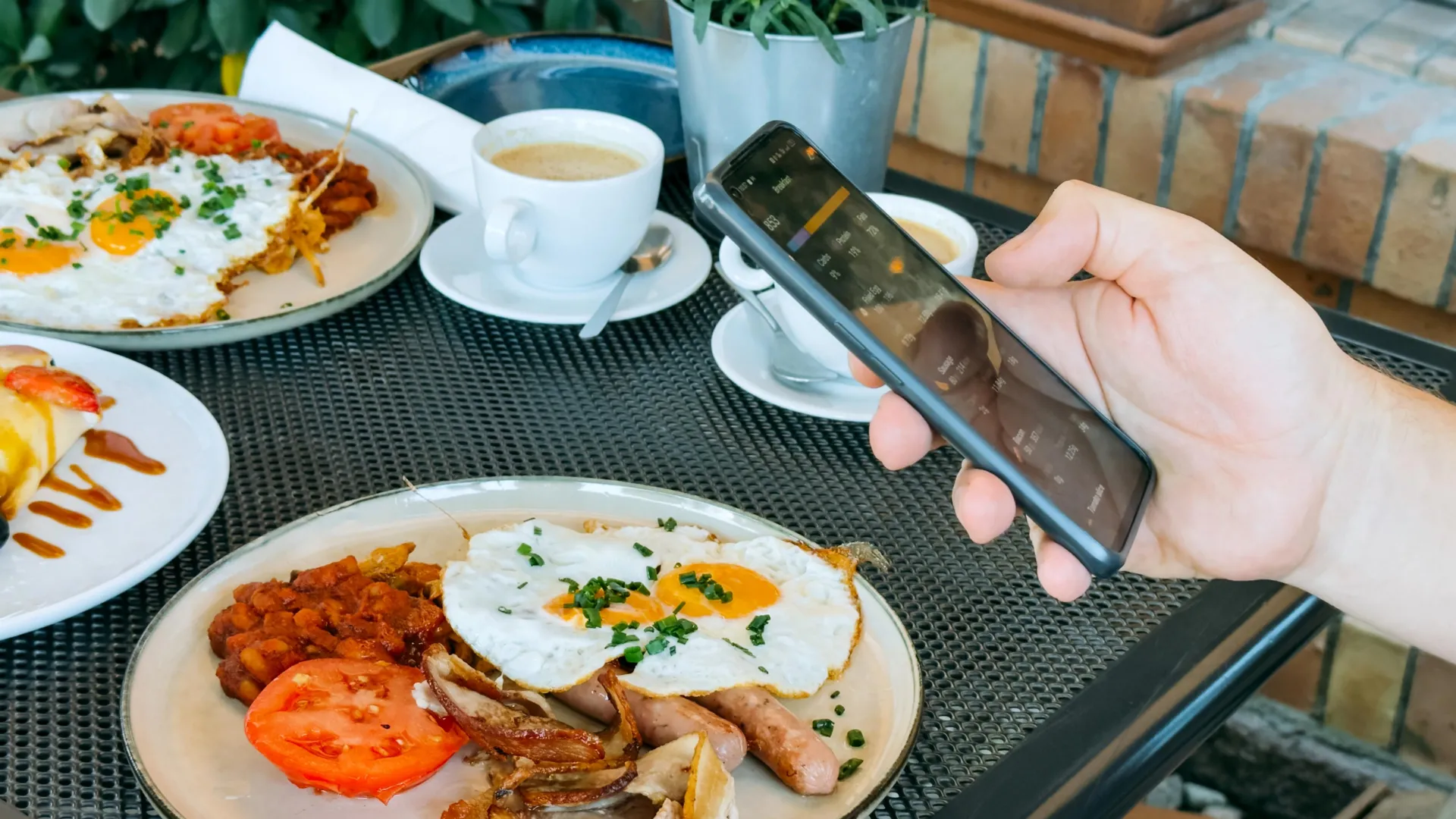
In an era where convenience often dictates our health choices, AI-powered calorie tracking apps have emerged as the gold standard for the time-poor health enthusiast. By simply snapping a photo of a plate, users can theoretically bypass the tedious process of manual data entry, portion estimation, and label scanning. However, a groundbreaking study presented at NUTRITION 2026 suggests that while these digital assistants are impressively fast, their accuracy leaves much to be desired.
New research from the National Institute of Diabetes and Digestive and Kidney Diseases (NIDDK), part of the National Institutes of Health (NIH), reveals that these AI tools may be systematically underestimating caloric and fat content by significant margins. As digital health tools become increasingly integrated into weight-management strategies, this "calorie gap" poses a potential hurdle for those relying on technology to guide their dietary goals.
The Promise of AI in Nutrition
The appeal of photo-based calorie tracking is rooted in cognitive load reduction. Historically, maintaining a food diary—a practice widely considered the "gold standard" for weight loss and metabolic health—has been plagued by high attrition rates. Users frequently grow weary of the meticulous labor involved in logging every gram of butter or ounce of chicken.
AI-driven apps promised to solve this by utilizing advanced image recognition algorithms. The process seems seamless: the user photographs their meal, the AI identifies the constituent ingredients and estimates portion sizes, and the app cross-references these visual data points with comprehensive nutritional databases. For the average consumer, it is a frictionless experience. But as Aaron Hengist, a postdoctoral visiting fellow at the NIDDK, notes, the popularity of these tools has far outpaced their scientific validation. "The accuracy of many of these apps has not been thoroughly evaluated," Hengist explained. "Our study helps address this question by looking at whether these apps can reliably estimate calories."
Chronology: From Controlled Kitchen to Public Disclosure
The project, led by researchers at the NIH Clinical Center, was born out of a broader, high-stakes metabolic study examining how different dietary compositions—specifically ketogenic versus standard diets—impact the human body.
Phase One: Establishing the Baseline
In the early stages of the investigation, researchers utilized the NIH’s highly controlled metabolic kitchen. Unlike a home environment where portion estimation is prone to human error, the metabolic kitchen allows for the precise measurement of ingredients to the nearest 0.1 gram. This provided the "ground truth"—a gold-standard reference point against which the AI apps could be rigorously tested.
Phase Two: The Comparison
Researchers collected standardized, high-quality photographs of 102 distinct meals. These images were then fed into four of the most popular nutrition tracking platforms currently on the market: MyFitnessPal, LoseIt!, CalAI, and Appediet. The objective was simple: compare the AI’s automated output against the measured laboratory data.
Phase Three: The NUTRITION 2026 Presentation
The findings were unveiled on July 25, 2026, at the NUTRITION 2026 conference in National Harbor, Maryland. Olivia Charles, a postbaccalaureate intramural research training fellow at NIDDK, presented the results during the President’s Oral Session. The presentation, which highlighted the significant discrepancies between the app estimates and the laboratory measurements, served as a wake-up call to both developers and the millions of users relying on these platforms for health management.
Supporting Data: The Magnitude of the Error
The data presented by the NIDDK team paints a concerning picture of current AI limitations. On average, the four tested apps underestimated the caloric content of the meals by 250 to 345 calories per plate.
Furthermore, the data regarding macronutrients was equally revealing. The apps consistently underestimated fat content by approximately 30 grams per meal. When one considers that a single gram of fat contains nine calories, this error accounts for a massive portion of the total caloric deficit found by the researchers.
Accuracy Variance
The study also explored how different variables affected performance:
- Macronutrient Consistency: All four apps showed higher consistency in identifying carbohydrates than they did for fats or proteins.
- Caloric Density: MyFitnessPal and LoseIt! demonstrated improved accuracy when dealing with higher-calorie meals compared to lower-calorie options, though they still failed to reach a high degree of precision.
- The Ketogenic Challenge: In a follow-up analysis involving more than 200 additional meals, researchers discovered that the AI struggled significantly more with low-carbohydrate, high-fat ketogenic meals. The AI’s consistent failure to recognize the density and volume of fats in these meals suggests a specific architectural weakness in how these algorithms interpret lipid-heavy food items.
Official Responses and Scientific Context
It is important to note the scientific standing of these findings. While the research was reviewed and selected by a committee of experts for the NUTRITION 2026 conference, the study has not yet completed the full peer-review process required for publication in a scholarly journal. As such, the NIH team frames these results as preliminary.
However, the implications remain clear. "People using a photo-based tracking app without adjusting the portions or entering the amounts of food should take the results with a grain of salt," Hengist warned. The consensus among the researchers is that while AI is an excellent tool for qualitative logging, it is not yet a replacement for quantitative nutritional analysis.
Implications for Public Health and Future Development
The "calorie gap" identified in the study carries significant weight for public health. If a user believes they are consuming 1,500 calories based on an app’s estimate, but is actually consuming 1,800 to 1,900, their weight loss goals—or, in the case of medical nutrition therapy, their metabolic management—could be severely undermined.
A Hybrid Approach
The researchers suggest that the path forward is not to abandon these tools, but to refine them through a hybrid methodology. By combining the efficiency of photo-based identification with traditional, manual verification methods, users can mitigate the risks of AI error. For example, using the app to identify the types of food present but manually verifying the volume or weight of high-fat ingredients could bridge the accuracy gap.
The Challenge for App Developers
For the developers of MyFitnessPal, LoseIt!, and similar platforms, the NIDDK study serves as a critical benchmark. The difficulty these systems have with fat content suggests a need for better training data—specifically, images of meals with known, measured fat content. As AI models move toward more sophisticated computer vision, the integration of 3D depth-sensing (often available in modern smartphones) might eventually allow apps to better estimate volume, which is currently a massive hurdle for 2D image analysis.
The "Silent" Risk
Perhaps the most dangerous implication is the false sense of security provided by these apps. When technology provides a number, humans are psychologically inclined to accept it as objective fact. This "automation bias" can lead to complacency. If a user sees a number that aligns with their goals, they are unlikely to question it, even if their physical progress on the scale or in blood markers tells a different story.
Conclusion: Bridging the Gap
The convenience of the modern digital diet is undeniable. However, the NIDDK’s findings remind us that technology is an aid, not a replacement for fundamental nutritional awareness. While AI-powered apps continue to evolve, they are currently operating in a landscape of approximation.
For the time being, the most effective strategy for the health-conscious individual is one of informed skepticism. Users should treat AI calorie estimates as a "floor" rather than an absolute truth—knowing that the actual caloric load is likely higher than what the screen displays. As the research team continues to investigate the nuances of AI nutritional estimation, the industry will need to prioritize transparency and technical precision to ensure these tools truly serve the people who rely on them for their health.
Until the technology catches up to the complexity of the dinner plate, the most accurate tool remains a simple, reliable kitchen scale and a healthy dose of nutritional literacy.