By Jackie Keating, LCSW
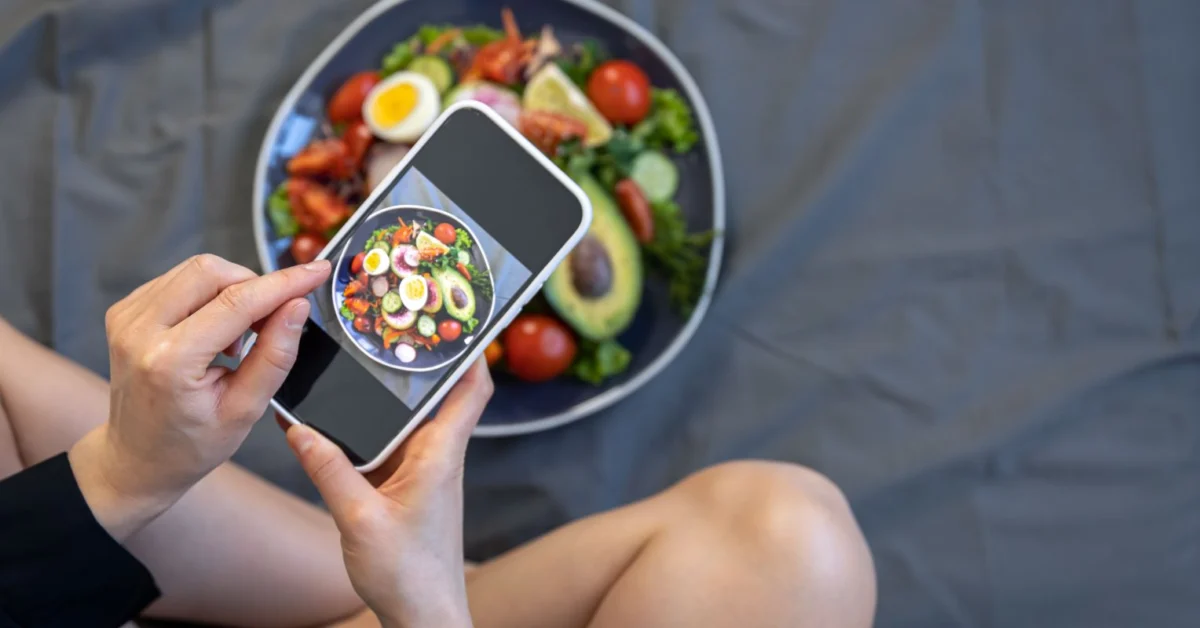
It is a familiar Sunday night ritual. You are lying in bed, the glow of your smartphone illuminating the dark room as you scroll through social media, seeking a moment of respite from the upcoming week. Suddenly, the algorithm shifts. An influencer appears on your screen with a perfectly curated "what I eat in a day" video. The meals are aesthetic, devoid of carbohydrates, and remarkably low in calories. Moments later, a different creator makes a "relatable" joke about binge-drinking to cope with a stressful week, while a "mom-fluencer" glamorizes needing a glass of wine to survive the afternoon. Interspersed between these snapshots are aggressive advertisements for fitness programs promising to "fix your life in three simple steps."
By Monday morning, the digital noise has manifested in the physical world. A coworker discusses a restrictive new diet; a friend texts you about "shredding" for the summer; and a celebrity endorses a plant-based protocol. The messaging is omnipresent, relentless, and increasingly dangerous. We are living in an era where diet culture is not just a lifestyle choice—it is a pervasive, profit-driven digital architecture that is reshaping how we view our bodies, our worth, and our survival.
The Mechanics of Diet Culture in the Digital Age
Social media was built on the promise of connection, but it has evolved into a high-speed engine for comparison and self-criticism. At its core, diet culture thrives by commodifying insecurity. It dangles the carrot of "health and happiness" while delivering a harvest of shame, guilt, and anxiety.
The Profitability of Insecurity
The wellness industry has exploded into a financial juggernaut. According to data from 2024, the market was valued at $160 billion, with projections suggesting it will reach a staggering $360 billion by 2034 (Finklea, 2025). This massive expansion is fueled by an ecosystem of digital creators who capitalize on the public’s desire for self-improvement.
By demonizing specific food groups and promoting restrictive habits under the guise of "wellness," influencers turn personal insecurities into a lucrative business model. The message is as seductive as it is destructive: If you buy these supplements, follow this routine, and shrink your body, you will finally be happy. In reality, these creators are often selling a lifestyle that is physically and mentally unsustainable. Behind the filtered photos often lie stories of extreme caloric restriction, obsessive fasting, and hidden mental health struggles.
The Impact on Vulnerable Populations
The psychological toll of this constant exposure is quantifiable. Research indicates that nearly 46% of teens aged 13–17 report feeling worse about their physical appearance after using social media. Furthermore, individuals who spend more than three hours a day on these platforms are twice as likely to develop eating disorders (EDs) compared to those with lower screen time (The REACH Institute, 2025). The algorithm does not discriminate; it feeds the user content that confirms their deepest insecurities, creating a feedback loop that is difficult to break.
The Intersection of Eating Disorders and Substance Use
Perhaps the most alarming consequence of modern digital influence is the normalization of maladaptive coping mechanisms. While eating disorders and substance use disorders (SUDs) manifest differently on the surface, they are often two sides of the same coin: both serve as desperate attempts to regulate emotions, manage stress, and exert control in an unpredictable world.
A Shared Behavioral Foundation
The National Eating Disorders Association (NEDA, 2023) reports that roughly 50% of people struggling with an eating disorder also misuse alcohol or other substances. This is not a coincidence. Research confirms an interdependent relationship between the two, where the presence of one significantly increases the risk of developing the other (Xi & Galaj, 2025).
Social media platforms like TikTok and Instagram have inadvertently accelerated this crossover. By glamorizing "thinspiration" on one hand and "party culture" on the other, these platforms provide a roadmap for users to cycle between restrictive eating and substance-based escapism. When both behaviors are normalized as "lifestyle choices" or "coping strategies," the line between a healthy habit and a life-threatening disorder becomes dangerously blurred.
The Escalating Mortality Risk
The convergence of these disorders represents a public health emergency. Anorexia nervosa already carries the highest mortality rate of any mental health condition, but when coupled with substance use, the risk of fatality skyrockets.
Data on Co-Occurring Disorders
Studies show that co-occurring alcohol and hard drug use nearly quadruples the mortality risk for individuals with eating disorders (Mellentin et al., 2022). This lethal combination is compounded by the fact that those with eating disorders are already at a higher risk for suicide, comorbid psychiatric conditions, and severe mood or anxiety disorders (SAMHSA, 2025).
The tragedy is that the medical and psychological community is often ill-equipped to handle this intersectionality. Current treatment systems are frequently siloed—patients are often shuffled between eating disorder clinics and substance abuse programs, neither of which fully addresses the underlying mechanics of the other. This creates a "whack-a-mole" approach to recovery, where the patient moves from one treatment to another without ever achieving true, sustained healing.
A Path Toward Integrated Care
If we are to curb the influence of toxic diet culture and address the growing crisis of co-occurring disorders, we must demand a fundamental shift in how we approach recovery and digital health.
The Need for an Integrative Approach
Clinical care must move toward a model that addresses both eating disorders and substance use simultaneously. It is no longer sufficient to treat the symptoms; clinicians must address the underlying trauma, the impact of societal pressures, and the role of the digital environment in sustaining the disorder.
Empowering the Individual
Beyond the clinic, there is a societal responsibility to dismantle the structures that profit from our unhappiness. This requires:
- Digital Literacy: Educating users—especially the youth—about how algorithms work and how content is curated to exploit insecurities.
- Regulatory Oversight: Holding social media companies accountable for the promotion of harmful diet content and the glamorization of dangerous substances.
- Holistic Wellness: Shifting the cultural conversation away from body size and aesthetic "results" toward functional health, mental well-being, and genuine self-compassion.
The "wellness" industry may be projected to reach $360 billion by 2034, but we must ask ourselves at what cost. As long as we continue to measure our worth through the narrow lens of a smartphone screen, we remain vulnerable to a machine that thrives on our depletion.
Reclaiming our health requires more than a new diet plan or a three-step routine; it requires us to disconnect from the digital noise and reconnect with the reality that health is not a product to be bought, but a complex, individual state of being. We must stop letting the wrong influences dictate the terms of our existence. By fostering environments that prioritize integrated care and critical thinking, we can begin to heal the wounds left by a culture that prefers we stay insecure, hungry, and silent.
References
- Dane, A., & Bhatia, K. (2023). The social media diet: A scoping review to investigate the association between social media, body image and eating disorders amongst young people. PLOS Global Public Health.
- Finklea, K. (2025). The wrong influence: The link between diet culture and eating disorder. HopeHealth.
- Gordon, K. H., et al. (2023). Co-occurring substance use and eating disorders. Psychiatric Times.
- Hambleton, A., et al. (2022). Psychiatric and medical comorbidities of eating disorders. Journal of Eating Disorders.
- Holland, G., & Tiggemann, M. (2023). Social media and body image: A systematic review. PLOS Global Public Health.
- Mellentin, A. I., et al. (2022). The impact of alcohol and other substance use disorders on mortality in patients with eating disorders. The American Journal of Psychiatry.
- National Eating Disorders Association (2023). Statistics & research on eating disorders.
- Pierce, S., Joy, J. M., & Wiss, D. A. (2025). Abstinence-based treatment of comorbid eating disorders. Frontiers in Psychiatry.
- Substance Abuse and Mental Health Services Administration (2025). Breaking the silence: What everyone should know about eating disorders.
- The REACH Institute (2025). How social media is impacting teens.
- Xi, Z.-X., & Galaj, E. (2025). Novel potential pharmacological approaches in treating eating disorders comorbid with substance use disorders. Biomedicine & Pharmacotherapy.