



Correction: This story has been updated to reflect that other federal agencies, not the Centers for Disease Control and Prevention, oversee dietary recommendations.
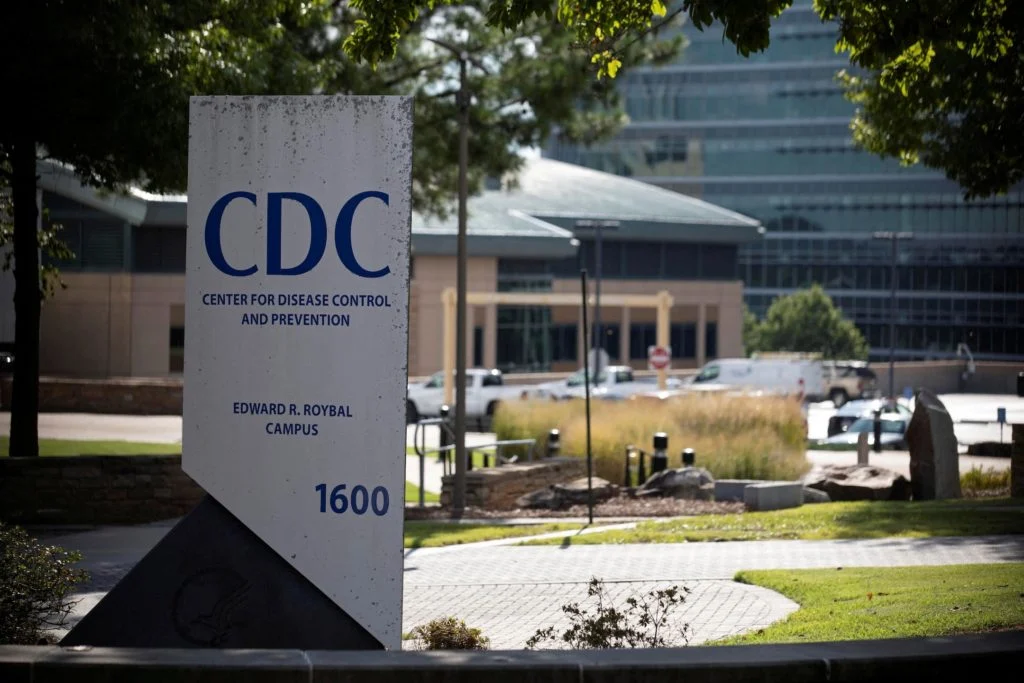
In the landscape of American public health, the bedrock of scientific authority is undergoing a seismic shift. A new poll released Tuesday by the Harvard T.H. Chan School of Public Health and the de Beaumont Foundation reveals a staggering decline in public confidence: only 50% of Americans now trust the Centers for Disease Control and Prevention (CDC) to provide reliable public health guidance. This represents a precipitous drop from the 77% trust level recorded just one year ago.
The data, derived from a survey of 2,205 U.S. adults, suggests that the American public is increasingly viewing scientific directives through a fractured, partisan lens. As the nation grapples with the fallout of the COVID-19 pandemic and the policy shifts of the current administration, the traditional "monopoly" that federal scientists held over the truth has been shattered, leaving the country at a precarious crossroads.
The Chronology of Distrust: A Rapid Decline
To understand the current crisis, one must look at the trajectory of public perception over the last few years. Following the immediate aftermath of the COVID-19 pandemic, public trust in the CDC remained relatively resilient, hovering between 74% and 78% from 2022 through 2025.
However, the political climate of 2026 has introduced a new, more volatile dynamic. According to the poll, 50% of Americans report that their trust in federal health recommendations has diminished specifically since President Donald Trump began his second term.
Gillian SteelFisher, director of the Harvard Opinion Research Program, notes that while trust in public health institutions has fluctuated in the past, the current rate of decline is unprecedented. "It hasn’t declined so substantially and so quickly in the same time period," SteelFisher observed.
The decline is strikingly broad, affecting nearly every demographic subgroup: men and women; white, Black, and Hispanic populations; urban, suburban, and rural residents; and those with varying levels of educational attainment. Even across political lines, the trend is largely uniform—with one notable, and potentially concerning, exception.
The Partisan Divide: A "Polarization of Facts"
The only demographic group to report an increase in trust toward the CDC over the past year is Republican voters, rising to 67% from 63% in April 2025. Conversely, only 14% of Democrats currently approve of the federal public health agencies’ performance under the current administration, compared to 80% of Republicans.
Brian Castrucci, president and CEO of the de Beaumont Foundation, characterizes this data as evidence of a "deep polarization of facts and science."
"We now live in a world where scientific fact is understood through a partisan lens," Castrucci said. "While we can make partisan differences between health facts, disease doesn’t discriminate. Measles, Ebola, and hantavirus don’t really care what we think. If we don’t have a united response, that is extraordinarily dangerous for our country."
Castrucci notes that the newfound Republican support for the CDC—a historically skeptical party regarding federal intervention—mirrors the changing leadership of the Department of Health and Human Services (HHS), which is now headed by former anti-vaccine activist Robert F. Kennedy Jr. This alignment suggests that for many Americans, "trust" in an agency is currently synonymous with "agreement" with the political figures at its helm.
Institutional Credibility and the "Personal Belief" Factor
A core driver of this declining trust is the perception that the CDC has been compromised by political agendas. Sixty-eight percent of respondents agreed that the CDC’s health recommendations are now influenced by the personal beliefs of its leaders rather than objective scientific consensus. Furthermore, 66% of Americans believe federal public health agencies have focused "too much" on the wrong priorities.
SteelFisher points out that this skepticism is not merely a product of the current administration, but rather a culmination of the politicized atmosphere surrounding the COVID-19 era. "If you just say it’s just one party or the other, that’s a mistake," she said. "People feel like decisions are being made without following standard practices, and that makes people nervous."
The sense of unease is compounded by reports of scaled-back research funding. About 6 in 10 Americans expressed concern that federal agencies have cut or restricted programs for health and medical research, further fueling the perception that the institutions are being hollowed out or redirected for political ends.
The Rise of Non-Governmental Experts
As the federal government’s "cachet" as a trusted messenger fades, the public is turning elsewhere. Kathleen Hall Jamieson, director of the Annenberg Public Policy Center at the University of Pennsylvania, notes that the way Americans make health decisions has fundamentally shifted.
"The answer [to handling conflicting advice] used to be: ‘I’m going to do what they both say,’" Jamieson explained. "Now, the answer is they trust the non-governmental organizations more than the CDC."
This trend is corroborated by research from the Annenberg Public Policy Center. A March poll found that approximately three-quarters of Americans place their trust in professional bodies like the American Medical Association (AMA), the American Academy of Pediatrics, and the American Heart Association. In contrast, trust in the CDC, the National Institutes of Health (NIH), and the Food and Drug Administration (FDA) remains significantly lower, at roughly 60%.
The Harvard/de Beaumont survey mirrors this, finding that state and local health departments retain higher levels of public confidence (66% and 70%, respectively) than their federal counterparts. It appears that the closer an agency is to the local community, the more credible it remains in the eyes of the public.
Complex Realities: Vaccinations and Nutrition
Despite the broader collapse in institutional trust, the public remains surprisingly aligned with established science on several key issues.
For instance, support for routine childhood vaccinations remains broad, though partisan fissures are evident. While 96% of Democrats view childhood vaccines as safe, that figure drops to 85% among Republicans. This discrepancy suggests that while the political rhetoric surrounding vaccination has penetrated the electorate, the fundamental consensus on the safety of childhood immunizations has not fully eroded.
The reaction to recent federal dietary recommendations also reveals a nuanced public. Nine in 10 Americans support the new federal guidance to limit added sugar and highly processed foods, and 85% support increased protein intake. However, support wanes when the advice becomes more controversial: only 62% support the recommendation to increase beef and whole milk consumption.
This suggests that the public is not reflexively rejecting federal guidance; rather, they are engaging in a process of "scientific vetting," where they accept advice that aligns with general health consensus while remaining skeptical of recommendations that lack broad academic support or appear influenced by industry or political lobbying.
Implications for the Future
The implications of a nation that no longer trusts its primary health guardians are profound. As Castrucci warns, the "monopoly" that doctors and scientists once held over the public consciousness has been broken by a deluge of social media misinformation and partisan tribalism.
The public health sector has failed to adapt to this new reality, struggling to find "trusted messengers" capable of cutting through the noise. Without a restoration of trust, the U.S. may face significant hurdles in managing future outbreaks or public health crises.
Whether this trend will reverse remains an open question. Castrucci noted that it remains to be seen if Republican support for the CDC will plummet if and when the political pendulum swings back toward a Democrat in the White House.
For now, the challenge for the public health community is clear: moving beyond the "partisan lens." If the CDC is to regain its status as a trusted messenger, it must reconcile the tension between its political leadership and the objective, non-partisan nature of the science it is intended to represent. Until then, the institutions tasked with keeping Americans safe may find themselves increasingly sidelined by a public that is looking for answers, but no longer looking to Washington to provide them.