By Sam Zeveloff, Ph.D.
May 9, 2026
When Robert F. Kennedy Jr. assumed the role of Secretary of Health and Human Services (HHS), the nation expected a focus on policy, the National Institutes of Health (NIH), and the vast regulatory apparatus governing American medicine. Few anticipated that his tenure would be punctuated by inquiries into his historical, often bizarre, interactions with wildlife carcasses.
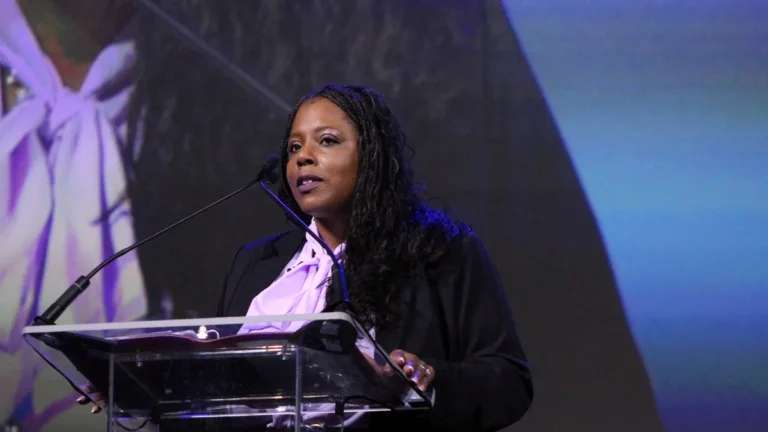
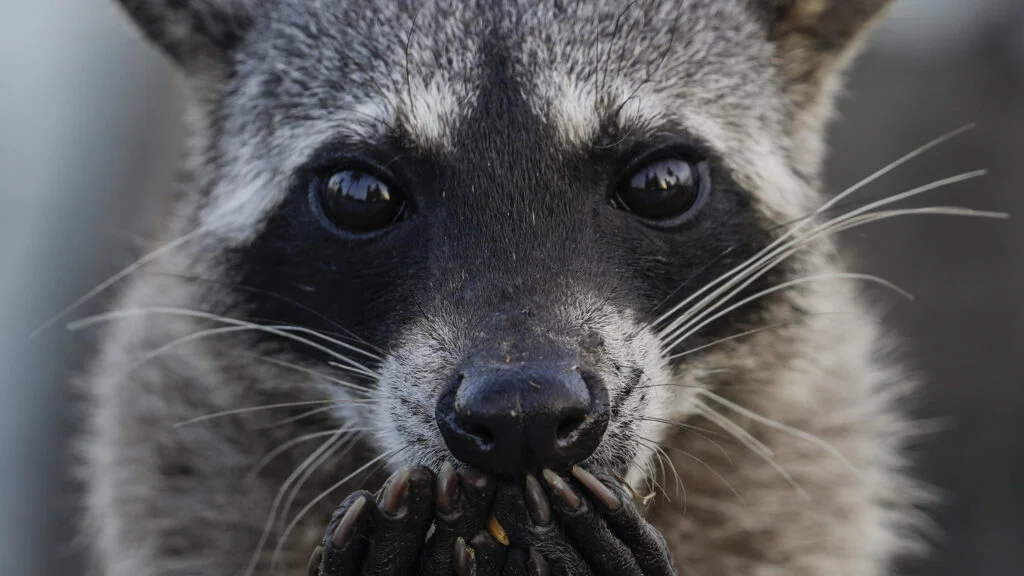
During a recent appearance on Capitol Hill, Rep. Adelita Grijalva (D-Ariz.) confronted the Secretary with a peculiar allegation: that in 2001, he stopped his vehicle on a highway to harvest the penis of a road-killed raccoon. While the incident drew titters and sensationalist headlines, the episode—when viewed alongside a string of other reported behaviors—demands a serious interrogation of the bioethical standards we expect from the nation’s top health official.
The Anatomy of an Allegation
The raccoon incident, first chronicled in Isabel Vincent’s biography RFK Jr.: The Fall and Rise, relies on an entry from Kennedy’s own private journals. In the text, he describes the scene with startling candor: “I was standing in front of my parked car on I-684 cutting the penis out of a road killed raccoon, thinking about how weird some of my family members have turned out to be.”
According to Vincent, Kennedy’s intent was simply “to study it later.” When pressed by Rep. Grijalva during the committee hearing, Kennedy bypassed the question entirely, pivoting instead to a critique of the NIH budget and diversity, equity, and inclusion (DEI) initiatives. The deflection was successful in a political sense, but it left the underlying question of his judgment unanswered.
A Chronology of Unusual Encounters
To understand the gravity of these reports, one must look at the emerging pattern of Kennedy’s interactions with animal remains. These are not isolated incidents of curiosity; they represent a recurring, arguably compulsive, engagement with dead animals that spans decades.
- The 2001 Raccoon Incident: As documented in his journals, Kennedy performed a roadside dissection of a raccoon. While the act itself is technically "salvage," the lack of a clear scientific objective distinguishes it from legitimate wildlife research.
- The 2011 Whale Head Allegation: Perhaps the most widely publicized episode involved the transport of a whale’s head on the roof of his vehicle. His daughter’s account of the event describes the head being strapped to the family car, a move that raised significant concerns regarding the Marine Mammal Protection Act (MMPA). While a subsequent inquiry by the National Oceanic and Atmospheric Administration (NOAA) closed the case by deeming the allegation "unfounded," the lack of transparency regarding the disposal and transport of the remains continues to fuel skepticism.
- The 2014 Central Park Bear Incident: Kennedy famously confessed to leaving a dead bear cub in Central Park, staged to look like a bicycle accident. While he initially claimed the intent was to bring the animal home for meat—a potentially defensible act of subsistence—the subsequent decision to turn the carcass into a "prank" transformed the animal from a resource into an object of morbid theater.
Scientific Merit vs. Ad Hoc Acquisition
From a zoological perspective, interest in animal anatomy is not inherently perverse. As a graduate student in wildlife ecology, I spent years studying the reproductive anatomy of male raccoons. My research focused on the baculum (os penis), a bone whose size and curvature are vital markers for determining an animal’s age. This data is essential for population ecology and wildlife management.
My specimens were sourced ethically from legal hunting and trapping activities, and they ultimately served an educational purpose—some now reside in the Icelandic Phallological Museum. The critical difference between professional research and Kennedy’s behavior is the presence of a "purpose-driven" framework.
Scientific collection is defined by:
- Clear Research Goals: The collection is designed to answer a specific ecological or medical question.
- Professional Norms: The handling of remains follows safety and hygiene protocols.
- Societal Benefit: The knowledge gained contributes to the broader understanding of species or environmental health.
Kennedy’s actions appear to lack these pillars. There is no evidence that his collection of a raccoon’s penis or the decapitation of a whale contributed to any scientific corpus. Instead, these acts suggest a disregard for the dignity of the remains and a fascination with the macabre that sits at odds with the professional stewardship of biological resources.
The Legal and Ethical Implications
The Marine Mammal Protection Act (MMPA) was established to protect species that are vital to our oceans’ health. The law broadly prohibits the "take" of marine mammals, which explicitly includes the unauthorized possession and transport of parts. By removing a whale head and driving it through public corridors, Kennedy flirted with a violation of federal law that carries significant penalties.
Even if a violation is not prosecuted, the ethical breach remains. Bioethics is not merely about what is legal; it is about the moral weight we assign to life—even life that has ended. When a high-ranking official, particularly one who oversees the Department of Health and Human Services, treats the remains of sentient creatures as curiosities or props, it signals a fundamental lack of respect for the natural world.
The bear cub incident is a case in point. The ethical defense of using an animal for food rests on a "subsistence framework," where the animal is treated as a necessary resource. The moment the carcass is repurposed for a public prank, that framework collapses. It shifts from utility to degradation.
The Office of the Secretary and Public Trust
The most profound concern is not that Robert F. Kennedy Jr. has done strange things with dead animals, but that the man who manages the nation’s health and science infrastructure appears to lack a coherent bioethical filter.
As the supervisor of the National Institutes of Health, Kennedy is the ultimate overseer of the NIH Department of Bioethics—the very institution tasked with setting the moral compass for American medical research. The irony is staggering. If the Secretary of HHS cannot distinguish between a legitimate scientific specimen and a morbid souvenir, how can he be expected to uphold the rigorous ethical standards required for human clinical trials, genetic research, or public health mandates?
Public trust in science is fragile. It is built on the premise that those in charge operate with a level of maturity, foresight, and moral clarity. When a leader acts in ways that are, at best, erratic and, at worst, disrespectful to the sanctity of life, it invites legitimate questions about their fitness for office.
Conclusion: A Need for Accountability
We must move beyond the jokes and the sensationalism. The public deserves to know the full context of these events. Were there scientific permits? Were these remains handled in ways that posed public health risks? Most importantly, does the Secretary of Health and Human Services hold a coherent philosophy on the ethical treatment of biological life?
Standards in science and public health are not abstract, static ideals; they are reinforced by the conduct of our leaders. If those who hold the highest offices in the land treat the natural world with flippancy, we cannot expect the public to treat the mandates of that same office with the seriousness they deserve.
It is time for the Secretary to address these incidents not as partisan attacks, but as legitimate questions regarding his capacity to lead. The stewardship of human health and the stewardship of the natural world are inextricably linked; one cannot be entrusted with the former if they lack the basic respect required for the latter.
Sam Zeveloff, Ph.D., is the Presidential Distinguished Professor Emeritus of Zoology at Weber State University and the author of "Raccoons: A Natural History" (Smithsonian Institution Press, 2002).