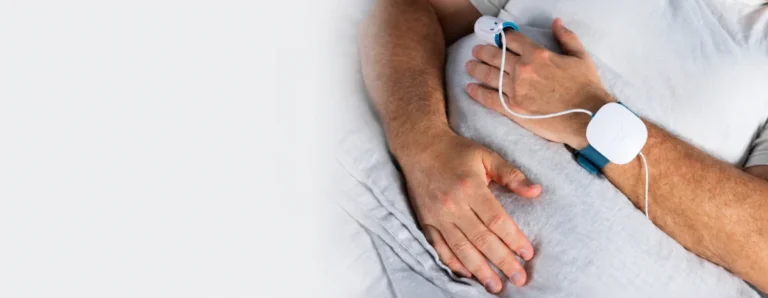
The landscape of sleep medicine has undergone a seismic shift over the past decade. Once tethered to the traditional, brick-and-mortar overnight polysomnography (PSG) laboratory, the diagnosis and management of sleep-disordered breathing have migrated into the patient’s own bedroom. Driven by technological advancements in wearable sensors and the rapid adoption of telehealth, Home Sleep Testing (HST) has emerged as the gold standard for clinical efficiency, patient comfort, and scalability.
As sleep centers, hospitals, and private practices face increasing pressure to reduce diagnostic backlogs, a new ecosystem of "HST Services Programs" has matured. These vendors act as the logistical and clinical backbone for medical practices, offering everything from device fulfillment to AI-assisted scoring and board-certified physician interpretation.
Main Facts: The Modern HST Ecosystem
At its core, an HST services program is a third-party partner that enables medical providers to outsource the logistical heavy lifting of sleep diagnostics. Whether it is a sleep physician looking to scale capacity or a non-sleep specialist aiming to screen patients for Obstructive Sleep Apnea (OSA), these platforms provide a turnkey infrastructure.
The current market is defined by a high degree of "device-agnostic" flexibility. Providers like Persante, Snap Diagnostics, and Wesper emphasize the ability to utilize multiple hardware platforms—such as the WatchPAT series, Alice NightOne, or ResMed ApneaLink—under a single, unified software umbrella. This allows practices to select the best diagnostic tool for a specific patient’s clinical profile without managing separate inventory chains.
Key Operational Pillars
- Logistics: The majority of these services function as "direct-to-patient" operations. Devices are shipped to the home, accompanied by digital or physical instructions, and returned via prepaid mailers.
- Clinical Integrity: Despite the move away from in-lab monitoring, these programs maintain high clinical rigor. Most offer a hybrid approach: automated scoring for rapid results, followed by manual review by Registered Polysomnographic Technologists (RPSGTs) and final validation by board-certified sleep physicians.
- Support: Patient compliance remains a critical hurdle. To mitigate this, providers such as Ognomy, BetterNight, and Dreem Health integrate live text messaging, video conferencing, and 24/7 technical support to ensure the diagnostic study is performed correctly on the first attempt.
Chronology: The Shift to Decentralized Care
The transition to home-based diagnostics did not happen overnight. It was a calculated migration sparked by three distinct phases of innovation:
Phase 1: The Early Adoption (2010–2015)
Initially, HSTs were viewed as a supplementary tool. Devices were basic, often limited to measuring oxygen saturation and heart rate. During this period, sleep labs viewed home testing with skepticism, fearing it would undermine the financial model of the traditional sleep center.
Phase 2: The Data Integration Era (2016–2020)
As platforms like EnsoData and Itamar Medical (now part of ZOLL) refined their signal processing, the reliability of HST data reached a parity with in-lab studies for uncomplicated OSA. Programs began to focus on "workflow integration," allowing data to flow directly into Electronic Medical Records (EMRs).
Phase 3: The Virtual-First Revolution (2021–Present)
The COVID-19 pandemic acted as a massive catalyst. With sleep labs closed due to social distancing requirements, providers were forced to adopt fully remote diagnostic workflows. This period cemented the "End-to-End" model, where the service provider handles the entire patient journey—from the initial telehealth consultation to the final prescription of CPAP or oral appliance therapy.
Supporting Data: Comparative Analysis of Leading Programs
The following table summarizes the operational scope of current market leaders:
| Program | Primary Devices | Turnaround Time | Support |
|---|---|---|---|
| BetterNight | Alice NightOne, ApneaLink, WatchPAT | 1-3 Days | 24/7 |
| Wesper | Wesper Lab, Wesper Lite | 2-7 Days | 24/7 |
| EnsoHST Direct | EnsoHST | 1-5 Days | 24/7 |
| Nox Service | Nox T3s | 1-3 Days | 24/7 |
| Snap Diagnostics | Model 9/8 | 5 Days | 24/7 |
Note: Turnaround times are estimated based on device receipt; specific figures vary by geographic region and carrier efficiency.
The Role of Artificial Intelligence
AI is no longer a peripheral feature; it is the engine of the HST industry. Platforms like EnsoData utilize deep learning to provide near-instantaneous scoring, which is then validated by human clinicians. This "Human-in-the-loop" model ensures that clinical sensitivity remains high—often cited as exceeding 90% for sleep apnea detection—while drastically reducing the wait time for patient results.
Official Perspectives and Industry Responses
Industry leaders emphasize that these services are designed to augment, rather than replace, the role of the sleep physician.
"Our mission is to remove the friction from the diagnostic process," notes a spokesperson for a leading HST provider. "By allowing physicians to offload the inventory management, patient education, and raw data scoring, we allow them to focus on the most important aspect of care: the patient-provider relationship and long-term treatment adherence."
However, there remains a healthy debate regarding the role of "Direct-to-Consumer" (DTC) models. Some traditional sleep medicine practitioners argue that DTC programs risk fragmenting care, potentially losing the long-term context that a local sleep specialist provides. Conversely, proponents argue that without these services, millions of patients with undiagnosed OSA would never seek treatment due to the high barrier to entry of traditional labs.
Implications for the Future of Sleep Medicine
The rise of these programs carries significant implications for the healthcare system:
1. The Death of the Backlog
For hospitals and large health systems, the traditional PSG waiting list is a significant source of revenue leakage and patient dissatisfaction. By deploying scalable HST solutions, these systems can process patients in days rather than months. This is particularly vital for populations with comorbid conditions where untreated sleep apnea can lead to cardiovascular complications.
2. Diversification of Care Providers
The accessibility of these platforms has expanded the diagnostic gatekeepers. Dentists focusing on oral appliance therapy and primary care physicians (PCPs) are increasingly using these services to initiate treatment protocols. This democratizes sleep medicine, moving it from a specialty-only service to a primary care necessity.
3. Patient-Centric Metrics
Success is no longer measured solely by the accuracy of the AHI (Apnea-Hypopnea Index) score. It is increasingly measured by "Patient Satisfaction" and "Therapy Compliance." Because these programs offer high-touch educational support—via videos, text, and live agents—they are seeing higher rates of successful device usage compared to the traditional "here is a device, good luck" approach.
4. Economic Realignment
Payment models are evolving to reflect this new reality. As insurance companies increasingly demand value-based care, the cost-effectiveness of an HST (which is significantly lower than an in-lab PSG) makes it an attractive reimbursement target. Programs that offer "Cash Pay" options alongside insurance billing ensure that patients without high-deductible insurance plans can still access life-saving diagnostics.
Conclusion
The transformation of home sleep testing into a sophisticated, multi-vendor service industry marks a milestone in digital health. By centralizing logistics, automating data processing, and prioritizing patient education, these programs are effectively closing the gap in the global sleep apnea epidemic.
For the physician, the challenge now lies in selecting the partner that best aligns with their practice’s specific workflow. Whether a clinic requires a "white-glove" managed service or a technical platform to bolster their own internal capabilities, the current market offers a robust selection of tools. As these technologies continue to integrate with wearable data and EHR systems, the path toward a "sleep-aware" healthcare system becomes increasingly clear, promising a future where a good night’s sleep is no longer a luxury, but a standardized clinical outcome.