




This week in Las Vegas, the Olympia Weekend is marking a significant historical milestone. As the global stage for the pinnacle of physique sports, the Olympia is introducing a new chapter to its storied legacy: the crowning of the inaugural Fit Model Olympia champion. For the traditionalists who might view this as a dilution of the sport’s hardcore roots, it is worth considering the context of an industry that has been in a state of constant metamorphosis since Larry Scott claimed the first Mr. Olympia title in 1965.
With the addition of the Fit Model division, the Olympia now oversees 12 distinct categories, ranging from the gargantuan mass of Open Bodybuilding to the athletic displays of Fitness and the aesthetic precision of Classic Physique. The inclusion of Fit Model is not merely an expansion; it is a strategic maneuver by the IFBB Pro League to address the natural, albeit often problematic, trajectory of physique competition.
A Chronology of Competitive Expansion
The history of the Olympia is a history of segmentation. As the sport grew, the standard for each division inevitably shifted. What began as a singular pursuit of bodybuilding has expanded into a complex ecosystem of specialized categories: Open, 212, Classic, Men’s Physique, Bikini, Figure, Wellness, Fitness, Women’s Physique, Women’s Bodybuilding, Wheelchair, and now, Fit Model.
The arrival of Fit Model follows a deliberate, multi-year rollout. The NPC—the amateur pipeline for the IFBB Pro League—first introduced the division in 2025 to gauge interest and establish a foundational aesthetic. Following a successful amateur run, the IFBB Pro League integrated the division into the professional circuit in 2026. Now, the 2026 Olympia, held September 24–27 in Las Vegas, cements Fit Model as a premier, qualification-based event within the sport’s most prestigious weekend.
This timeline reflects a wider industry trend: the creation of new divisions to "reset the clock." Historically, when a division becomes too extreme, the federation introduces a "lesser" category to capture the aesthetic ideal that the original division has long outgrown.
The Explicit Mandate: Defining the ‘Fit Model’ Look
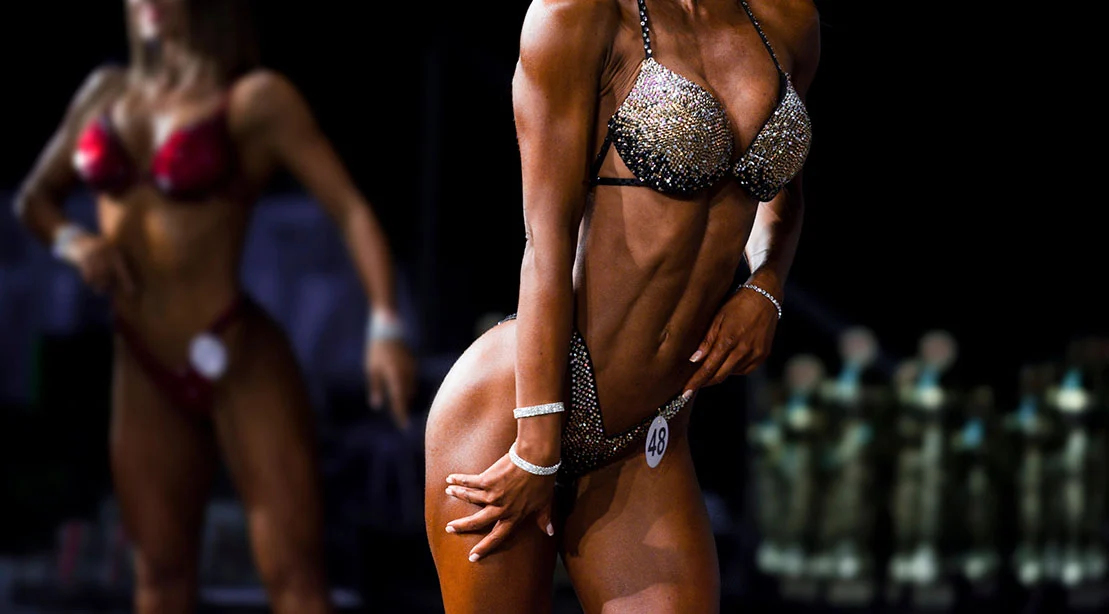
The judging criteria for the Fit Model division are uniquely rigid and explicit, serving as a protective barrier against the inevitable "muscle creep" that characterizes other categories. According to the IFBB Pro League guidelines, the division is not looking for the extreme conditioning or maximal muscularity found in the Bikini or Figure ranks.
The Technical Requirements:
- Muscularity: Competitors must possess enough muscle to shape the female frame, but strictly less than their Bikini counterparts.
- Regional Development: There should be limited development in the legs, glutes, arms, and deltoids. Specifically, the delts should exhibit a hint of roundness but remain far from the "capped" look preferred in higher-muscularity divisions.
- Conditioning: This is the most restrictive element. The midsection should appear fit and athletic but should not display the high level of detail or "shredded" look common in other divisions.
- The "No-Go" Zones: The rules explicitly forbid visible glute-ham tie-ins and any sign of hamstring separation.
These instructions are essentially an attempt to codify a "mainstream fitness" look. Interestingly, the IFBB has cited the 2015 physique of three-time Bikini Olympia champion Ashley Kaltwasser as the visual benchmark. By looking backward to a previous iteration of a current division, the federation is acknowledging that the standards for Bikini have moved significantly toward a higher, more muscular intensity over the last decade.
A Division Built on "Less" Instead of "More"
The core philosophy of the Fit Model division is a rejection of the "bigger is better" ethos that has dominated bodybuilding for over half a century. In almost every division—from Women’s Bodybuilding to Men’s Physique—the trend line is unidirectional: more muscle, harder conditioning, smaller waists, and wider shoulders.
Classic Physique, which was introduced to provide a reprieve from the massive size of the Open division, has itself evolved. Today’s top-tier Classic competitors are significantly larger and more conditioned than the legends of the 1970s "Golden Era" they seek to emulate.
Fit Model represents an attempt to halt this perpetual escalation. The presentation style underscores this difference. There are no bodybuilding mandatory poses; instead, athletes perform a simple front and back pose. The suits are plain-colored, eschewing the intricate, Swarovski-encrusted designs common in the Bikini division, and competitors are required to wear heels. It is a presentation focused on elegance, symmetry, and balance rather than raw mass or anatomical separation.
The "Not-Quite-Bodybuilding" Debate
The introduction of any new category inevitably invites criticism from the old-school guard. Detractors argue that a division lacking mandatory poses or extreme conditioning is "not bodybuilding." However, this is a recurring cycle. When the Bikini division was first introduced, it faced identical skepticism. When Fitness—a division defined by athletic gymnastics and high-intensity movement—was added, it was similarly dismissed by purists.
The primary question remains: Does Fit Model attract a new demographic of athletes who would otherwise shun the stage?
The answer appears to be yes. There exists a significant population of women who are dedicated to the lifestyle—training hard, eating clean, and maintaining an enviable physique—but who have no interest in the extreme caloric deficits required to achieve the glute-ham tie-ins necessary to win in the Bikini division. By creating a space that rewards a "fit, healthy, and aesthetic" look without demanding the extreme physiological sacrifices of other categories, the IFBB is expanding its reach.
Implications for the Future of the Olympia
The success of the Fit Model division hinges on one critical factor: the consistency of the judging panel. The federation faces an enormous challenge in protecting the "standard" of the division.
If the inaugural winner at the 2026 Olympia leans toward a more conditioned, "Bikini-lite" look, the entire field for 2027 will adjust their training to match that intensity. Once the winning look begins to lean toward more muscularity or harder conditioning, the division will be on the same trajectory as its predecessors. The "creep" is inevitable if the judging criteria are not enforced with absolute precision.
If the standard remains fixed, Fit Model could serve as a permanent "anchor" for a specific, desirable physique. If it fails to hold the line, the IFBB may find itself in the same position it is in today: needing to invent "Fit Model Classic" in ten years to correct the drift of the current category.
For the observers in Las Vegas this weekend, the first-ever Fit Model Olympia champion will be more than just a winner of a trophy. She will be the living, breathing definition of the category. The judges have the power to define the division for years to come. Every competitor who follows will be chasing the physique that earns the gold this week.
The Olympia is officially betting that there is a place for "less" in a world of "more." Whether the athletes and the judges can maintain that balance will determine if Fit Model remains a breath of fresh air or simply becomes another step on the road to more extreme muscularity. The world of professional bodybuilding is watching, and for the first time in a long time, the most important thing to look for is what isn’t there.