











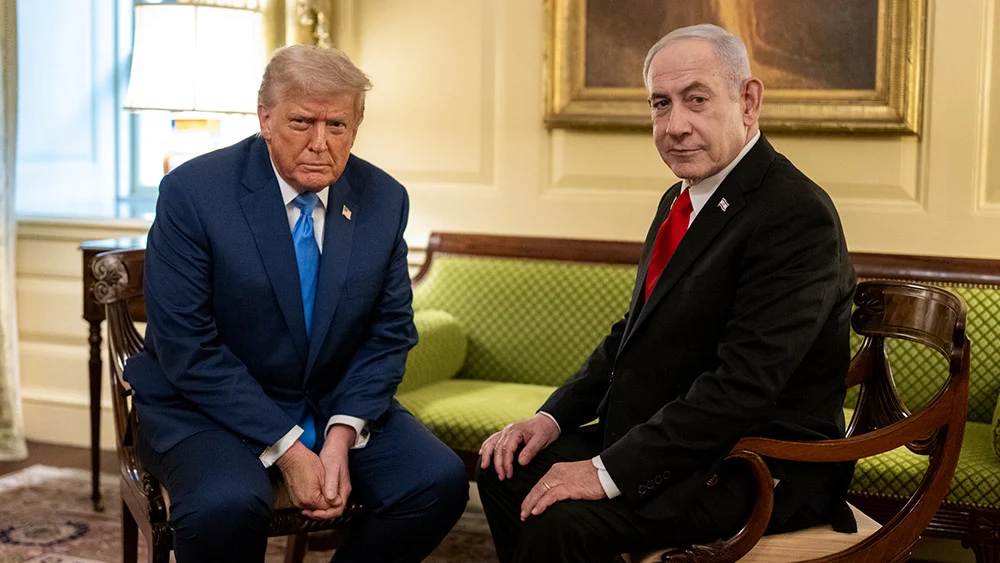
The decades-long political and strategic alliance between United States President Donald Trump and Israeli Prime Minister Benjamin Netanyahu is currently undergoing its most severe stress test to date. A tense, hour-long phone conversation on May 19 has ripped the veil off a growing divergence in regional policy, revealing that while both leaders seek to neutralize the threat posed by the Islamic Republic of Iran, their methodologies have become fundamentally incompatible.
At the heart of the friction is the U.S. decision to scrub a planned military campaign—reportedly code-named "Operation Sledgehammer"—which was intended to be a robust, retaliatory strike against Iranian assets. The cancellation of these strikes, initiated by the White House, has left the Israeli leadership feeling abandoned, while the Trump administration finds itself increasingly weary of being drawn into an open-ended regional conflict.
A Chronology of Escalation and Stalled Retaliation
The current diplomatic crisis is the culmination of a rapidly deteriorating security environment in the Middle East that began earlier this year with coordinated U.S.-Israeli strikes on Iranian nuclear infrastructure.
- Mid-May: The conflict, entering its 12th day, saw a brief and fragile ceasefire brokered by the White House. The truce was intended to allow for a cooling-off period, but it disintegrated almost instantly as both Tehran and Jerusalem accused one another of ongoing missile strikes and violations of the peace terms.
- May 17: President Trump signaled to Prime Minister Netanyahu that the U.S. was prepared to move forward with a fresh, decisive wave of attacks against Iran, aimed at crippling its remaining military infrastructure.
- May 18: Within 24 hours of that commitment, the White House reversed course. Influenced by intense lobbying from Gulf allies—specifically the United Arab Emirates, Qatar, and Saudi Arabia—President Trump opted to grant diplomatic mediators additional time to seek a breakthrough.
- May 19: The "heated" phone call occurred. Sources familiar with the conversation described it as a clash of wills, with Netanyahu arguing that diplomacy is a trap being used by Tehran to rebuild its military, and Trump insisting that the path to a lasting solution requires further negotiation.
The Strategic Rift: Maximum Pressure vs. Decisive Force
The disagreement between Washington and Tel Aviv highlights a long-standing ideological split that has been masked by the personal rapport between the two leaders. Trump, throughout his presidency, has relied on a doctrine of "maximum economic pressure" paired with high-stakes, last-minute diplomatic brinkmanship. He views the conflict through the lens of a dealmaker, preferring to keep the threat of force as a lever rather than an end-state.
Conversely, Benjamin Netanyahu’s security doctrine is rooted in the "Begin Doctrine," which posits that Israel cannot afford to allow its existential enemies any window of opportunity to reconstitute their nuclear or ballistic capabilities. Israeli officials view the current diplomatic pause as a strategic blunder, fearing that the time currently being squandered on negotiations will be used by the Iranian Revolutionary Guard Corps (IRGC) to harden their bunkers and disperse their missile batteries.
One U.S. official briefed on the contents of the May 19 call used colorful language to describe the Prime Minister’s demeanor, stating, "Bibi’s hair was on fire after the call." The sentiment within the Israeli cabinet is one of profound frustration; they feel they have been led to the precipice of a definitive victory, only to have the rug pulled out from under them by an administration that is prioritizing the concerns of Gulf states over the immediate security requirements of the Jewish state.
The Diplomatic Gambit: The "Letter of Intent"
While the drums of war beat in the background, a frantic, multi-national diplomatic effort is underway. Mediators from Pakistan and Qatar are currently finalizing a "letter of intent" aimed at establishing a 30-day window for intensive negotiations. The proposed framework is ambitious, aiming to address several pillars of the crisis:
- Nuclear Program: A freeze on uranium enrichment and a commitment to international oversight.
- Sanctions Relief: Potential limited thawing of frozen Iranian assets in exchange for verifiable compliance.
- Maritime Security: Reopening the Strait of Hormuz to civilian and commercial shipping, which has been significantly disrupted by the ongoing naval tensions.
- Regional Security Guarantees: A broader framework to address the proxy wars currently being fought across Lebanon, Syria, and Yemen.
Despite the enthusiasm from regional partners, the prospects for this document are dim. Iran has maintained a rigid posture, continuing to demand the total cessation of attacks on Iranian shipping, the full release of all frozen assets, and explicit security guarantees that would shield their regime from future U.S. or Israeli strikes.
Official Responses and Public Posturing
President Trump has attempted to maintain an air of control and unity, despite the obvious fracture. In a public briefing, he attempted to project a sense of dominance over the situation, telling reporters when asked about the Prime Minister: "He’ll do whatever I want him to do."
However, this public confidence is undermined by the reality of the situation. Trump has also expressed his own irritation with the Israeli side, noting that both Israel and Iran have violated his brokered truce. In a pointed social media statement, the President explicitly demanded that Israel cease its bombing campaign, framing any further offensive action as a violation of his directives.
Netanyahu’s office has remained relatively tight-lipped, acknowledging only that Israel halted its planned strikes at the President’s request. This public compliance, however, masks a deepening concern within the Israeli security establishment. They are increasingly worried that Trump is prone to the same cycle of "threat and withdrawal" that has plagued regional policy for years, potentially emboldening Tehran by demonstrating a lack of follow-through.
Implications for the Middle East
The implications of this widening divide are significant. For the region, the unpredictability of the U.S.-Israel relationship creates a power vacuum. If the alliance between Washington and Jerusalem continues to fray, Tehran may feel emboldened to push its luck, calculating that the U.S. is not prepared to engage in a full-scale kinetic war and that Israel can be successfully pressured into a defensive posture.
For the United States, the situation represents a complex balancing act. Trump is attempting to satisfy his Gulf allies—who fear that a full-scale war would devastate their economies and infrastructure—while simultaneously trying to fulfill his campaign promises of "peace through strength."
The President’s comments on May 20 served as a final warning: if the current diplomatic efforts fail to yield results, the military option remains on the table. "If we don’t get the right answers, it goes very quickly," Trump remarked. "We’re all ready to go."
Conclusion: A Fragile Future
The alliance between Donald Trump and Benjamin Netanyahu has survived political scandals, international condemnation, and domestic turmoil. Yet, the current dispute over Iran poses a different kind of threat—a fundamental disagreement on the existential nature of the conflict.
As regional mediators race against the clock to prevent a return to full-scale war, the world is watching to see if the two leaders can reconcile their strategies. Should the diplomatic path fail, the resulting military escalation would likely be the most intense the region has seen in decades. Whether this is a temporary tactical disagreement or the beginning of a deeper, more permanent rift in U.S.-Israeli relations remains the defining question of the current geopolitical crisis. The window for a peaceful resolution is closing, and the stakes for both the White House and the Knesset have never been higher.