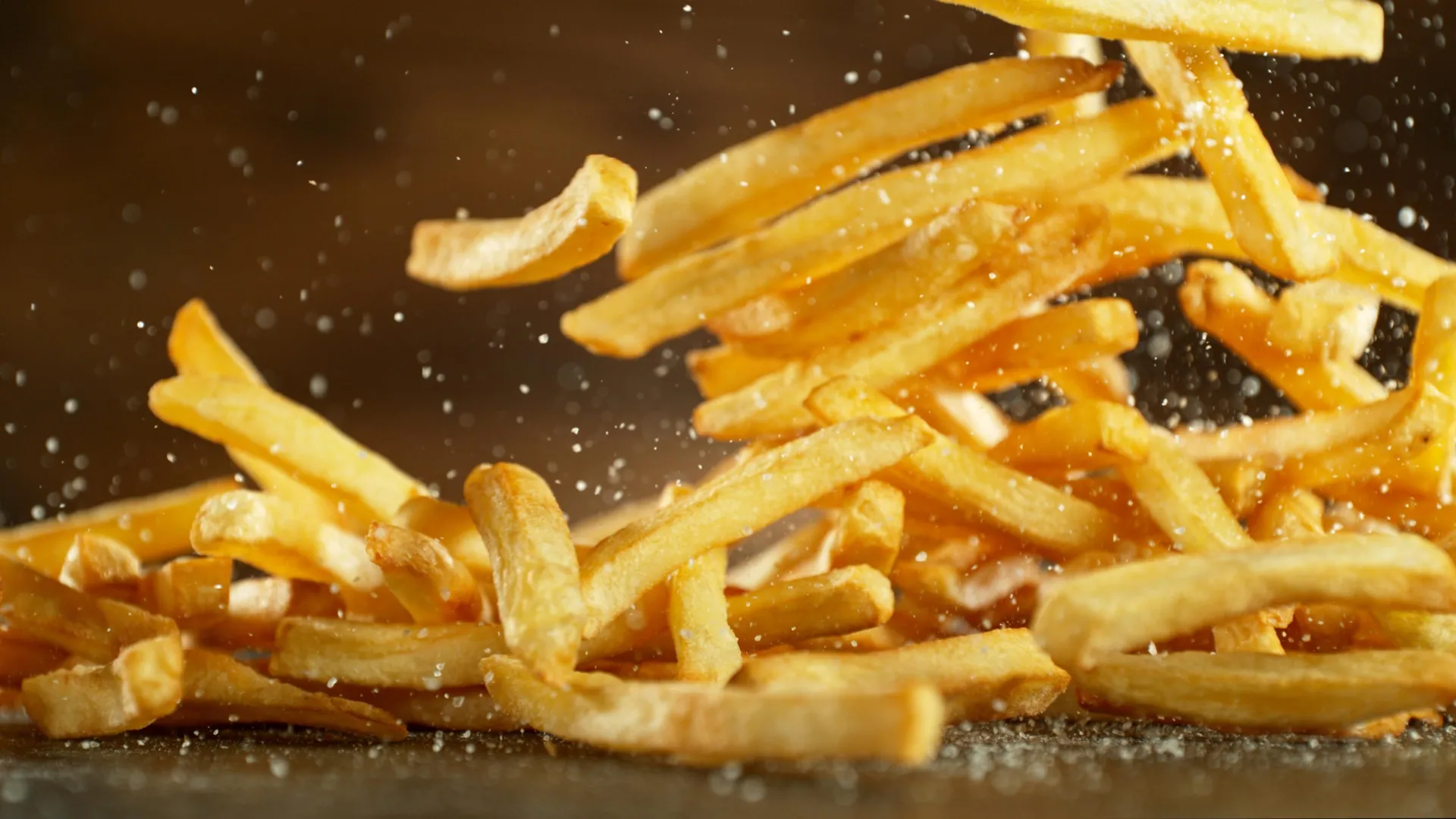
For generations, the humble French fry has stood as a global culinary staple. Whether served as a golden-brown side dish in a fast-food establishment or a premium accompaniment in a fine-dining restaurant, its appeal is universal. The secret to this popularity is a specific sensory profile: a crisp, satisfying exterior that gives way to a soft, fluffy interior, coated in a rich, savory layer of oil.
However, this indulgence comes with a significant health caveat. The very process that renders fries delicious—deep-fat frying—is also responsible for their high caloric density. During the frying process, potatoes act like sponges, absorbing vast quantities of oil as water evaporates from their internal structures. This high fat content has long been linked to systemic health issues, including obesity, cardiovascular disease, and hypertension.
Now, a team of researchers at the University of Illinois Urbana-Champaign (UIUC) may have found a solution that reconciles our cravings with our health. By leveraging the physics of electromagnetic waves, scientists are developing a hybrid frying method that promises to slash oil absorption without compromising the "crunch factor" that defines the perfect fry.
The Science of the "Soggy" Problem
To understand the breakthrough, one must first understand the thermodynamics of a potato. When a strip of potato hits 180-degree Celsius oil, a violent, invisible transformation occurs. Initially, the potato’s internal pores are saturated with water. As the heat penetrates the surface, this water turns into steam, creating internal pressure that pushes outward.
However, the process is fleeting. As the water escapes, it leaves behind a network of empty, porous channels within the potato. Once the water vapor pressure drops, the system experiences a phenomenon known as "negative pressure." In this state, the potato acts like a straw; it creates a suction effect that draws the surrounding hot oil deep into its porous structure.
"Think about a straw in a drink," explains Pawan Singh Takhar, a professor of food engineering in the Department of Food Science and Human Nutrition at UIUC. "If you push air into the straw, it creates positive pressure and any liquid will be pushed out. But if you suck on the straw, the liquid moves upward. Now imagine food materials have lots of tiny straws. When there is positive pressure, the oil stays out. But if there is negative pressure, the oil starts moving in."
According to Takhar’s research, roughly 90% of the oil absorption in a French fry occurs during this negative pressure phase. For decades, the food industry has struggled to mitigate this without altering the flavor, but the physics of traditional deep-frying makes this nearly impossible.
Chronology: From Lab Bench to Hybrid Solution
The journey toward this innovation began with a collaboration between UIUC and Washington State University. The researchers aimed to manipulate the internal pressure of the potato during the frying cycle. To do this, they turned to microwave energy.
Phase 1: The Microwave Experimentation
The researchers utilized a specialized microwave fryer capable of operating at two distinct frequencies: 2.45 gigahertz (the standard frequency for household microwaves) and 5.8 gigahertz. By testing these frequencies, the team sought to understand how electromagnetic waves could manipulate the movement of water molecules inside the potato.
Phase 2: Tracking the Internal Changes
The team processed potatoes through the standard industrial pipeline: peeling, cutting, blanching, and salting. They then subjected the strips to various frying conditions. Throughout the process, the team deployed high-precision sensors to track:
- Internal temperature fluctuations.
- Pressure changes within the potato tissue.
- Moisture loss rates.
- Oil uptake percentages.
Phase 3: Mathematical Modeling
Recognizing that physical measurement alone couldn’t account for every variable, the researchers developed complex mathematical models. Using the "hybrid mixture theory," they simulated how heat, moisture, and oil interacted at the molecular level under microwave influence. These simulations allowed the team to predict that microwave energy could significantly shorten cooking times while keeping the internal pressure positive, thereby preventing the "suction" of oil into the potato.
Supporting Data: The Efficiency of Dual-Frequency Heating
The data gathered during the research was compelling. By using microwaves to heat the potato from the "inside out," the researchers could ensure that water molecules were constantly oscillating and generating vapor. This vapor pressure acts as a barrier, preventing the oil from infiltrating the potato’s pores during the cooking process.
However, the team encountered a significant hurdle: texture. Fries cooked solely in a microwave remained unappealingly soggy. They lacked the Maillard reaction—the chemical process that gives fried foods their golden, crisp exterior.
"If you just use microwave frying, you get soggy food," Takhar noted. "To obtain a crispy texture and taste, you need conventional heating."
This realization led to the development of the "hybrid fryer." By combining conventional hot-oil immersion (to handle the surface crisping) with integrated microwave technology (to handle the internal moisture and pressure regulation), the researchers achieved the "holy grail" of food science: a fry that tastes like a traditional one but contains significantly less fat.
Official Responses and Expert Perspective
The research, led by Takhar and doctoral student Yash Shah, has been published in two major scientific journals: the Journal of Food Science and Current Research in Food Science. The academic community has received these findings with optimism, noting that the technology is not merely a laboratory curiosity but a viable candidate for industrial scaling.
"Consumers want healthy foods, but at the time of purchase, their cravings often take over," Takhar stated. "High oil content adds flavor, but it also contains a lot of energy and calories. My research team studies frying with the aim of obtaining lower fat content without significant differences in taste and texture."
The USDA National Institute of Food and Agriculture, which funded the project, views this as a vital step in addressing the public health crisis surrounding processed foods. By focusing on the engineering of the process rather than demanding that consumers simply "eat less," the researchers are offering a technological solution that respects consumer behavior while prioritizing nutritional outcomes.
Implications: A Shift in Industrial Frying
The implications for the food processing industry are profound. Large-scale fryers, such as those used by major fast-food chains and frozen food manufacturers, are essentially continuous conveyor belt systems. Integrating microwave generators into these existing systems is technically feasible and economically practical.
1. Improved Nutritional Profiles
If widely adopted, this technology could lead to a massive reduction in the average fat content of commercial fried snacks, potentially impacting rates of obesity and hypertension on a population level.
2. Operational Efficiency
Microwave-assisted frying significantly reduces total cooking time. For commercial manufacturers, time is money. Faster cooking cycles translate to higher throughput, lower energy consumption per unit, and reduced operating costs.
3. Maintaining the "Craveability" Factor
Perhaps most importantly, the hybrid method ensures that the product remains a "treat." By retaining the conventional frying step, the researchers ensure that the sensory experience—the crunch, the aroma, and the golden color—remains consistent with what the public expects.
4. Broader Applications
While the current focus is on the French fry, the principles of hybrid microwave frying can be applied to a wide array of fried goods, including breaded meats, vegetable tempura, and processed snacks. The ability to manipulate internal pressure via electromagnetic waves offers a new "knob" for food engineers to turn, allowing for unprecedented control over the final product’s quality.
Conclusion
The work coming out of the University of Illinois Urbana-Champaign serves as a masterclass in modern food engineering. By moving beyond traditional culinary methods and embracing the physics of electromagnetics, Takhar and his team have provided a roadmap for a healthier future.
While the technology awaits further commercial development, the path is clear: we no longer have to choose between the joy of a perfect French fry and our long-term health. Through the marriage of old-world frying and new-world microwave physics, the future of the snack industry looks significantly brighter—and crispier—than ever.