In a significant breakthrough for cardiovascular and metabolic medicine, researchers at UT Southwestern Medical Center have identified a previously overlooked protein that acts as a master regulator of how the liver secretes cholesterol-carrying particles into the bloodstream. This discovery, published in the American Heart Association journal Circulation, offers a new molecular "lever" that could revolutionize the treatment of atherosclerosis, heart disease, and fatty liver disease.
The protein, known as HELZ2, functions as a gatekeeper within liver cells, controlling the stability of the messenger RNA (mRNA) responsible for producing apolipoprotein B (apoB). By effectively fine-tuning the genetic instructions before the cholesterol-transporting proteins are even manufactured, HELZ2 presents a potential alternative to conventional therapies like statins, which act much later in the biological pipeline.
The Mechanics of Cholesterol Transport: A Shift in Perspective
To understand the magnitude of this discovery, one must look at how the body manages lipids. The liver is the primary engine for cholesterol distribution. It packages cholesterol and triglycerides into lipoproteins—the particles that circulate through our blood. While these particles are essential for energy transport, an excess of them, particularly low-density lipoprotein (LDL) or "bad" cholesterol, is the primary driver of plaque buildup in the arteries.
For decades, medical science has focused on managing cholesterol after it has already entered the blood or by inhibiting the liver’s internal production of cholesterol via enzymes like HMG-CoA reductase (the target of statins). The discovery of HELZ2 shifts this paradigm entirely.
"Most previous research focused on what happens to apoB after it’s already made," explains Dr. Yiao Jiang, a postdoctoral researcher in the Zhang Lab and a co-author of the study. "What surprised us is that HELZ2 acts much earlier, by controlling how long the apoB ‘message’ survives before the protein is even produced."
By regulating the lifespan of APOB mRNA, HELZ2 dictates the volume of lipoproteins the liver is capable of assembling. When HELZ2 activity is elevated, the mRNA degrades rapidly, stalling the assembly line. Fewer apoB proteins are produced, fewer lipoproteins are formed, and consequently, fewer fat particles are dispatched into the bloodstream.
Chronology of a Scientific Breakthrough
The path to identifying HELZ2 was paved by decades of innovation in genetic screening at UT Southwestern. The research team utilized a large-scale genetic screening platform developed by Nobel laureate Dr. Bruce Beutler, Director of the Center for the Genetics of Host Defense.
Phase 1: The Unexpected Mutation
The project began as an investigation into unusual fat accumulation in the livers of laboratory mice. Researchers observed that a specific group of mice exhibited a "gain-of-function" mutation. Unlike their counterparts, these mice showed a dramatic decrease in blood cholesterol levels but a paradoxical increase in liver fat. Through comprehensive genomic sequencing, the team identified that this mutation resulted in hyper-active HELZ2.
Phase 2: Decoding the Molecular Mechanism
Once the link between the mutation and the altered lipid profile was established, the team moved to isolate the precise molecular interaction. They discovered that HELZ2 binds to APOB mRNA. By shortening the "half-life" of this genetic instruction set, HELZ2 effectively prevents the cell from synthesizing the apoB protein. This established HELZ2 as a critical check-and-balance system in hepatic metabolism.
Phase 3: Validating the Therapeutic Potential
With the mechanism confirmed, the researchers moved to determine whether this process could be modulated in a controlled environment. The study demonstrated that by manipulating HELZ2, they could effectively "dial" the levels of circulating cholesterol, suggesting that if a pharmaceutical agent could replicate or inhibit this protein, it might offer a potent new tool for clinicians.
The Balancing Act: Cholesterol vs. Liver Fat
One of the most nuanced findings of the study is the "see-saw" effect between blood cholesterol and liver fat. This discovery highlights the inherent complexity of metabolic regulation.
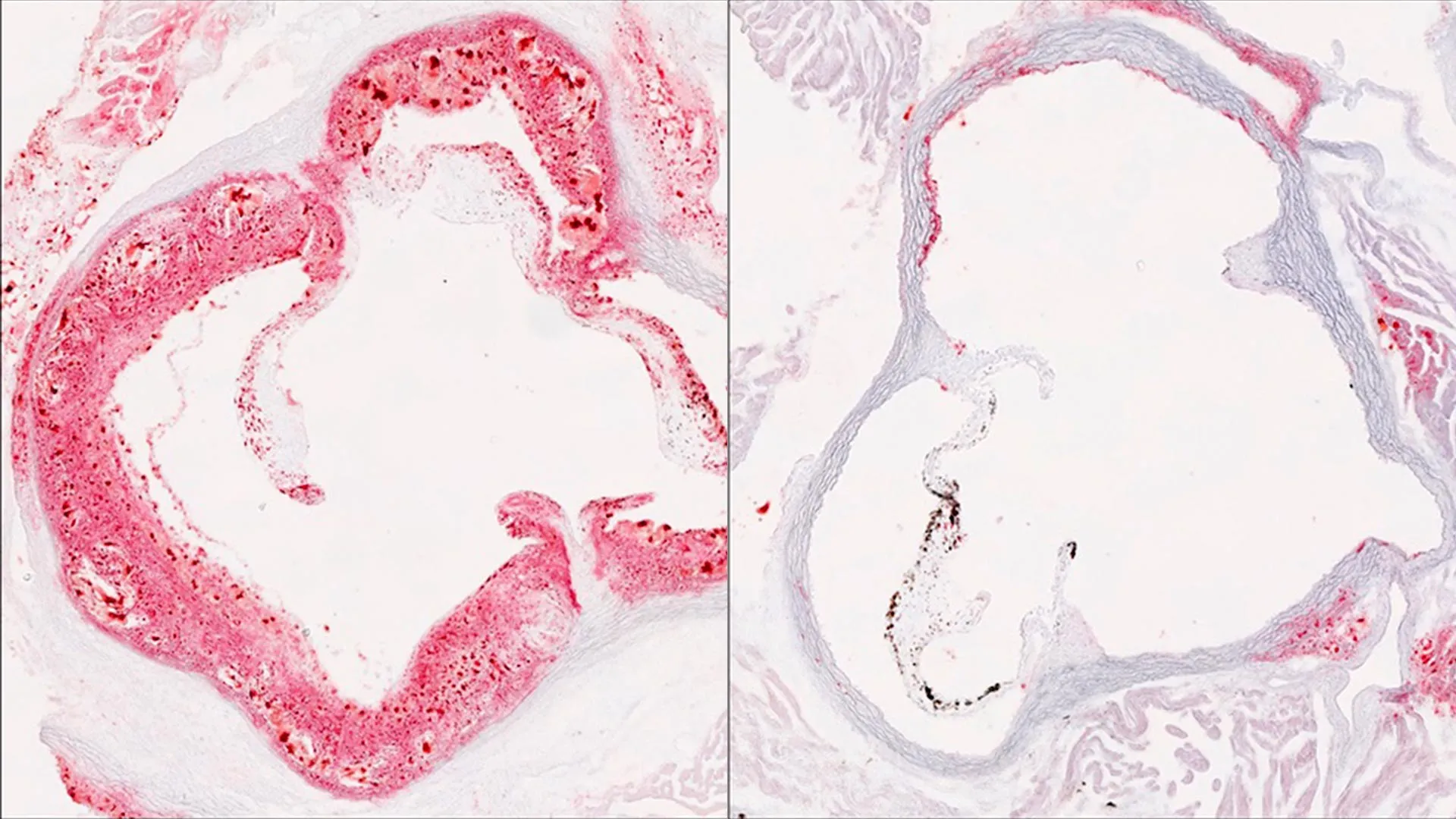
In the mice with the HELZ2 mutation, the researchers witnessed a significant reduction in LDL cholesterol and triglycerides, providing a clear protective effect against atherosclerosis—the primary cause of heart attacks and strokes. However, because the liver could not export these fats as efficiently, they accumulated within the liver tissue itself.
This creates a dual-edged sword that researchers must navigate. "We can think of HELZ2 as a kind of dial between the liver and the bloodstream," says senior author Dr. Zhao Zhang, Assistant Professor in UT Southwestern’s Center for the Genetics of Host Defense and of Internal Medicine. "Turning it up lowers cholesterol in the blood but increases liver fat. Turning it down does the reverse. That balance makes HELZ2 especially interesting as a potential therapeutic target."
The goal for future drug development will not necessarily be to fully activate or deactivate HELZ2, but rather to modulate it with surgical precision—lowering blood cholesterol without causing harmful hepatic steatosis (fatty liver).
Implications for Future Clinical Practice
The medical community currently relies heavily on statins, which have been the gold standard for cholesterol management for over thirty years. While statins are highly effective, they are not without limitations, including side effects like muscle pain and the fact that they do not address the entire spectrum of lipid-related metabolic disorders.
The identification of HELZ2 introduces an entirely different category of intervention: RNA-level regulation. By acting before the protein is synthesized, this approach could potentially be more efficient and offer a higher degree of control than current downstream inhibitors.
A New Era of Targeted Medicine
As the research team looks toward future applications, they are considering how this discovery could assist patients who do not respond to traditional cholesterol-lowering drugs. Furthermore, the role of HELZ2 in fatty liver disease—a condition that is rapidly becoming a global health crisis—cannot be overstated. Understanding how to "turn the dial" to prevent fat accumulation in the liver could provide a therapeutic pathway for millions of patients with non-alcoholic fatty liver disease (NAFLD) and metabolic dysfunction-associated steatohepatitis (MASH).
Official Responses and Collaborative Impact
The study represents a collaborative triumph at UT Southwestern. Dr. Bruce Beutler, whose genetic screening system was instrumental in this discovery, brings a pedigree of excellence to the project. As a 2011 Nobel laureate in Physiology or Medicine, Dr. Beutler’s work continues to define the cutting edge of how genetic variations dictate human health.
"The idea that we can control apoB at the RNA level represents a major shift in how we think about cholesterol regulation," says Dr. Zhang. "It gives us a new molecular lever—and potentially a new set of tools—for tackling these conditions."
The project was supported by significant grants from the National Institute of Diabetes and Digestive and Kidney Diseases of the National Institutes of Health, underscoring the federal commitment to understanding the genetic underpinnings of chronic metabolic diseases.
Conclusion: The Horizon of Lipid Research
While the discovery of HELZ2 is still in the preclinical phase, the implications are profound. It provides a roadmap for future drug development that seeks to treat the root causes of lipid imbalance rather than simply managing the symptoms.
As the research moves from the laboratory to potential clinical exploration, the medical community will be watching closely. If the "genetic dial" identified by the UT Southwestern team can be safely manipulated in human patients, it may mark the beginning of a new chapter in cardiovascular prevention—one where we no longer just treat the consequences of cholesterol, but instead, precisely control its very genesis.
This research serves as a reminder that the human body is a finely tuned machine, and that beneath the complexity of our metabolic processes, there are elegant, controllable mechanisms waiting to be uncovered. For those suffering from the silent progression of heart disease, the HELZ2 protein may one day be the key to a healthier heart and a more balanced life.