






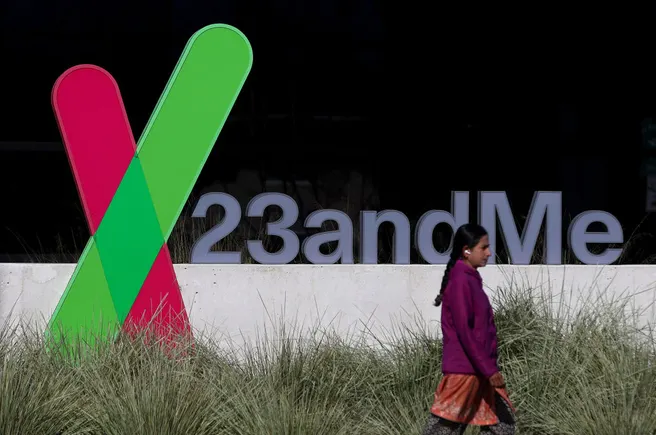
The intersection of biotechnology and digital security has long been a subject of concern for privacy advocates, but in late 2023, those fears materialized into a corporate catastrophe. Genetic testing giant 23andMe, once the vanguard of personalized health insights, has become the centerpiece of a massive data security failure. Following a sophisticated cyberattack that compromised the sensitive biological and ancestral data of nearly 6.9 million users, the company now faces aggressive litigation from the State of California. This crisis has not only tarnished the company’s reputation but has served as a grim catalyst for its financial collapse, culminating in bankruptcy and a complex, contentious corporate restructuring.
The Scope of the Breach: A Treasure Trove of Biological Identity
The 23andMe data breach stands as one of the most significant compromises of genetic information in history. The breach, first acknowledged in October 2023, was not merely a loss of credit card numbers or email addresses; it involved the exposure of profoundly intimate data.
According to official filings and internal investigations, hackers gained access to the accounts of approximately 6.9 million individuals—nearly half of the company’s total user base at the time. The stolen data included genetic predispositions, health risk factors, ancestry reports, ethnicity markers, and detailed information regarding biological relatives.
For many users, 23andMe provided a window into their own biological heritage. By exposing this data, the attackers did more than steal digital records; they compromised the genetic privacy of millions of families, potentially exposing individuals to future discrimination based on health markers or lineage.
Chronology: Five Months of Unchecked Access
The narrative of the breach is characterized by a prolonged period of vulnerability. Forensic investigations and subsequent legal complaints have painted a picture of a company that was, at best, unprepared for the sophistication of modern cyber threats, and at worst, negligent in its duty to safeguard the most sensitive data a consumer can provide.
- Early 2023: Threat actors began utilizing "credential stuffing" attacks. By leveraging recycled passwords obtained from previous breaches on other platforms, hackers systematically gained unauthorized access to 23andMe user accounts.
- The "DNA Relatives" Exploit: Once inside, the hackers exploited a coding flaw in the "DNA Relatives" feature. This tool, designed to help users identify biological connections, allowed the attackers to scrape extensive amounts of data from the accounts of users who had opted into the feature, as well as the data of their connected relatives.
- October 2023: The breach reached the public eye when stolen data appeared for sale on dark web forums. The attackers specifically marketed subsets of the data—notably 1.1 million records belonging to Asian-Pacific Islander and Ashkenazi Jewish users—signaling a malicious intent to leverage the data for discriminatory purposes.
- October 10, 2023: Under immense pressure and following the exposure of the data, 23andMe finally implemented a global password reset, a security measure that many experts argue should have been a standard protocol long before the incident.
- November 2023: The company mandated multifactor authentication (MFA) for its users, a fundamental security practice that was strikingly absent during the five months the attackers operated undetected within the company’s systems.
- March 2025: Facing a deluge of class-action lawsuits and mounting operational costs, 23andMe filed for Chapter 11 bankruptcy. The fallout from the data breach was explicitly cited as a contributing factor to the company’s fiscal insolvency.
Supporting Data: A Failure of Basic Security Protocols
The legal complaint filed by California Attorney General Rob Bonta highlights a systemic failure to implement industry-standard security measures. At the heart of the critique is the company’s delay in adopting basic, high-impact defenses.
The use of "credential stuffing" is a well-documented threat in the cybersecurity industry. That 23andMe did not have robust, mandatory multifactor authentication in place for its entire user base until after the breach had been discovered suggests a fundamental misalignment between the company’s product—which deals in the most sensitive data imaginable—and its security posture.
Furthermore, the "DNA Relatives" feature, while popular among users, lacked the necessary guardrails to prevent mass extraction. By allowing a single compromised account to effectively "scrape" the records of thousands of other users, 23andMe inadvertently created a force multiplier for the hackers. This architecture allowed a limited number of account compromises to balloon into a breach involving nearly 7 million people.
Official Responses and The Legal Battle
California Attorney General Rob Bonta has been the most vocal critic of 23andMe’s handling of the crisis. In a series of public statements, Bonta characterized the company’s response as "entirely unacceptable."
"This wasn’t just exposed usernames and user preferences," Bonta remarked. "It was consumers’ sensitive personal information and data related to consumers’ health, genetic predispositions, and risk factors, biological relatives, ancestry, and ethnicity."
Bonta’s office is currently pursuing civil penalties that reflect the severity of the incident. Under California law, the state is seeking:
- $1,000 per violation of the Genetic Information Privacy Act.
- $2,500 per violation of the California Consumer Privacy Act (CCPA).
- $7,500 for each intentional violation or violation involving the data of minors.
The Attorney General emphasized the cultural context of the breach, noting that the exposure of specific ethnic groups (AAPI and Ashkenazi Jewish) occurred during a period of rising hate speech and violence in the United States, effectively weaponizing the data against already vulnerable communities.
Implications: The Future of Genetic Privacy
The collapse of 23andMe and its subsequent acquisition by the TTAM Research Institute—a nonprofit founded by former CEO Anne Wojcicki—has opened a new front in the legal battle. California, along with four other states, has formally opposed this sale. The states argue that transferring the massive, sensitive genetic database to a new entity without seeking explicit, fresh opt-in consent from every affected user violates genetic privacy laws.
The Bankruptcy Dilemma
The bankruptcy proceedings add a layer of complexity to the litigation. If the state secures civil penalties, those claims must navigate the priority queues of the bankruptcy court. Whether victims will ever see any restitution remains an open question, as the company’s assets are liquidated or reorganized to satisfy creditors.
A Warning for the Bio-Tech Industry
The 23andMe incident serves as a watershed moment for the biotechnology sector. It underscores that companies handling biological data cannot be evaluated by the same standards as traditional e-commerce platforms. Genetic data is immutable; if a credit card number is stolen, it can be changed. If a person’s genetic predisposition to a disease or their precise ancestry is exposed, that information is compromised for a lifetime.
The incident highlights a critical need for:
- Stricter Regulation: Moving beyond general privacy laws toward specialized genetic privacy protections that mandate rigorous, proactive security audits.
- Privacy-by-Design: Features that share data between users must be built with the assumption that accounts will be compromised, ensuring that a single breach cannot lead to a systemic data harvest.
- Accountability: The high penalties sought by the California Attorney General signal that regulators are increasingly willing to hold executives and corporations financially responsible for the long-term, irreversible damage caused by data negligence.
As the legal proceedings continue, 23andMe remains a cautionary tale. It stands as a stark reminder that in the age of Big Data, the most intimate details of our biology are only as secure as the infrastructure that stores them. For millions of customers, the breach was a violation of trust that may have lifelong consequences, and for the industry at large, it is a clarion call for a radical overhaul of security culture in the digital age.