Published June 3, 2026
Note: This feature is part of the Yoga Journal archives series, a curated collection of seminal articles originally published between 1975 and the present. This piece originally appeared in the 2006 issue of Yoga Journal.
For many, the backbend represents the pinnacle of yogic expression—a graceful, gravity-defying architecture of the human form. For senior Iyengar Yoga teacher Patricia Walden, these postures are more than mere physical feats; they are a metaphorical ascent. "I think of backbends as the closest I’ll ever get to flying," Walden says. She often cites a poem by the 13th-century mystic Rumi to encapsulate the internal experience of the practice: "Stop the words now. Open the window in the center of your chest and let the spirits fly in and out."
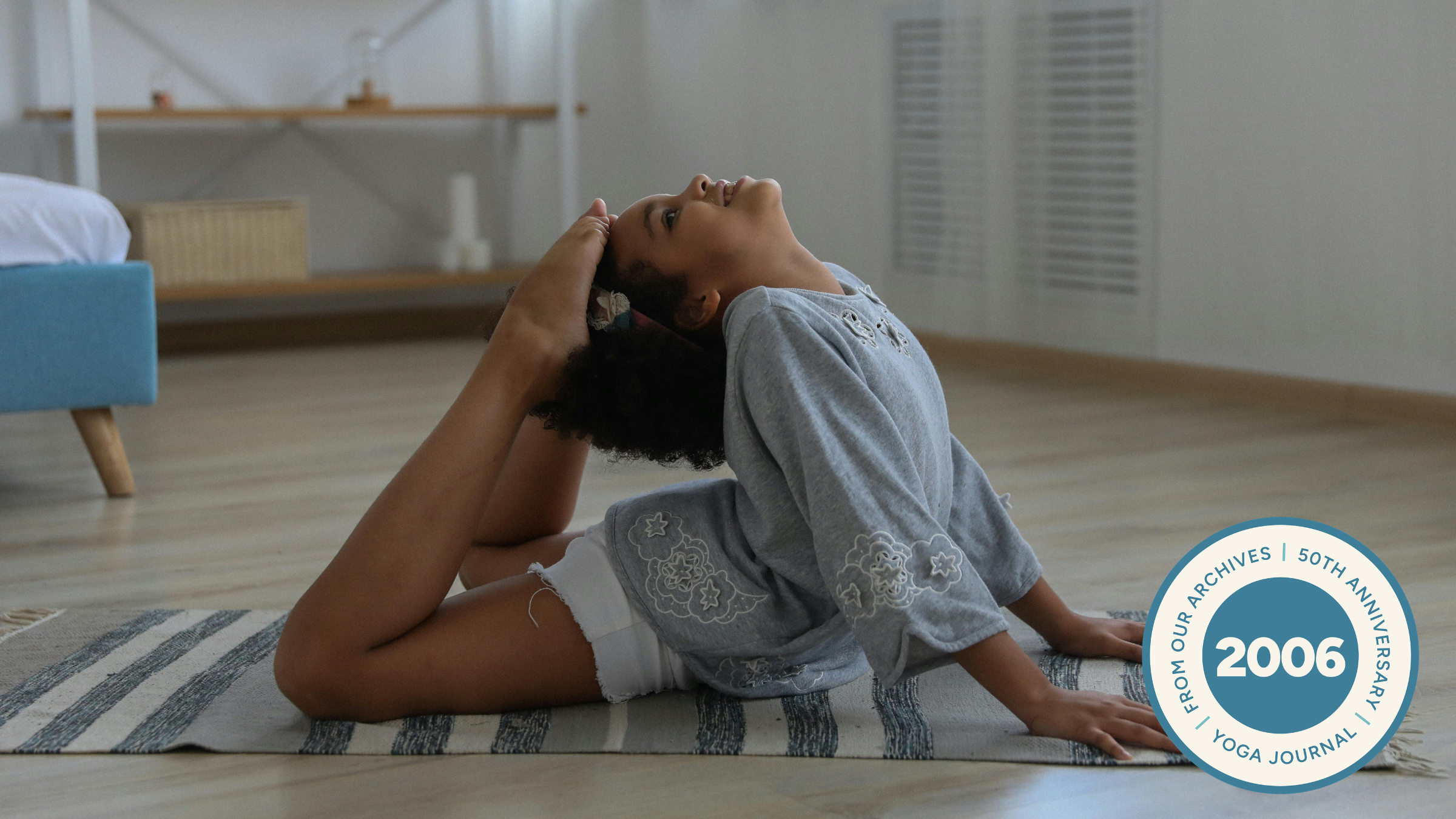
For Walden, these words are not just poetic; they are a blueprint for Rajakapotasana, or King Pigeon Pose. However, the path to such an advanced posture is rarely linear. While her current practice exhibits an effortless, fluid elegance, Walden is quick to remind students that her own journey was fraught with physical resistance. For years, backbends were a source of acute lower-back pain, a reality that allows her to offer profound empathy to those who find the heart-opening journey daunting.
The Physical and Psychological Mechanics of the Backbend
The transition from struggle to freedom is the hallmark of Walden’s teaching philosophy. As she evolved her practice, she discovered that the physical constraints of back-bending were often deeply intertwined with emotional armoring. "Many people carry a significant amount of tension around the navel and diaphragm," she observes. "When you begin to let go and experience true freedom in your chest, you often feel emotions being released."
This psychological release is a fundamental component of the practice. Backbending requires a courageous surrender into the unknown—an arching of the spine that leaves the front body exposed and vulnerable. By persevering through this discomfort, students report a marked increase in self-confidence and emotional resilience. The physical opening of the chest serves as a catalyst for a broader, more expansive mental state.
The Journey to King Pigeon: A Chronology of Preparation
King Pigeon Pose is not a posture one simply "enters"; it is a posture one earns through meticulous preparation and a disciplined sequencing of the body’s mechanics. Walden suggests that students approach their practice with the analytical rigor of a scientist and the devotion of a monk.
Studying the Form
Walden’s foundational advice is to consult B.K.S. Iyengar’s seminal text, Light on Yoga. By studying the precise alignment of King Pigeon Pose and comparing it to foundational postures like Bhujangasana (Cobra Pose), students can begin to visualize the trajectory of their own progress. The goal is to identify the "anatomical bridge"—where one needs more flexibility (typically the groin and thoracic spine) and where one needs more stability (the shoulders, arms, and back extensor muscles).
The Mantra of Repetition
"Practicing an asana is like chanting a mantra," Walden explains. "You don’t just say a mantra once: You repeat it over and over until its sound and meaning infuse your whole being." This concept of repetition is essential for developing the neuromuscular memory required for deep backbends. It is not merely about physical stamina; it is about allowing the intelligence of the body to catch up to the intentions of the mind.
Maintaining a Spacious Mind
Perhaps the most critical advice Walden offers is the maintenance of a "spacious mind." When faced with a challenging pose, the natural human response is to contract—to clench muscles and shorten the breath. This contraction is the enemy of the backbend. By keeping the mind quiet and spacious, the practitioner avoids aggressive movement, instead treating the physical form as a "doorway" to deeper, internal awareness.
Supporting Data: A Four-Step Preparatory Sequence
To reach the depth required for King Pigeon, Walden advises a robust warm-up. Before attempting this sequence, practitioners should engage in a vigorous practice including Adho Mukha Vrksasana (Handstand), Urdhva Mukha Svanasana (Upward-Facing Dog), and Urdhva Dhanurasana (Wheel Pose).
1. Cobra Pose (Bhujangasana)
Cobra acts as the primary laboratory for the backbend. By pressing the feet and legs firmly into the floor, one creates the necessary "downward pressure" to allow the spine to rise. Walden emphasizes the internal rotation of the thighs and the movement of the tailbone toward the floor to protect the sacrum. The key here is to lift from the upper sternum while avoiding the "navel-push," which compresses the lumbar spine.
2. Bow Pose (Dhanurasana)
Bow Pose deepens the engagement of the back extensor muscles. By grasping the ankles and pressing the shins back, the practitioner builds a dynamic tension that opens the chest horizontally. Walden encourages students to "walk" their hands down the shins toward the knees as flexibility increases, effectively using the breath to percolate awareness through the entire posterior chain.
3. One-Legged King Pigeon Pose II (Variation)
Using a wall and yoga blocks, this variation allows for the precise squaring of the hips. By kneeling with the back shin against the wall, the practitioner can safely address tightness in the quadriceps and groin. This variation serves as a critical diagnostic tool: if the spine cannot reach a vertical alignment, it indicates a need for more focused work on hip mobility before attempting the full expression of the pose.
4. King Pigeon Pose (Variation)
Using a chair as a support, the practitioner can explore the deep thoracic arch required for the final pose. This version requires a sophisticated communication between three distinct movements: the arching of the upper spine, the drawing of the feet toward the head, and the grounding of the hands. It is a balancing act of opposing forces, designed to prepare the body for the final, unassisted expression.
Implications for the Long-Term Practitioner
The ultimate goal of King Pigeon Pose is not the attainment of the physical shape itself, but the cultivation of awareness. Walden likens the practice to "digging a well." Each session is an opportunity to go deeper into the unexplored regions of one’s own physical and mental landscape.
The Conductor’s Approach
Walden emphasizes that as one approaches the full pose, one must adopt the mindset of a conductor leading an orchestra. The pose requires a subtle, constant recalibration of all physical actions. It is a symphony of engagement—balancing the strength of the arms with the softness of the breath, and the lift of the sternum with the grounding of the tailbone.
The Illusion of "Effortless Magic"
When asked about the secret to finally touching the head to the feet, Walden offers a mix of wisdom and humor. "You wait, breathe into that opening, wait there, go a little further… and one day, your head will magically rest on your feet without any effort."
This "effortless magic" is the result of years of consistent, devoted practice. It serves as a reminder that the most profound transformations in yoga are not achieved through force or goal-oriented striving, but through a patient, steady dialogue with the body.
Final Reflections
In an era where yoga is often marketed as a quick path to physical fitness, Patricia Walden’s approach remains a sobering and beautiful reminder of the practice’s deeper roots. King Pigeon Pose is a challenge, certainly, but it is also an invitation. It asks the practitioner to be brave enough to open their chest, quiet enough to hear the messages of their body, and patient enough to let the transformation happen in its own time. Whether it takes months or a lifetime, the journey toward the pose is, in itself, the true destination.