












Executive Summary: A New Front in the Geopolitical Tug-of-War
The landscape of global medicine is undergoing a seismic shift, one that has moved from the laboratory bench to the halls of Congress. A new bipartisan proposal, introduced on June 2, 2026, aims to integrate the biotechnology sector into the "COINS" Act—a legislative framework designed to scrutinize cross-border economic entanglements.
The move comes as U.S. lawmakers express growing alarm over the rapid maturation of China’s pharmaceutical industry. Spearheaded by Reps. John Moolenaar and Debbie Dingell, the legislation seeks to impose rigorous oversight on licensing agreements between American pharmaceutical giants and their Chinese counterparts. This effort is not merely a regulatory tweak; it is a fundamental challenge to the globalized nature of modern drug discovery, driven by fears that reliance on Chinese innovation could eventually threaten U.S. national security and the long-term viability of the American research infrastructure.
The Chronology of a Growing Divide
To understand the urgency behind this legislation, one must look at the rapid acceleration of Sino-U.S. biotech integration over the last half-decade.
- 2020: The Starting Line: Cross-border licensing deals between U.S. and Chinese firms were relatively modest, totaling less than $5 billion annually. At this stage, China was viewed primarily as a manufacturing hub for APIs (Active Pharmaceutical Ingredients).
- 2023: The Strategic Warning: A bipartisan commission released a series of formal recommendations, highlighting the potential for intellectual property leakage and the loss of domestic manufacturing capacity. This report served as the first major legislative "shot across the bow."
- 2025: Mega-Deals Set the Stage: The industry saw a transition from small-scale collaborations to massive, long-term strategic alliances. Bristol Myers Squibb announced a multi-billion dollar collaboration with Hengrui Pharma, potentially valued at $15.2 billion. Shortly thereafter, Pfizer inked a deal with Innovent Biologics, signaling that the "Big Pharma" giants were heavily doubling down on Chinese innovation.
- June 2026: The Legislative Pivot: The introduction of the amendment to the COINS Act marks the first time that the federal government has sought to place the biotechnology industry under the same stringent scrutiny typically reserved for semiconductors and quantum computing.
Supporting Data: The Scale of the "Licensing Explosion"
The data supporting the lawmakers’ concerns is stark. According to figures cited by the bill’s sponsors, cross-border licensing transactions involving Chinese drugmakers surged to $136 billion in 2025. This exponential growth—a nearly 27-fold increase since 2020—highlights a trend that U.S. policymakers characterize as an "offshoring of critical medical intelligence."
Critics of the current deal-making pace argue that the "regulatory flexibility" offered by the Chinese market acts as a subsidy for innovation, allowing Chinese firms to move faster than their Western peers. However, the sheer volume of these deals has created a dependency loop. By outsourcing R&D, U.S. companies are not only funding the growth of the Chinese ecosystem but are also becoming reliant on clinical data and manufacturing processes originating within a geopolitical rival’s borders.
Official Perspectives: The Clash of Philosophies
The Case for Containment
Rep. John Moolenaar has been the most vocal critic of the status quo. In a pointed statement following the bill’s introduction, Moolenaar argued that the current trajectory is unsustainable.
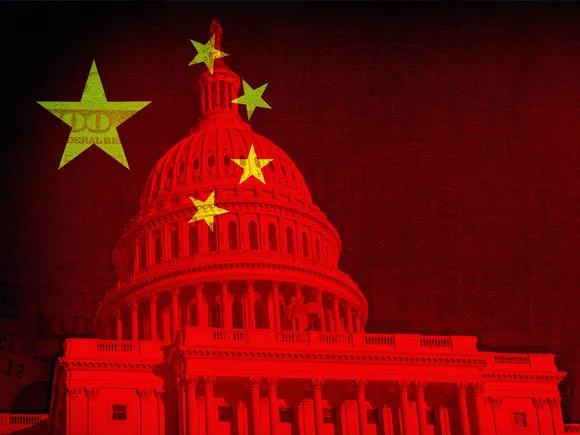
"American companies are making dangerous deals with Chinese biotech companies that threaten the future of American pharmaceutical production," Moolenaar said. "We must not allow American investment, expertise, and technology to offshore our biotech industry, hand Chinese companies another chokehold over our economy, and hollow out our nation’s research infrastructure."
For the bill’s proponents, this is a matter of sovereignty. They argue that if the U.S. loses its edge in biotechnology—a field they view as critical to national defense as artificial intelligence—the nation risks a scenario where a future public health crisis could leave the U.S. at the mercy of foreign supply chains and proprietary technology controlled by Beijing.
The Case for Global Collaboration
Conversely, the venture capital and scientific communities have expressed significant pushback. Bruce Booth, a partner at Atlas Venture, has become a prominent voice in the opposition, arguing that the legislation is based on a fundamental misunderstanding of how scientific progress works.
"Biotechnology is not a ‘secretive’ industry in the way that defense technology is," Booth argued in a recent industry blog post. "It is built on a long-standing tradition of shared scientific knowledge. A huge diversity of players, collaborating over time, is what makes this industry so dynamic."
Booth points to the historical example of Takeda Pharmaceutical. In the 1990s, Japan was viewed as an existential threat to Western industry, much like China is today. Yet, Takeda did not destroy Western pharma; it integrated into the global ecosystem and now serves as a major employer in the U.S. life sciences hub of Cambridge, Massachusetts. Booth contends that treating Chinese firms as pariahs will only stifle U.S. innovation and increase costs for patients who rely on the rapid, globalized pace of drug development.
Implications: A Looming Legislative Battle
The road to passing this legislation is fraught with political hurdles. The 119th Congress, which set a record for the lowest number of bills signed into law during the first year of the current administration, is now entering a period of intense focus on the upcoming November elections.

The Legislative Path
To see this bill through to the President’s desk, sponsors will likely have to attach it to a broader, must-pass spending package. However, this carries its own risks, as the pharmaceutical lobby is expected to fight hard against provisions that would complicate their ability to secure the most profitable, high-potential assets from overseas.
The Economic Fallout
Should the bill pass in its current form, the immediate impact would be a "chilling effect" on venture capital and Big Pharma licensing.
- Valuation Volatility: Chinese biotech firms, which have relied heavily on Western capital and licensing fees, could see their valuations plummet.
- Increased Costs: If U.S. firms are forced to repatriate R&D, the costs of drug discovery—already reaching record highs—would likely spike, potentially being passed on to the consumer in the form of higher drug prices.
- Global Retaliation: There is a significant risk that China could respond with retaliatory measures, such as restricting access to the Chinese market for U.S. pharmaceutical products or limiting the export of essential raw materials required for medicine manufacturing.
Conclusion: The Path Forward
The debate over the COINS Act amendment is emblematic of a broader, deeper question facing the United States: How does a nation maintain its competitive edge in a globalized scientific landscape without succumbing to isolationism?
While the desire to protect national security is understandable, the biotech sector operates on a model of global exchange that is distinct from traditional heavy manufacturing. As the November elections approach, the industry will be watching closely to see if the U.S. chooses a path of guarded cooperation or a strict, defensive decoupling. For now, the future of the multi-billion dollar deals between Pfizer, Bristol Myers, and their Chinese partners hangs in the balance, serving as a high-stakes test case for the future of global medicine.