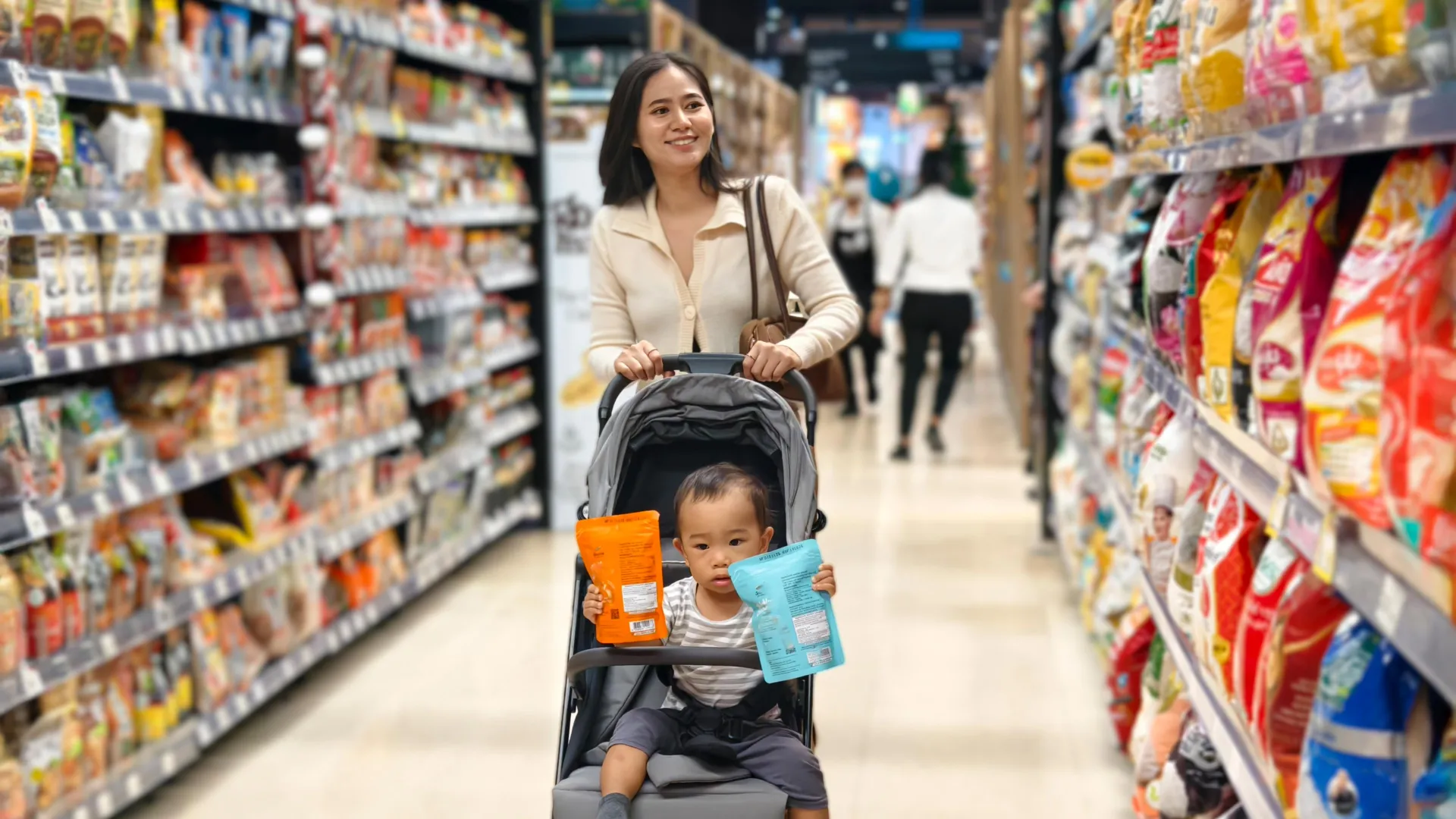
For millions of parents, the grocery store toddler aisle is a place of convenience and presumed safety. Walking past shelves lined with colorful pouches, crackers, and snack bars, the average consumer operates under the implicit trust that these products—specifically engineered for developing bodies between the ages of 6 and 36 months—meet rigorous nutritional standards. However, a sweeping new study presented at the American Society for Nutrition’s annual flagship conference, NUTRITION 2026, suggests that this trust may be misplaced.
The research, which examined thousands of packaged products across Texas, indicates that the toddler food market is overwhelmingly dominated by ultra-processed items. Perhaps more alarmingly, nearly half of these products fail to meet basic international health benchmarks, raising urgent questions about how the food industry targets our youngest consumers and how current regulatory gaps may be contributing to long-term health risks.
The Study: A Snapshot of the Modern Toddler Diet
The research project, led by Erin A. Hudson, JD, a PhD candidate at The University of Texas at Austin, alongside Dr. Marissa Burgermaster, involved a meticulous audit of 21 grocery stores in the Austin, Texas area. Researchers photographed and analyzed the nutritional profiles of 2,783 individual products marketed to children aged 6 to 36 months. To maintain a focus on snack and meal convenience items, the study explicitly excluded infant formula, liquid beverages, and standard fruit or vegetable purees often introduced as "first foods."
Using the Nova classification system—the gold standard for categorizing food based on the extent of industrial processing—the team discovered that 81% of the items on the shelves were classified as "ultra-processed." These are products formulated mostly from substances derived from foods, additives, and industrial processes, often containing little to no intact whole-food ingredients.
When measured against the World Health Organization’s (WHO) Nutrition and Promotion Profile Model (NPPM)—a global framework designed to ensure that commercial foods meet the specific physiological needs of young children—the findings were stark: 49% of the products failed to satisfy at least one critical nutrient benchmark.
Chronology of the Investigation and Disclosure
The timeline of this research underscores the growing urgency surrounding pediatric nutrition policy in the United States.
- Data Collection: Throughout the observation phase, researchers conducted in-store audits in Austin, documenting the precise nutritional labels of nearly 3,000 products.
- The Analysis: Following the collection, the team applied the Nova classification and the WHO NPPM benchmarks to quantify the prevalence of sugar, sodium, fat, and caloric density.
- The Disclosure: On July 26, 2026, during the "Ultra-Processed Foods: Methodological Advancements" oral session at NUTRITION 2026 in National Harbor, Maryland, Hudson presented the finalized data. The presentation served as a wake-up call to the scientific community, highlighting the discrepancy between what parents perceive as "healthy" and what is actually contained within the packaging.
While the data currently exists as a conference abstract—meaning it has undergone expert committee review but awaits the full rigors of a peer-reviewed journal publication—the implications have already sparked intense discussion among nutrition policy experts.
Supporting Data: Where the Products Fail
The nutritional shortcomings identified by the researchers were not isolated to a single category of food; rather, they spanned a wide array of popular toddler snacks. When the researchers broke down the failures, they identified specific, concerning trends:
- Sugar Overload: 17% of products failed to meet WHO-recommended sugar limits.
- Sodium Excess: 25% of products contained sodium levels exceeding healthy thresholds for toddlers.
- Energy and Fat Discrepancies: 11% of products fell short of fat standards, while 12% failed to meet energy density requirements.
The study highlighted several "repeat offenders" that frequently bypassed these health guidelines. Fruit pouches were cited for excessive sugar content; oat bars were flagged for high sugar and caloric density; and savory staples like macaroni and cheese, turkey sticks, and various puffs (cheese and peanut butter) were frequently found to be over-indexed in sodium, fat, and calories.
A critical nuance of the study is the distinction between "good" and "bad" calories. The researchers acknowledged that higher fat or calorie levels are not inherently negative if they stem from whole-food sources like beef or peanuts. However, the study found that ultra-processed versions of these foods contained high sugar and salt without the corresponding nutritional benefits found in whole foods, making them poor choices for developing children.
Regulatory Implications and the "Labeling Gap"
The timing of this research coincides with a pivotal moment for the U.S. Food and Drug Administration (FDA). The agency is currently weighing updated regulations regarding front-of-package nutrition labeling, health claims, and the marketing of food to children.
Currently, the United States stands in contrast to many other nations that have implemented aggressive "warning label" systems. In countries like Chile, for instance, products high in sugar, sodium, or calories must feature prominent, black-and-white warning labels that are easily understood by parents at a glance. In the U.S., by contrast, the burden of nutritional literacy falls entirely on the parent.
"Many parents may assume that products sold on the baby/toddler food aisles of their grocery stores have to meet certain nutrient standards," Hudson noted during her presentation. "Our findings highlight that half of the toddler foods available in local grocery stores do not. As a result, parents have to be vigilant in checking labels and ingredients to determine the nutrient content and processing level of products for their toddlers."
The researchers argue that the current landscape is fundamentally unfair to parents. By relying on sophisticated marketing and "healthy-sounding" branding, manufacturers often obfuscate the nutritional reality of their products. Mandatory front-of-package warnings could serve as a necessary tool to help parents navigate the grocery store, while simultaneously providing a financial incentive for manufacturers to reformulate their recipes to avoid the "unhealthy" labeling.
The Long-Term Consequences of Early Dietary Habits
The urgency behind this research stems from the established link between early childhood nutrition and lifelong health outcomes. The toddler years are a formative window where taste preferences and dietary patterns are cemented. When a child is frequently exposed to ultra-processed foods—which are often hyper-palatable due to the specific combination of added sugars, fats, and sodium—it can create a biological and behavioral preference for those types of foods.
Excessive sugar consumption during these early years is particularly hazardous. Beyond the risk of childhood obesity, it is linked to the development of early-onset metabolic issues and tooth decay. While the specific biological mechanisms linking ultra-processed foods to poor health outcomes are still being studied, the consensus is growing that the industrial processing itself, even when nutrients are balanced, may have independent, negative impacts on metabolic health.
Limitations and Future Directions
The researchers were careful to acknowledge the limitations of their study. Because the research was restricted to shelf-stable packaged foods in a single geographic region (Austin, Texas), it does not capture the entirety of a toddler’s diet, which often includes fresh produce, homemade meals, and other non-packaged items. Furthermore, the findings are currently classified as preliminary.
However, the study provides a robust foundation for future research. The next steps for the team involve expanding the geographic scope to ensure these findings are representative of the national landscape. Furthermore, there is a clear call for more in-depth studies to identify exactly which features of ultra-processed foods—whether it is the food matrix structure, additives, or the lack of fiber—are driving the observed associations with negative health outcomes.
Conclusion: A Call for Transparency
The findings from NUTRITION 2026 serve as a stark reminder that the food environment is a significant factor in public health. For parents who are often exhausted and operating under time constraints, the toddler food aisle is designed to offer a quick solution. Yet, as the data from the University of Texas at Austin suggests, that solution may come at a hidden cost to the child’s long-term well-being.
The push for clearer, mandatory front-of-package labeling is not just a regulatory hurdle for the food industry; it is a necessary evolution in public health policy. Until such labels become a reality, parents are left to navigate a complex, often misleading marketplace alone. By exposing the prevalence of ultra-processed products, this study provides the evidence needed to advocate for a food environment that prioritizes the health of children over the convenience of industrial formulation.