









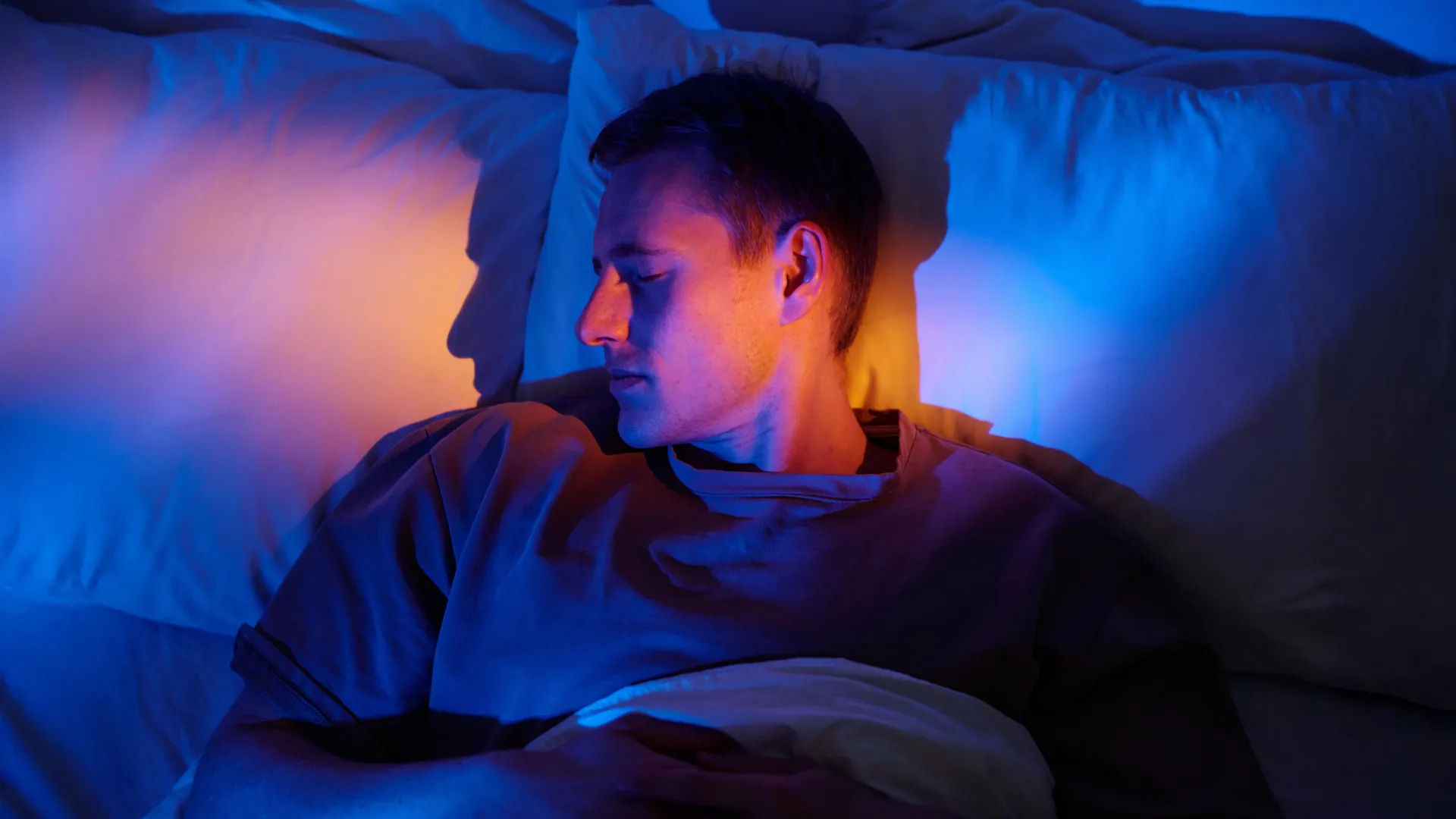
In an era defined by the glow of smartphones, the persistent hum of city streetlights, and the ubiquity of LED standby lights, true darkness has become a rare commodity. While we have long understood that light pollution disrupts our sleep-wake cycles, a groundbreaking study published on September 9 in the European Heart Journal suggests that the consequences of nighttime illumination extend far beyond mere grogginess. For the first time, researchers have established a direct, physiological link between nighttime light exposure and structural changes within the human heart.
The study, which analyzed data from over 11,000 individuals, reveals that even moderate levels of light during the night—what might be dismissed as harmless ambient glow—can trigger a process known as cardiac remodeling. This phenomenon, typically associated with chronic stress or injury, signals a worrisome decline in heart efficiency that could, if left unchecked, pave the way for heart failure.
The Architecture of the Study: Tracking Light in the Dark
Led by Professor Lu Qi of Tulane University in New Orleans, the research team set out to bridge the gap between observational links—which have long suggested a correlation between light exposure and cardiovascular disease—and the actual physical manifestations of that damage.
"Previous observational studies have linked nighttime light exposure with a higher risk of cardiovascular disease, but little is known about the related cardiac structure and functional changes," Professor Qi explained. "We carried out this research to find out what happens to the heart over time when people are exposed to too much light at nighttime."
The researchers utilized the extensive resources of the UK Biobank, selecting a cohort of 11,071 participants. The methodology was rigorous and longitudinal. To capture an accurate picture of the participants’ nocturnal environment, each individual wore a specialized light sensor on their wrist for a period of seven days. This device provided granular data on the intensity and duration of light exposure while the participants slept.
Three years later, the participants returned for a clinical follow-up that included cardiac MRI scans. These high-resolution images provided the researchers with an unprecedented look at the heart’s anatomy and physiology. By comparing the MRI results of those exposed to light levels above three lux—roughly the brightness of a dim nightlight—with those who slept in near-total darkness, the team was able to isolate the effects of light pollution on the heart muscle.
Evidence of Cardiac Remodeling: What Happens Inside the Chest
The findings from the MRI scans were stark. Participants who regularly slept in environments with higher levels of nighttime light exhibited distinct signs of "cardiac remodeling," a biological process that indicates the heart is struggling to cope with persistent, low-level stress.
Specifically, the scans showed a noticeable thickening in the wall of the left ventricle, the heart’s primary pumping chamber. As this muscular wall thickens, the volume of the chamber itself is effectively reduced, leaving less room for blood to fill and circulate. Alongside this structural change, the researchers identified a decline in the muscle’s flexibility. The heart appeared less able to flex and contract with the necessary fluidity required for an efficient heartbeat.
These changes were not confined to the left ventricle; the research team also detected subtle, yet significant, abnormalities in the right ventricle and the left atria. According to Professor Qi, these findings are deeply concerning.
"This is the first study of its kind," Qi noted. "Cardiac remodeling is typically seen in response to chronic stress or injury. It is our body’s way of adapting, but ultimately, it weakens the heart and can lead to heart failure. Light pollution has emerged as a new, previously underestimated risk factor for cardiovascular disease."
The Biological Mechanism: Why Light Matters
To understand why light at night triggers such a profound physical response, one must look at the circadian rhythm—the internal 24-hour clock that regulates everything from hormone secretion to cellular repair. Light is the primary zeitgeber (time-giver) for this clock. When light hits the retina, even through closed eyelids, it suppresses the production of melatonin, the hormone responsible for facilitating deep, restorative sleep.
However, the implications go deeper than just poor sleep quality. The chronic suppression of melatonin and the disruption of the circadian rhythm can trigger an inflammatory response and oxidative stress throughout the body. When this occurs consistently over months and years, the heart—a muscle that requires precise timing and rest to function—begins to suffer. The "stiffening" observed in the study participants is likely a direct result of this chronic, system-wide stress.
Official Responses and Clinical Implications
The publication of this study has sent ripples through the cardiology community, prompting a call to action for both clinicians and public health policymakers. An editorial accompanying the study, penned by Professor Thomas Münzel of the University Medical Center Mainz, Germany, and his colleagues, underscores the gravity of the findings.
Professor Münzel and his team argue that "darkness deserves recognition as a vital sign," placing it on the same level of importance as blood pressure monitoring or air quality assessments. They suggest that the medical community has been missing a critical piece of the patient history.
"It is time for clinicians, particularly those managing patients with heart failure or atrial fibrillation, to start asking about the sleep environment," the editorial states. "We need to ask how dark the bedroom is, whether the patient works night shifts, and how much screen use occurs after sunset."
The editorial highlights that the solution, while requiring a paradigm shift in awareness, is remarkably accessible. For patients, the advice is simple and inexpensive:
- Install blackout curtains to eliminate external light pollution from streetlights or passing traffic.
- Replace bedside lighting with warm-spectrum bulbs that minimize blue-light exposure.
- Eliminate "phantom" lights by covering standby LEDs on televisions, chargers, and electronic devices.
The Public Health Frontier: Reclaiming the Night
Beyond the individual bedroom, the study’s authors emphasize that the responsibility lies with urban planners and policymakers as well. As the planet becomes increasingly saturated with artificial light, the "night" is disappearing. This is not just an aesthetic or environmental concern; it is a cardiovascular health crisis.
Professor Münzel’s team advocates for smarter urban design. "Light pollution is one of the few environmental hazards that cities can control directly and affordably," they note. They suggest a transition to shielded fixtures that direct light downward rather than into the sky, the use of warm-spectrum bulbs, and the installation of dimming or motion-activated streetlights. Such measures are already available, energy-efficient, and climate-friendly, offering a "win-win" for both public health and sustainability.
The researchers emphasize that the dose-response relationship in their study was unambiguous: more light at night directly correlated to worse cardiovascular outcomes. The clinical reality unfolding inside our chests—hearts becoming stiffer, weaker, and less efficient—is a direct mirror of the world we have created outside our windows.
A Call for a New Perspective on Wellness
For decades, the medical field has focused on diet, exercise, and smoking cessation as the pillars of heart health. While these remain critical, the inclusion of "light hygiene" as a cardiovascular health strategy represents a significant evolution in our understanding of environmental health.
The study concludes that this is more than just an interesting observation; it is a wake-up call. The evidence suggests that our modern, hyper-lit lifestyle is fundamentally at odds with the biological requirements of the human heart. By reclaiming the dark, we may be able to significantly lower the incidence of heart disease and improve the longevity of the population.
As we look toward the future, the message is clear: the path to a healthier heart may start with the simple, quiet act of turning out the lights. By treating darkness as an essential component of our physiological environment, we can protect the very organ that sustains us, ensuring that our hearts remain resilient in an increasingly bright world. The science has spoken; now, the transition from awareness to policy and personal practice must follow.