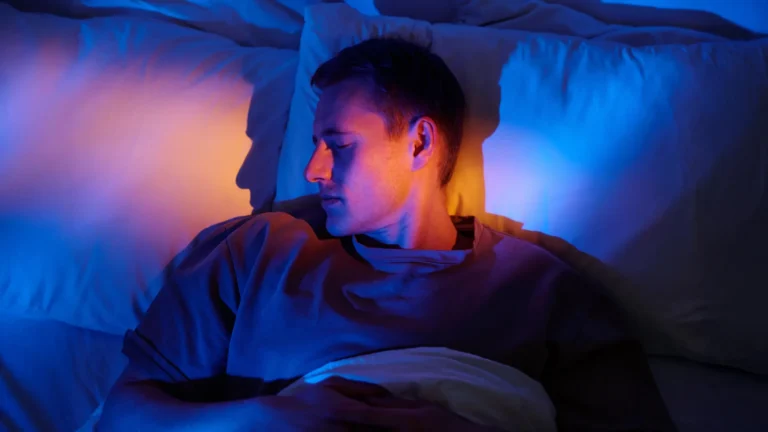
In the modern era, the sun sets, but the world does not go dark. From the persistent glow of streetlights filtering through bedroom curtains to the blue-light flicker of smartphones and standby LEDs on household appliances, humanity has become a species that thrives in a state of perpetual illumination. However, a groundbreaking study published on September 9 in the European Heart Journal suggests that our self-imposed "24-hour light cycle" may be exacting a heavy toll on our most vital organ: the heart.
Research led by Professor Lu Qi of Tulane University has unveiled a troubling association between exposure to light at night and measurable, potentially dangerous alterations to the heart’s structure and function. For those living in densely populated urban centers where light pollution is a constant, this research offers a stark warning that the bedroom environment may be as significant to cardiovascular health as diet or exercise.
The Anatomy of the Study: Tracking Light in Real-Time
To understand the long-term impact of nocturnal light, Professor Qi and his team turned to the UK Biobank, a vast repository of biological and health data. The study followed 11,071 participants, providing a robust sample size that allows for significant statistical power.
The methodology was meticulous. Rather than relying on self-reported sleep habits—which are notoriously prone to inaccuracy—researchers equipped each participant with a light-sensing device worn on the wrist for seven consecutive days. This allowed the team to capture precise, objective data regarding the intensity and duration of light exposure each individual encountered during the night.
Three years later, the researchers invited these participants back for cardiac magnetic resonance imaging (MRI) scans. These state-of-the-art scans provided a high-definition window into the heart, allowing scientists to assess the size of the heart’s chambers, the thickness of the muscle walls, and the efficiency of the blood-pumping mechanism. By comparing participants exposed to light levels above three lux—roughly the intensity of a dim nightlight—to those who slept in near-total darkness, the researchers uncovered a clear, dose-dependent relationship between artificial light and cardiac remodeling.
Cardiac Remodeling: What Happens When the Heart Adapts to Stress?
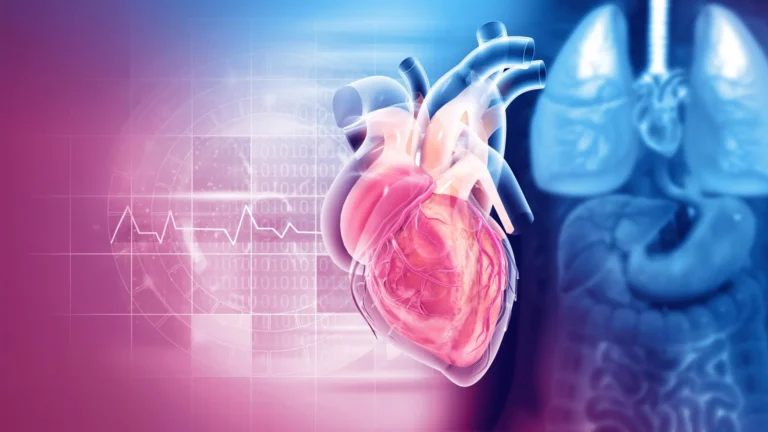
The most striking finding of the study was the physical transformation of the heart muscle. In participants exposed to higher levels of nighttime light, researchers observed a thickening of the left ventricular wall. The left ventricle is the heart’s primary pumping chamber, responsible for circulating oxygenated blood to the rest of the body. When the wall of this chamber thickens, the interior volume of the chamber decreases, forcing the heart to work harder to maintain systemic circulation.
Furthermore, the scans revealed a loss of flexibility in the heart muscle. In a healthy heart, the muscle is supple, allowing it to expand and contract efficiently with each beat. The research indicated that nighttime light exposure hinders this elasticity, a hallmark of early-stage cardiovascular decline. These changes were not limited to the left ventricle; the right ventricle and the left atria also showed signs of structural adaptation.
Professor Qi describes this process as "cardiac remodeling."
"This is the first study of its kind," Qi noted. "It shows that exposure to higher levels of light at nighttime is linked to cardiac remodeling. We typically see this in response to chronic stress or injury to the heart. It is the body’s way of adapting to that stress, but ultimately, it weakens the heart and can lead to heart failure."
The Biological Link: Why Does Light Matter?
The relationship between light and heart health is not merely coincidental; it is rooted in our biology. Humans evolved over millions of years to follow a circadian rhythm—a 24-hour internal clock regulated primarily by light and darkness.
When we are exposed to light at night, it disrupts the production of melatonin, the hormone responsible for regulating sleep-wake cycles and providing antioxidant protection. The suppression of melatonin is linked to oxidative stress and systemic inflammation. Over time, this chronic disruption can lead to elevated blood pressure, autonomic nervous system imbalance, and increased levels of stress hormones like cortisol.
The heart, as a muscle constantly under load, is particularly sensitive to these hormonal shifts. When the body fails to enter a state of "nocturnal recovery," the heart remains in a state of hyper-arousal. The remodeling observed in the study is effectively the heart’s desperate attempt to cope with a physiological environment that never truly rests.
Expert Perspectives: A "Vital Sign" for the Modern Age
The publication of the findings has triggered a robust response from the medical community. An editorial accompanying the study, authored by Professor Thomas Münzel of the University Medical Center Mainz, Germany, and his colleagues, elevated the discourse from clinical observation to a public health imperative.
Professor Münzel argued that the medical profession must broaden its definition of "risk factors." For decades, doctors have focused on cholesterol, smoking, and blood pressure. According to Münzel, the "darkness of the bedroom" should now be added to that list.
"It is time for clinicians, particularly those managing patients with heart failure or atrial fibrillation, to start asking about the sleep environment," the editorial states. "How dark is the bedroom? Does the patient work night shifts? How much screen use occurs after sunset?"
Münzel’s team emphasized that while the biological mechanisms are complex, the solutions are remarkably simple and inexpensive. Simple interventions—blackout curtains, warm-colored bedside lamps that reduce blue-light emission, and covering the small standby LEDs on televisions and charging docks—could potentially mitigate the risks.
Implications for Public Policy and Urban Planning
While the responsibility for a dark bedroom falls on the individual, the researchers argue that the larger issue of light pollution is a public health crisis that requires systemic intervention. Satellites orbiting the Earth show a planet that is glowing ever brighter at night, a testament to the expansion of artificial illumination.
From an urban planning perspective, the study suggests that cities have the power to protect their citizens’ hearts through smarter lighting design. Modern technology allows for shielded fixtures that direct light only where it is needed, rather than scattering it into the sky and through bedroom windows. Warm-spectrum bulbs, which are less disruptive to human circadian rhythms than the harsh blue-white LEDs currently favored by many municipalities, are both energy-efficient and climate-friendly.
"Light pollution is one of the few environmental hazards that cities can control directly and affordably," Münzel added. "Dimming streetlights or using motion-activated lighting are not just energy-saving strategies; they are public health strategies."
A Call to Action: Defining the Future of Sleep Health
The takeaway from the European Heart Journal study is unequivocal: the dose-response relationship is unambiguous. More light leads to worse outcomes, and the structural damage being done to our hearts is clinically meaningful.
As the medical community digests these findings, the conversation is shifting toward a new paradigm of preventative cardiology. We are entering an era where "environmental hygiene" is as crucial as dietary hygiene. The study provides a bridge between the clinical reality unfolding inside the chest—hearts that are becoming stiffer, weaker, and less efficient—and the external environment of a glowing, sleepless planet.
For the individual reader, the message is clear: the darkness is not an absence of light; it is a vital component of physiological health. Just as we prioritize clean air and water, we must begin to value the dark as a "vital sign."
As we look toward the future, the integration of these findings into clinical practice will be essential. If doctors can successfully incorporate questions about sleep environments into routine check-ups, they may be able to identify patients at risk before the structural remodeling of the heart becomes irreversible.
In the final analysis, the study serves as a humbling reminder that despite our technological advancements, we remain biological creatures tethered to the natural cycles of our planet. When we turn off the lights, we are not just going to sleep; we are giving our hearts the silence and darkness they need to heal, recover, and keep beating for a lifetime.