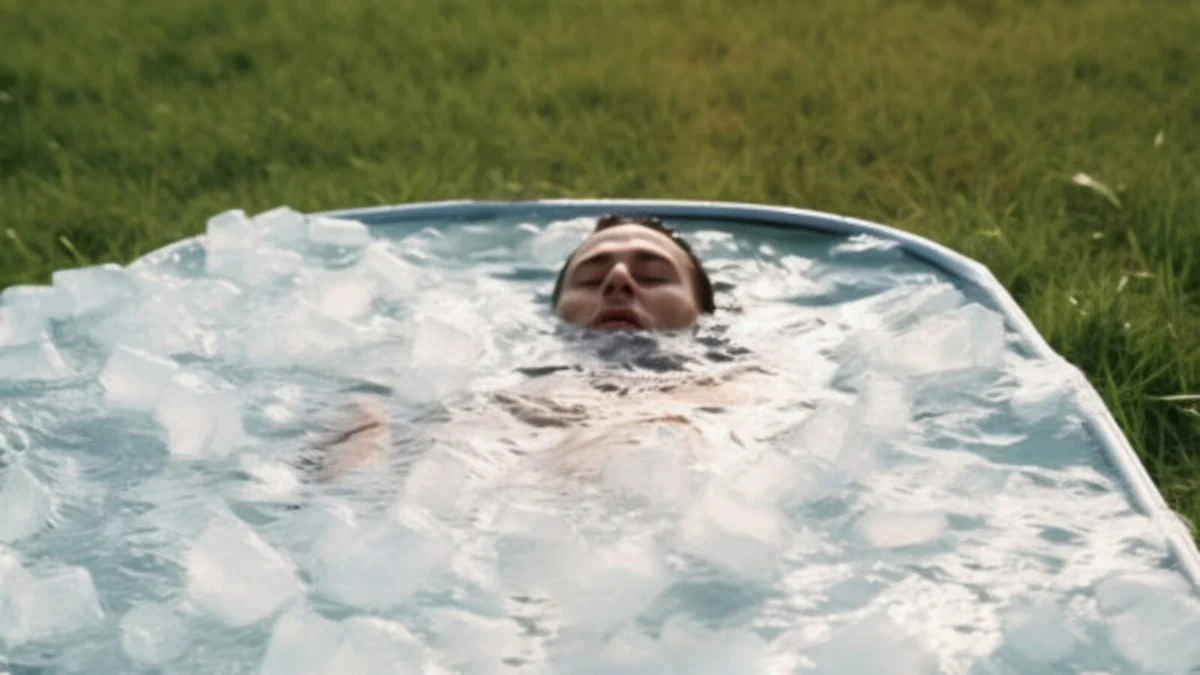
In the high-performance corridors of elite athletics, the "cold plunge" has transitioned from a fringe eccentric practice to a standardized recovery pillar. From the ice baths of the NFL locker room to the portable cold-plunge tubs appearing in suburban garages, the pursuit of cryotherapy has become a cultural phenomenon. Yet, as the practice gains mainstream traction, exercise scientists are urging a more nuanced approach. While the physiological allure of shivering in sub-50-degree water is undeniable, emerging research suggests that the timing of these icy immersions may inadvertently sabotage the very goals—muscle growth and adaptation—that athletes work so hard to achieve.
Main Facts: The Physiology of the Plunge
At its core, cold water immersion (CWI) operates on the principle of vasoconstriction. When the body is submerged in cold water, blood vessels narrow, shunting blood away from the extremities and toward the core to preserve vital organ temperature. Upon exiting the water, a "rebound effect" occurs, where blood vessels dilate, theoretically flushing metabolic waste products—such as lactate and inflammatory markers—out of damaged muscle tissues.
The primary appeal for the average fitness enthusiast is the immediate analgesic effect. The cold acts as a potent anti-inflammatory agent, numbing nerve endings and reducing the perception of delayed onset muscle soreness (DOMS). However, inflammation is not purely a villain in the training process. In the context of strength training, acute inflammation is a signaling mechanism. It is the biological "flare" that alerts the body to begin the repair and adaptation process, ultimately leading to hypertrophy (muscle growth) and increased strength.
The central conflict arises here: If an athlete aggressively suppresses the inflammatory response immediately following a hypertrophy-focused session, are they essentially "turning off" the biological signal for growth?
Chronology: From Clinical Utility to Mainstream Obsession
The history of hydrotherapy is ancient, dating back to Hippocratic medicine, but its modern application in sports science began to take shape in the late 20th century.
- The 1970s and 80s: The "Ice Bath" became a staple in track and field and endurance sports. Coaches noted that athletes who utilized ice baths felt "fresher" the following day, allowing for higher volume training loads.
- The Early 2000s: The practice migrated into professional team sports. Clinical studies began to appear, predominantly focusing on endurance athletes. Researchers found that CWI significantly reduced perceived muscle soreness compared to passive recovery.
- The 2010s: The "Hypertrophy Controversy" began to emerge. Researchers like Dr. Llion Roberts published landmark studies suggesting that while cold water reduced soreness, it also blunted the activation of satellite cells and the signaling pathways (such as mTOR) responsible for muscle protein synthesis.
- The 2020s: The "Wellness Boom." Cold exposure moved beyond the training room, fueled by social media trends and figures like Wim Hof. The focus shifted from pure athletic recovery to broader "biohacking," including metabolic health, immune function, and mental resilience.
Supporting Data: The Blunting Effect
The scientific consensus regarding CWI is bifurcated. For endurance athletes, the data is generally positive. For strength athletes, it is cautionary.
A pivotal 2015 study published in the Journal of Physiology examined the impact of CWI on long-term muscle adaptation. Participants performed strength training sessions for 12 weeks. One group utilized CWI post-workout, while the other performed active recovery (low-intensity cycling). The results were startling: the group that engaged in active recovery experienced significantly greater increases in muscle mass and strength compared to the cold-plunge cohort.
The mechanism is rooted in the suppression of the P70S6K pathway—a critical component in the body’s muscle-building cascade. By rapidly reducing core temperature and dampening the local inflammatory response, the cold bath essentially "mutes" the genetic expression required to build thicker, stronger muscle fibers.
Furthermore, a 2022 meta-analysis confirmed that while CWI is effective for short-term recovery (e.g., competing in a tournament with multiple games in 24 hours), it is counterproductive for "training cycles" where the goal is long-term physiological adaptation.
Official Responses and Expert Consensus
The current expert consensus, championed by organizations such as the National Strength and Conditioning Association (NSCA), can be distilled into a single philosophy: Context is King.
"We have to stop looking at recovery as a one-size-fits-all metric," says Dr. Elena Vance, a consultant in human performance. "If you are a professional basketball player in the middle of a playoff series, you don’t care about hypertrophy—you care about being able to move tomorrow. In that context, the cold plunge is an essential tool. However, if you are a bodybuilder or a recreational lifter trying to add muscle mass, the cold plunge is likely working against you."
Prominent strength coaches have shifted their protocols accordingly. Many now suggest a "buffer zone" of at least four to six hours between a high-intensity resistance training session and cold water immersion. This allows the body to complete its acute inflammatory signaling phase before the cooling effect is introduced.
Implications for the Modern Fitness Enthusiast
For the general population and fitness enthusiasts, the implications are clear: your recovery protocol should mirror your training goals.
1. Define Your Objective
If your primary goal is hypertrophy or absolute strength, treat the cold plunge as a standalone wellness activity rather than a post-workout recovery tool. Schedule it on rest days or in the mornings, far removed from your gym session.
2. Prioritize Natural Recovery
The most effective recovery tools remain the most basic: high-quality sleep, adequate protein intake, and active recovery (such as light walking or yoga). These methods support the body’s natural adaptation processes without interfering with the signaling pathways that build muscle.
3. Consider the Mental Aspect
It is important not to discount the psychological benefits of cold exposure. The "stress" of the cold plunge—a sudden, acute spike in adrenaline and norepinephrine—can have profound effects on mood, focus, and mental resilience. If the cold plunge helps you manage stress, improve your sleep quality, or provides a mental "reset," it still holds value. The key is to separate the neurological/psychological benefits from the physiological/muscular outcomes.
4. The "As-Needed" Paradigm
Rather than making the cold plunge a default, daily habit, view it as a tactical intervention. Use it when you are feeling exceptionally sore, when you are sleep-deprived, or when you are facing a high-stress day. By moving away from the "everyday" approach, you prevent the risk of blunting your hard-earned progress while still reaping the benefits of cold therapy when they are most needed.
Conclusion: A Balanced Approach
The rise of the cold plunge represents a broader trend in fitness: the desire to "hack" our biology to achieve faster results. However, the science warns us that nature often has a rhythm that we should be cautious about interrupting. Muscle growth requires a specific sequence of stress and recovery. By intervening too early with aggressive cooling, we may be silencing the very signals that make us stronger.
The modern athlete must become an architect of their own routine. By understanding the trade-offs between inflammation and recovery, we can use tools like the cold plunge with intention. The goal is not to avoid the cold, but to integrate it with the wisdom of timing—ensuring that we are recovering effectively without compromising the strength we strive to build. As with all things in physiology, the dose makes the poison, and in the case of the ice bath, the timing makes the difference.