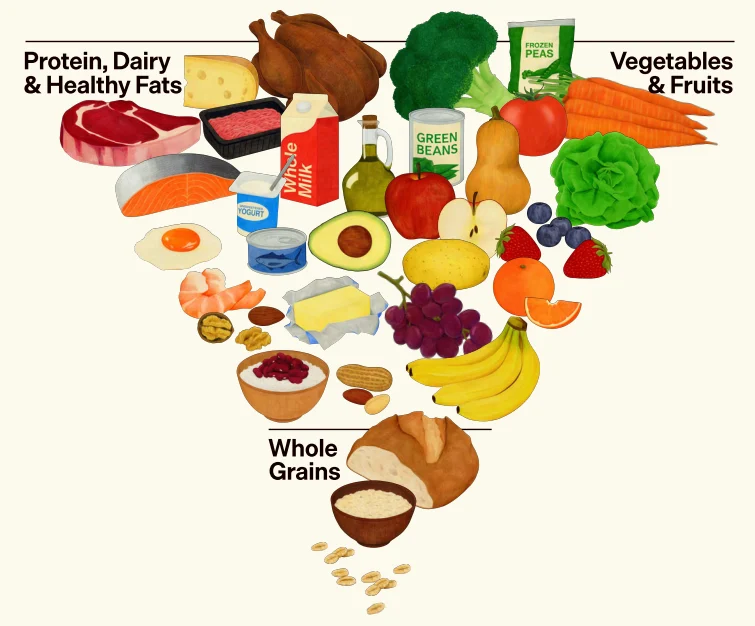












The release of the 9th edition of the Dietary Guidelines for Americans (2020–2025) marked a pivotal moment for public health policy in the United States. With the overarching mandate to "Make Every Bite Count," this sprawling, 150-page document serves as the primary blueprint for healthcare providers, policymakers, and federal nutrition programs. While the guidelines aim to simplify the complex landscape of nutrition, the release has sparked a rigorous debate regarding the intersection of individual health, cultural equity, and planetary sustainability.
Main Facts: A Shift Toward Lifespan-Focused Nutrition
The most significant evolution in the 2020-2025 edition is its commitment to "life-stage nutrition." Recognizing that nutritional requirements fluctuate dramatically from infancy through old age, the guidelines now offer specific, tailored recommendations for every phase of the human life cycle.
Unlike previous iterations that focused on isolating specific nutrients, this edition doubles down on the "dietary pattern" approach. By prioritizing the collective impact of what an individual eats over the course of a week rather than obsessing over individual "superfoods," the guidelines provide a framework for flexibility. This shift acknowledges that health is not achieved through isolated ingredients but through a sustained, nutrient-dense lifestyle.
However, the guidelines also explicitly acknowledge the social determinants of health. The document emphasizes that nutritional advice cannot exist in a vacuum; it must account for the lived realities of Americans. Factors such as race, cultural heritage, socioeconomic status, geographical food access, and personal budgetary constraints are now recognized as foundational elements that dictate whether an individual can realistically adhere to these national standards.
Chronology: The Evolution of Federal Guidance
The journey to the 2020-2025 guidelines represents a multi-year effort involving rigorous scientific review and public commentary.
- 2015-2016: The previous iteration of the guidelines set a precedent by removing strict limitations on total fat intake while simultaneously establishing a formal ceiling for added sugars. This set the stage for a debate on whether dietary policy should focus on macronutrient ratios or whole-food patterns.
- 2019: The Dietary Guidelines Advisory Committee (DGAC) began its comprehensive review of current scientific literature, evaluating evidence on how dietary patterns correlate with chronic disease prevention.
- December 2020: The USDA and HHS officially released the 9th edition. The rollout was met with immediate scrutiny, particularly regarding its failure to incorporate climate-related health data—a topic that had been requested by many public health advocacy groups during the public comment period.
- 2021-Present: Implementation efforts began across school lunch programs, WIC (Women, Infants, and Children), and other federal initiatives, while academic institutions and nutritionists continue to dissect the long-term implications of these standards.
Supporting Data: Examining the Healthy U.S.-Style Pattern
The core of the guidelines remains the "Healthy U.S.-Style Dietary Pattern." This model emphasizes a consistent intake of vegetables, fruits, grains, dairy, and protein. Yet, the data supporting these patterns remains contentious among nutritional epidemiologists.
The Limits on Nutrients
The guidelines maintain strict limits on three key areas, now categorized by specific age ranges:
- Added Sugars: Recommended to be less than 10% of total daily calories for those aged 2 and older.
- Saturated Fat: Recommended to be less than 10% of total daily calories for those aged 2 and older.
- Sodium: The guidelines suggest reducing intake, though they stop short of the more aggressive targets advocated by the World Health Organization, focusing on incremental change.
The Protein Conundrum
A point of significant technical debate is the recommendation for "lean meats." While the guidelines do clarify that the majority of protein intake should come from fresh or frozen lean cuts rather than processed meats (like hot dogs or deli meat), critics argue that this distinction is buried within the text. The public-facing summaries often lead with the term "lean meats," which may inadvertently encourage the consumption of processed items that are marketed as "low-fat" or "lean," even if they contain high levels of sodium and preservatives.
Official Responses and Professional Critiques
The scientific community’s response has been mixed. While many applaud the focus on life-cycle nutrition, prominent figures in the field, such as Dr. Walter Willett, Professor of Epidemiology and Nutrition at the Harvard T.H. Chan School of Public Health, have raised fundamental concerns.
Dr. Willett argues that the guidelines remain largely stagnant. "In general, there was minimal change from the last edition," he notes. The most glaring omission, according to Willett and his peers, is the lack of a nexus between human health and environmental sustainability.
The guidelines continue to recommend three servings of dairy per day. From an evidence-based perspective, this recommendation has faced long-standing criticism regarding its necessity for health outcomes. Furthermore, the push for low-fat dairy creates a "fantasy" scenario: if the population shifts toward low-fat milk, the remaining dairy fat must go somewhere. The disposal of such mass quantities of fat is economically and environmentally wasteful, suggesting that the dietary pattern is not designed with the current food supply chain in mind.
Implications: The Missing Link of Sustainability
Perhaps the most profound critique of the 2020-2025 guidelines is their silence on the climate crisis. The production of animal-based foods—specifically red meat and dairy—is a leading driver of greenhouse gas emissions. By failing to acknowledge the environmental footprint of these food groups, the U.S. government has missed an opportunity to align public health with planetary health.
The Climate-Health Nexus
Research consistently shows that the "Healthy U.S.-Style Pattern" is, by global standards, relatively high in meat and dairy. If the goal is to reduce the environmental impact of the American diet, a significant transition toward plant-based proteins is essential. Dr. Willett points out that for the guidelines to be truly effective in the 21st century, they must provide advice that is both nutritionally sound and environmentally sustainable.
Economic and Equity Barriers
The guidelines also carry implications for low-income populations. By failing to discourage processed meats more explicitly and by continuing to emphasize expensive, animal-centric proteins, the guidelines may inadvertently exacerbate health disparities. When "lean meat" is touted as the primary protein source, consumers on tight budgets may interpret this as an endorsement of cheap, processed, but "low-fat" meat products. This is particularly concerning given that these same populations already face disproportionately higher rates of diabetes and obesity.
The Path Forward: A Call for Evidence-Based Reform
The 2020-2025 guidelines serve as a reflection of the current political and industrial landscape of American nutrition. They are a starting point, but they are not an end-all. To truly "Make Every Bite Count," future editions must:
- Integrate Sustainability: Adopt a holistic view that considers the environmental costs of dietary recommendations.
- Clarify Protein Guidance: Distinguish clearly between unprocessed, high-quality proteins (beans, nuts, fish, poultry) and processed alternatives in all summary materials.
- Address Dairy Realities: Base dairy recommendations on the most recent, robust health outcome data rather than historical agricultural subsidies or traditional consumption patterns.
In conclusion, while the latest Dietary Guidelines for Americans offer a more nuanced approach to age-specific nutrition, they remain caught between the inertia of traditional dietary patterns and the urgent need for a shift toward sustainable, plant-forward eating. As the nation grapples with climate change and a chronic disease epidemic, the disconnect between federal policy and scientific reality will continue to be a primary area of focus for nutrition researchers and public health advocates alike. The challenge for the next iteration of the guidelines will be to bridge that gap, ensuring that the food we eat today supports both the people of tomorrow and the planet they will inhabit.