In the sterile, high-tech corridors of Legend Biotech’s manufacturing facility in Raritan, New Jersey, the boundary between biological innovation and industrial logistics dissolves. It was here that a patient named Colleen, a multiple myeloma survivor, met the very scientists and technicians who had labored over the personalized CAR-T therapy that saved her life. This encounter was more than a PR milestone; it was a profound illustration of the "patient-as-product" reality that defines the current era of personalized medicine.
For companies like Legend Biotech and its partner, Johnson & Johnson, the commercial success of Carvykti represents a paradox: as the treatment reaches more patients, the manufacturing burden does not become easier—it becomes exponentially more complex. Unlike traditional pharmaceuticals that can be mass-produced in massive bioreactors, Carvykti is an autologous therapy. Every dose is a unique biological entity derived from the patient’s own cells. As demand surges, the industry is discovering that scaling cell therapy is not about increasing the size of a batch; it is about scaling the capability to execute thousands of individual, error-free manufacturing runs in parallel.
The Chronology of a Breakthrough
The journey of Carvykti from a clinical concept to a cornerstone of myeloma treatment has been rapid. Following its initial FDA approval in 2022, the therapy has seen a meteoric rise in adoption. By the second quarter of 2026, the drug reported $657 million in net trade sales—a 50% increase compared to the previous year. Today, it is available at 348 sites across 19 global markets, marking a significant footprint for a therapy that requires such high-touch manufacturing.
However, the path to this level of commercialization was paved with immense logistical hurdles. Legend Biotech has spent the last several years methodically constructing a global supply chain designed to handle the "scale-out" model. This infrastructure includes:
- The Expanded Raritan Facility (USA): The primary hub for the North American market, designed to support up to 10,000 patients annually.
- Novartis Contract Manufacturing (Morris Plains, NJ): A strategic partnership that bolstered U.S. capacity during critical growth phases.
- The Obelisc and Tech Lane Facilities (Ghent, Belgium): Two state-of-the-art sites established to provide localized manufacturing for European and international patients, reducing the distance—and therefore the time—cells spend in transit.
The "Scale-Out" Paradigm: Data and Metrics
The defining challenge of CAR-T, as Mike O’Mara, Chief Operating Officer of Cellipont Bioservices, succinctly puts it, is that "when you scale an autologous cell therapy, you don’t scale up, you scale out."
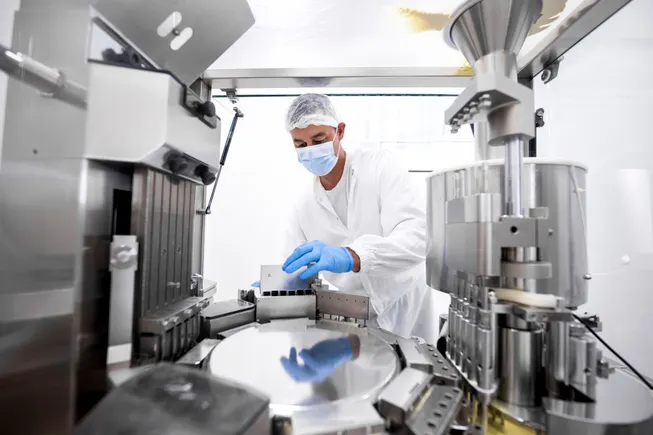
In traditional biopharma, scaling means moving from a 50-liter tank to a 2,000-liter tank. In the world of Carvykti, scaling means adding more cleanrooms, more specialized teams, and more parallel quality-control workflows. The data supporting Legend’s progress suggests they have mastered this delicate balance. In the first quarter of recent reporting, the company maintained a 99% manufacturing success rate—a staggering figure considering the variability of patient-derived raw materials. Furthermore, the median turnaround time in the U.S. has been stabilized at 29 days, with over 95% of orders meeting their projected delivery dates.
These metrics are not merely administrative achievements; they are the pillars of the company’s commercial value proposition. In the personalized medicine market, reliability is the primary currency. If a manufacturer cannot guarantee the return of a modified product within a specific window, the clinical viability of the treatment—and the patient’s health—is compromised.
Official Perspectives on Manufacturing Complexity
Industry experts and corporate leadership agree that the bottleneck in cell therapy is rarely just the "making" of the cell product. Instead, it is the integration of the entire ecosystem.
"The real question is not simply, ‘Can we manufacture another batch?’" says O’Mara. "It is, ‘Can we manufacture it, test it, release it, and deliver it consistently within the required timeframe?’"
Legend Biotech’s interim CEO, Alan Bash, has emphasized that the company’s regionalized manufacturing model is central to this. By keeping the manufacturing process as geographically close to the patient as possible, the company minimizes the risks inherent in cryopreservation and international shipping.
However, the pressure remains on the manufacturing floor. As teams scale, the risk of "operator-to-operator variability" increases. When a process is highly manual, the quality of the end product can shift based on the technician’s experience. To mitigate this, the industry is aggressively pivoting toward automation and closed-processing systems. A recent review published in the PDA Journal of Pharmaceutical Science and Technology highlights a fundamental shift: the industry is moving away from the "academic-style" manual processes of the past toward highly standardized, digitally monitored platforms that allow for more predictable outcomes.
Implications for the Future of Healthcare
The implications of these manufacturing hurdles reach far beyond the cleanroom. They dictate clinical access, regulatory policy, and even the design of clinical trials.
Easing Downstream Friction
One significant victory for the industry occurred in June 2025, when the FDA eliminated the mandatory Risk Evaluation and Mitigation Strategies (REMS) for several CAR-T therapies, including Carvykti. By streamlining monitoring protocols and reducing the time patients must remain near treatment centers, the FDA has effectively lowered the barrier to entry for smaller, regional, and rural hospitals. This shift is expected to expand the patient pool, but it also creates a new challenge: how to maintain the same level of manufacturing and logistics precision when the treatment is being administered in a wider variety of community settings.
The "Build Before You Need It" Mandate
A recurring theme among manufacturing experts is the "optimisation trap." Many biotech developers make the mistake of waiting until they reach commercial scale to optimize their processes. O’Mara warns that this is a critical error. A slow assay or a difficult-to-source raw material that is manageable during a 20-patient clinical trial becomes a catastrophic failure point when processing 2,000 patients a year. Consequently, "manufacturability" is now being treated with the same weight as "efficacy" and "safety" during the early drug development phase.
The Next Frontier: In Vivo CAR-T
While companies like Legend Biotech continue to refine the industrialization of autologous cell therapies, the long-term solution may lie in bypassing the ex vivo process entirely.
Legend is currently investigating in vivo CAR-T options, such as their candidate LB2501. By using a gene vector to modify immune cells directly inside the patient’s body, the manufacturing burden could shift from a patient-specific process to a standardized, "off-the-shelf" vector production model. Early data from 12 patients in a phase 1 study showed promising signs of efficacy without significant dose-limiting toxicities.
If successful, this approach would represent a massive pivot in the industry. It would not eliminate the need for manufacturing, but it would move the industry away from the bespoke, per-patient manufacturing model toward a more scalable, centralized production system.
Conclusion: The Path Ahead
The story of Carvykti is, in many ways, the story of the current generation of biotechnology. It is a story of bridging the gap between cutting-edge, personalized science and the rigid demands of industrial-scale production.
For the time being, the autologous model remains the gold standard, and every additional patient treated represents a triumph of logistics as much as a triumph of medicine. As Legend Biotech and its competitors refine their processes, the focus will remain on "industrializing the individualized." Whether through the automation of current cleanroom processes or the eventual transition to in vivo delivery, the ultimate goal remains the same: ensuring that the complexity of the manufacturing chain never stands in the way of a patient’s chance at life. The metrics of 2026 show that the industry is learning to run this race, but as demand continues to rise, the true test of the "scale-out" model is only just beginning.