For decades, the standard psychiatric response to auditory hallucinations—commonly referred to as "hearing voices"—has been one of suppression. Under the traditional medical model, these experiences are categorized as primary symptoms of pathology, specifically schizophrenia or other psychotic disorders, to be eliminated through pharmacological intervention. However, a growing movement of psychologists, practitioners, and "voice hearers" is advocating for a radical shift in perspective. Instead of viewing voices as biological "glitches," they are increasingly seen as meaningful, albeit disassociated, parts of a person’s psyche.
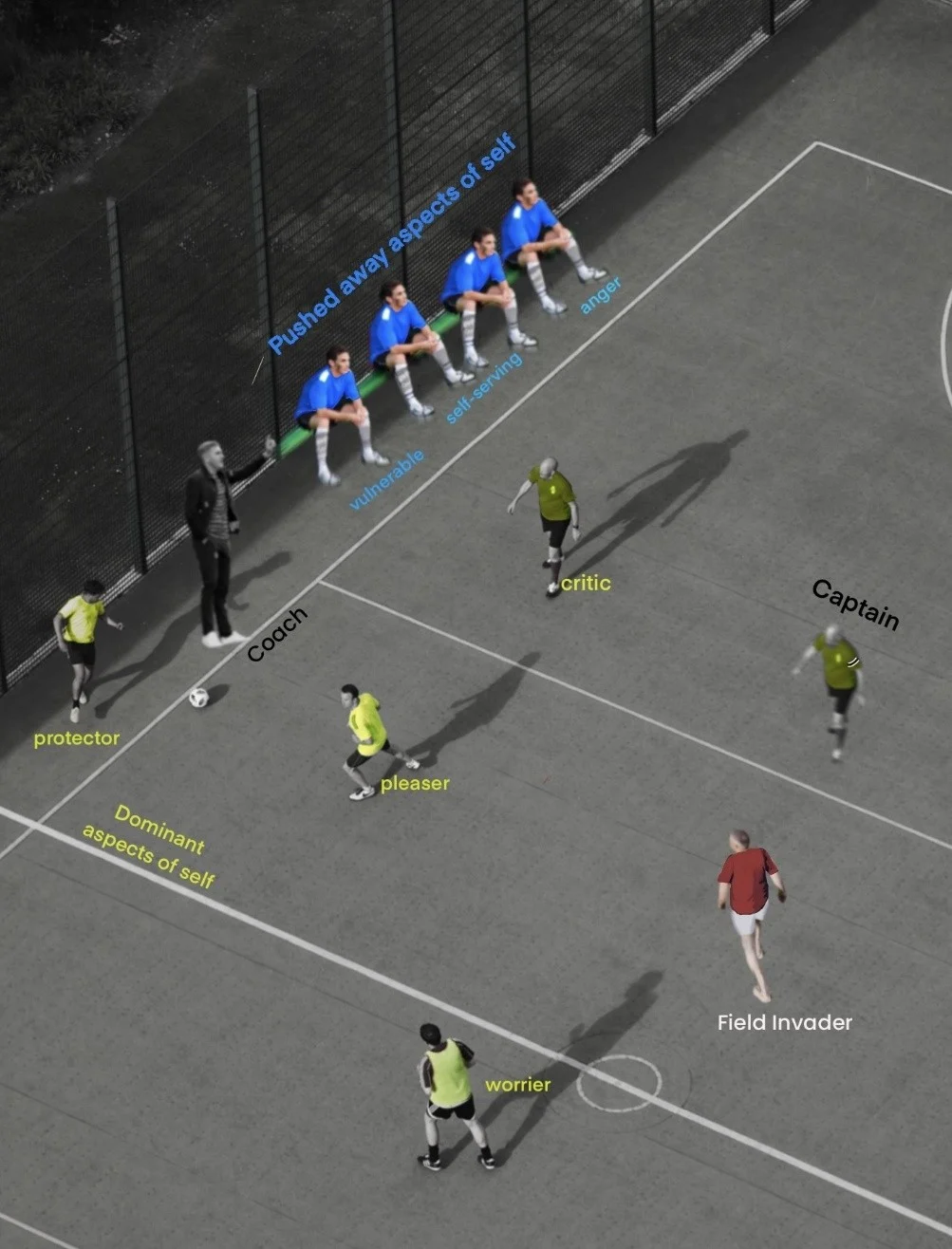
At the forefront of this shift is the "Talking with Voices" approach, which utilizes a vivid and accessible metaphor: the soccer team. By conceptualizing the mind as a squad and the individual as the coach, this framework provides a structured way for individuals to reclaim agency over their internal world.
Main Facts: A Paradigm Shift in Mental Health
The core of this approach lies in the transition from viewing voices as "symptoms" to viewing them as "sub-personalities" or "disowned selves." This perspective is rooted in the Hearing Voices Movement (HVM) and the psychological practice of Voice Dialogue.
The soccer metaphor serves as a bridge between complex Jungian theory and practical, everyday management. In this model, the "Aware Ego" functions as the team coach. A successful coach does not ignore the benchwarmers or favor only the star strikers; rather, they ensure every member of the squad feels valued and contributes to the team’s ultimate goal. When a coach neglects certain players, disharmony ensues. In the human psyche, this disharmony often manifests as distressing voices—internal "players" who have been benched or marginalized and are now "sabotaging" the coach’s efforts to get attention.
Key takeaways of this approach include:
- Voices have meaning: The content of what voices say is often symbolically related to the hearer’s life history, particularly past traumas.
- Dialogical Engagement: Rather than trying to "silence" voices, the goal is to negotiate with them, shifting the power dynamic from submission to leadership.
- Internal Multiplicity: The approach assumes that the human personality is not a single, monolithic entity but a collection of various "parts" or "selves."
Chronology: From Dutch Innovation to Global Research
The evolution of the "Talking with Voices" approach is a decades-long journey involving a collaboration between clinical professionals and those with lived experience.
The 1970s: The Birth of Voice Dialogue
Psychologists Hal and Sidra Stone developed "Voice Dialogue" as a tool for self-development. Their theory posited that individuals possess a cluster of sub-personalities. By getting to know these parts from a position of awareness, people could reduce inner conflict. While not initially designed for psychosis, it laid the theoretical groundwork for understanding the "multiplicity" of the mind.
The Late 1980s: The Hearing Voices Movement (HVM)
The movement began in 1987 in the Netherlands, sparked by a collaboration between psychiatrist Marius Romme and his patient, Patsy Hage. Hage challenged Romme to acknowledge that her voices were as real as the God people prayed to, leading Romme to realize that many people hear voices without ever needing psychiatric care. This led to the first international conferences and the establishment of peer support groups in England and beyond.
The 1990s: Bridging the Gap
In the late 1990s, voice hearers like Ron Coleman and psychiatrists like Dirk Corstens began making explicit links between Voice Dialogue and the experiences of voice hearers. They introduced "chair work"—a technique where the individual physically moves between chairs to represent different internal parts—as a way to facilitate direct communication with voices.

2010–Present: Clinical Validation
Over the last decade, researchers such as Eleanor Longden, Rufus May, and Charlie Heriot-Maitland have subjected these techniques to rigorous study. Approaches like Compassion Focused Therapy (CFT) for voices and Internal Family Systems (IFS) have converged with the Talking with Voices model. Recent pilot trials (e.g., Longden et al., 2021) have begun to evaluate the feasibility and efficacy of these dialogical interventions within National Health Service (NHS) settings in the UK.
Supporting Data: Mapping the Internal Soccer Team
The efficacy of the soccer metaphor lies in its ability to categorize complex internal experiences into recognizable roles. Practitioners use this map to help voice hearers "scout" their own internal talent.
The Team Coach (The Aware Ego)
The "Aware Ego" is the central processing unit of the psyche. Like a coach standing on the touchline, this part observes the game without being "played" by the players. The goal of therapy is to strengthen the Coach so they can manage both the dominant players and the disaffected ones.
The Captain (The Protector/Controller)
Every team has a leader on the pitch. In the psyche, this is the "Protector/Controller." This part’s job is to keep the person safe, often by keeping "vulnerable" or "child-like" selves hidden. If a therapist wants to talk to a voice, they must first get "permission" from the Captain, who may be wary of opening old wounds.
Players on the Field (The Dominant Selves)
These are the traits we show the world: the "hard worker," the "pleaser," or the "perfectionist." These parts are usually socially acceptable and have served us well in the past. However, being "stuck" in one position—like a striker who refuses to defend—can lead to exhaustion and internal imbalance.
Players on the Bench (The Disowned Selves)
These are parts of ourselves we have "benched" because they felt unsafe or were discouraged by our culture or upbringing. For example, a person raised in a household where anger was punished may bench their "Assertive Self." These parts are still in the squad, but they are frustrated and underutilized.
Disaffected Players and Protesters (The Voices)
This is where the metaphor becomes most powerful for those experiencing psychosis. Voices are conceptualized as players who have been so thoroughly "dropped" from the squad that they are no longer recognized as part of the team. They might be "leaking stories to the press" (intrusive thoughts) or "protesting on the pitch" (distressing hallucinations). By recognizing these voices as disowned players with valid—if poorly expressed—needs, the Coach can begin to bring them back into the fold.
Official Responses: Perspectives from the Field
The authors of this framework, psychologists Rufus May and Kate Middleton, emphasize that this model is about empowerment. Rufus May, who has worked with hearing voices groups since 2001, brings a unique perspective: he was treated for psychosis at age 18. "I strongly believed the content of my alternative realities were meaningfully related to my life, despite medical approaches which seemed to ignore this possibility," May notes.
Kate Middleton, who has used the soccer metaphor in clinical practice for years, highlights the "community development" aspect of the movement. She argues that the metaphor helps trainees and therapists move away from a "fix-it" mentality toward a "management and collaboration" mentality.

Other experts in the field, such as Richard Schwartz (founder of Internal Family Systems), have echoed these sentiments. In recent interviews, Schwartz has reflected on how dialoguing with voices—rather than suppressing them—can lead to profound healing, as it addresses the underlying trauma that caused the "part" to split off in the first place.
However, the medical establishment remains cautious. While "Talking with Voices" is gaining traction, many psychiatrists express concern that moving away from medication-first approaches could lead to relapses. Proponents of the soccer metaphor respond by clarifying that this is not necessarily an "either/or" approach, but a "both/and" strategy that prioritizes the person’s quality of life and agency.
Implications: Changing the Scoreboard
The shift toward a dialogical, metaphor-based understanding of voices has significant implications for the future of mental health care.
1. Reduction of Stigma and Fear
When a voice is seen as a "disaffected player" rather than a "brain disease," the fear factor is significantly reduced. This allows the individual to approach their experience with curiosity rather than terror. Research by Csipke and Kinderman (2006) found that a person’s beliefs about their voices are more predictive of distress than the voices themselves. By changing the belief—from "I am possessed/broken" to "I have a disgruntled teammate"—distress levels often drop.
2. Personal Agency and Recovery
The soccer metaphor places the individual back in the "Manager’s Seat." In the medical model, the patient is a passive recipient of treatment. In the soccer model, the individual is an active participant who must learn to scout, coach, and negotiate. This fosters a sense of self-efficacy that is vital for long-term recovery.
3. Cultural and Spiritual Flexibility
One of the greatest strengths of the "Coach" metaphor is its adaptability. For individuals who view their voices through a spiritual or cultural lens—such as ancestors, djinns, or ghosts—the metaphor still holds. Even if the "players" are external spirits, the "Coach" still needs to decide how to interact with them respectfully without being dominated by them.
4. Recognizing the Limits
Practitioners urge that the metaphor should not be taken too literally. Unlike a real soccer team, internal "players" cannot be traded or fired. They are part of the psyche for life. The goal is not to "win" a game but to achieve "social cohesion" within the mind.
Conclusion
The "Talking with Voices" approach, encapsulated by the soccer team metaphor, offers a compassionate and practical alternative to the pathologization of human experience. By viewing the mind as a diverse squad and the self as an aware coach, individuals are given the tools to transform a "sabotaging" internal environment into one of communication and cooperation. As research continues to validate these dialogical methods, the hope is that more "coaches" will find the confidence to step onto the field and lead their internal teams toward a more harmonious future.