Maintaining physical independence and vitality as we age is not a matter of luck; it is a matter of biology. For men over the age of 60, the decline in muscle mass—a condition known as sarcopenia—can lead to decreased mobility, a higher risk of falls, and a diminished quality of life. However, research consistently shows that targeted resistance training can effectively combat these changes.
To better understand how to maintain functional fitness without the need for a commercial gym membership, we consulted Ben Walker, founder of Anywhere Fitness and a renowned personal trainer specializing in home-based training for athletes and older adults.
The Science of Aging and Muscle Preservation
The human body is designed to move, but as we pass the age of 60, our muscle fibers—particularly type II fast-twitch fibers—begin to atrophy if not consistently engaged. The lower body is the primary engine of human movement. It houses the body’s largest muscle groups: the quadriceps, the hamstrings, and the gluteus maximus.
"Training the lower body is paramount because of the sheer size of these muscle groups," says Walker. "Because these muscles are so large, engaging them requires significant metabolic demand, which burns more calories and signals the body to maintain bone density and structural integrity. Men who prioritize their lower body strength tend to remain functionally independent far longer than those who do not."
Chronology of Functional Fitness: Why Now?
The necessity of a consistent workout regimen is often hindered by the realities of modern life: work deadlines, family obligations, and the logistical friction of commuting to a gym. By integrating a series of high-impact, low-risk exercises into your home environment, you remove the barriers to consistency.
Consistency is the cornerstone of fitness after 60. By focusing on a home-based routine, you can capitalize on "found time"—the 15 to 20 minutes between tasks—to ensure your lower body remains robust and capable.
The 7 Pillars of Lower-Body Strength
Walker suggests a regimen focused on unilateral movement, posterior chain activation, and stabilization. Below are seven essential exercises designed to restore leg strength and improve long-term mobility.
1. Step-Ups with Leg Lift
The step-up is a quintessential "functional" exercise. It mimics the mechanics of climbing stairs or navigating uneven terrain.
- The Benefit: It engages the lower back, core, hamstrings, quads, and calves simultaneously. Crucially, it is a unilateral exercise, meaning it forces each leg to work independently, which corrects muscle imbalances.
- Safety Profile: Unlike running or jumping, the step-up is a low-impact movement, making it significantly safer for the joints of the knees and lower back. As we age, our coordination and proprioception (the body’s ability to sense movement and location) can decline; the step-up serves as a practical diagnostic and training tool to sharpen these neurological pathways.
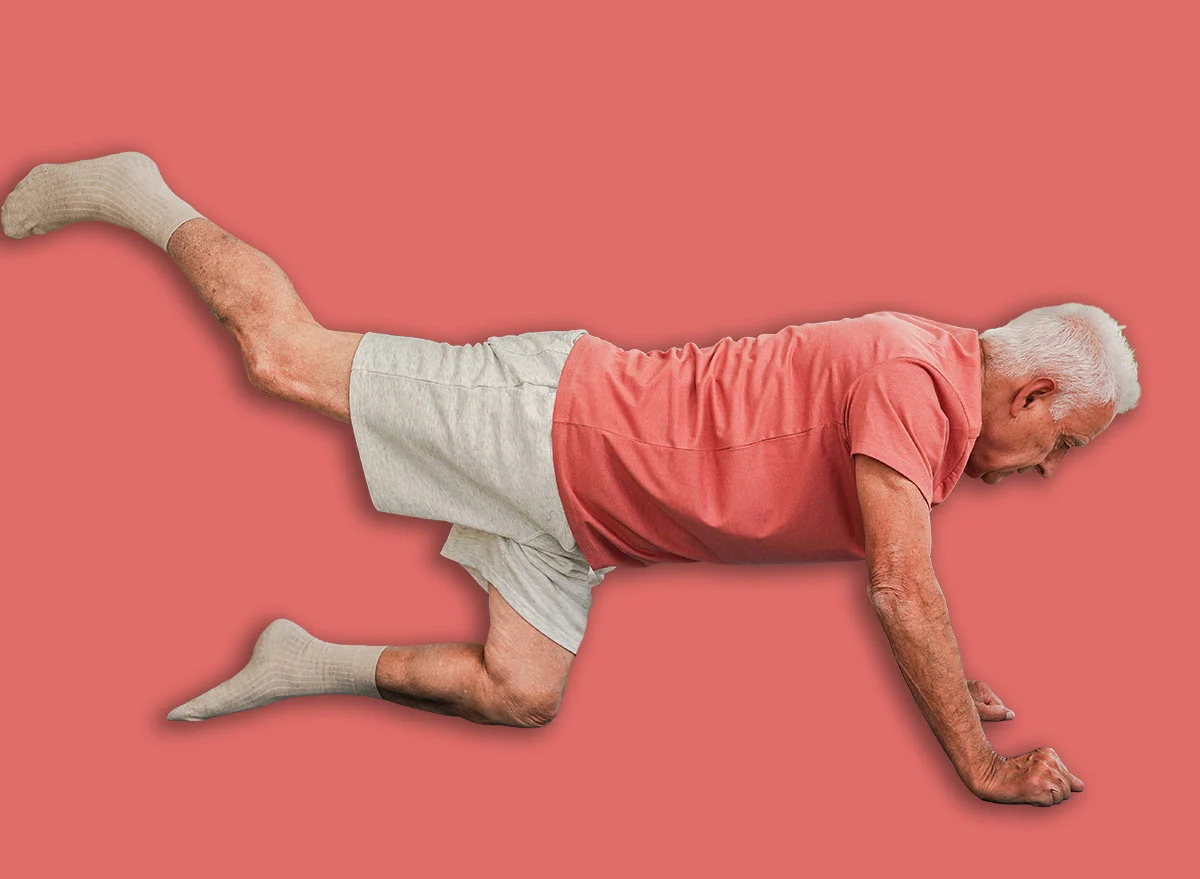
2. Fire Hydrants with Resistance Band
Pelvic control is often overlooked in older men, yet it is the key to a healthy spine. The Fire Hydrant targets the gluteus medius, a critical muscle for stability.
- The Benefit: A weak gluteus medius often leads to pelvic misalignment. By strengthening this muscle, you pull the pelvis into a neutral position, which naturally flattens the midsection and takes the pressure off the lumbar spine.
- Implementation: Using a resistance band increases the load on the hip stabilizers, ensuring that you are not just moving through a range of motion, but actively building the strength required to maintain a balanced gait.
3. Glute Kickbacks
Postural degradation is a common hallmark of aging. Often, a forward-tilting pelvis—which can make the stomach appear to protrude—is actually a symptom of weak glutes and tight hip flexors.
- The Benefit: Glute kickbacks target the entire posterior chain. By strengthening the glutes and hamstrings, you allow the spine to return to its natural, neutral alignment. This is not just about aesthetics; it is about reducing the chronic back pain that plagues millions of older adults.
4. Single-Leg Glute Bridge
The bridge is arguably the most effective movement for spinal health and core stabilization.
- The Benefit: When performed with one leg, the intensity increases, recruiting the deep core muscles and the erector spinae (the muscles running along the spine).
- Safety First: Because this exercise is performed while lying on a bed or floor, it eliminates the risk of falling, making it the perfect entry point for those currently experiencing pain or weakness in the lumbar region. It safely isolates the glutes without putting unnecessary shear force on the spinal discs.
5. Single Straight-Leg Raises
Range of motion is as important as raw strength. A stiff hip joint can lead to a shorter stride and a shuffling walk.
- The Benefit: This exercise focuses on active flexibility. By raising the leg while keeping it straight, you encourage the hip to move through its full range of motion while maintaining total muscular control. This helps prevent the "tightness" that often develops in the hip flexors after years of excessive sitting.
6. Wall Sits
Muscular endurance is the ability of your muscles to work over a sustained period. Without it, simple tasks like walking up a long flight of stairs or navigating a hill become exhausting.
- The Benefit: Wall sits are an isometric exercise, meaning the muscle length does not change during the contraction. This is remarkably joint-friendly. By holding a squat position against a wall, you build the stamina required for daily life while minimizing the wear and tear on your knees.
7. Romanian Deadlifts (RDLs)
The RDL is the gold standard for posterior chain development.
- The Benefit: It teaches the body to hinge at the hips rather than rounding the back. This movement pattern is vital for everyday lifting—whether you are picking up a bag of groceries or a grandchild. It stabilizes the hips and pelvis, promoting better balance and bone density.
- Professional Advice: Walker emphasizes that technique is paramount. Start with body weight or very light dumbbells. The goal is to feel the stretch in the hamstrings, not the strain in the lower back.
Implications for Longevity
The implications of adopting these seven exercises are profound. By focusing on these specific movements, men over 60 can effectively "future-proof" their bodies.
- Reduced Fall Risk: Improved balance and glute strength directly correlate to a lower incidence of falls, which is a leading cause of injury in the elderly population.
- Metabolic Health: Maintaining muscle mass helps regulate blood sugar and improves insulin sensitivity, which is vital for managing metabolic health as we age.
- Psychological Wellbeing: Strength training is not just physical; it is cognitive. The focus required to perform these exercises helps maintain mental sharpness and coordination.
Final Recommendations for Implementation
Consistency should always be prioritized over intensity, especially when beginning a new routine. Walker recommends starting with 2–3 sessions per week.
"Don’t worry about hitting a ‘personal best’ immediately," Walker advises. "Focus on the quality of the movement. If you can perform these exercises with perfect form, the strength gains will follow. Remember, the goal is to build a body that serves you for the next thirty years, not just the next thirty days."
Before beginning any new exercise regimen, it is recommended that you consult with your primary care physician, especially if you have a history of orthopedic issues or cardiovascular concerns. By combining medical guidance with a structured, consistent home workout, men over 60 can reclaim their strength and embrace their later years with confidence and vitality.