








As climate change accelerates the frequency and intensity of wildfires across North America, the geography of air pollution is being fundamentally rewritten. Smoke is no longer a localized nuisance confined to the immediate vicinity of a burn; it is a transboundary atmospheric pollutant capable of traveling thousands of miles, turning pristine skies into hazy, hazardous environments. From the dense forests of Canada to the bustling urban centers of the American East Coast, the plume of a wildfire has become a shared, continent-wide health concern.
The Science of Smoke: Understanding the Air Quality Index
To manage the risks posed by these atmospheric events, public health agencies rely on the Air Quality Index (AQI), a standardized metric developed by the Environmental Protection Agency (EPA). The AQI serves as a color-coded shorthand for the invisible cocktail of particulate matter (PM2.5), ozone, and other gaseous pollutants suspended in the air we breathe.
The scale is linear in its danger but exponential in its health implications:
- 0–50 (Good): Air quality is satisfactory, and air pollution poses little or no risk.
- 51–100 (Moderate): Air quality is acceptable. However, there may be a risk for some people, particularly those who are unusually sensitive to air pollution.
- 101–150 (Unhealthy for Sensitive Groups): Members of sensitive groups may experience health effects. The general public is less likely to be affected.
- 151–200 (Unhealthy): Some members of the general public may experience health effects; members of sensitive groups may experience more serious health effects.
- 201+ (Very Unhealthy/Hazardous): Health alert: The risk of health effects is increased for everyone.
The danger of wildfire smoke lies primarily in PM2.5—fine inhalable particles that are less than 2.5 micrometers in diameter. Because these particles are so small, they can bypass the body’s natural defense mechanisms, penetrating deep into the lungs and entering the bloodstream. Emerging research suggests that this type of pollution is particularly insidious; some studies have indicated that wildfire smoke may be more detrimental to brain health than other forms of urban air pollution, with potential links to cognitive decline and dementia.
Chronology of a Crisis: How Smoke Travels
The trajectory of wildfire smoke is dictated by complex synoptic-scale weather patterns. When a massive wildfire ignites—whether in the boreal forests of Canada or the dry brushlands of the American West—it creates a plume of thermal energy that can loft smoke high into the atmosphere.
- The Ignition and Lofting Phase: Large-scale fires generate enough heat to create "pyrocumulonimbus" clouds. These fire-driven thunderstorms push smoke into the upper troposphere, where high-altitude winds act as a highway.
- The Transport Phase: Once in the upper atmosphere, smoke can drift across entire countries. This phenomenon explains why residents in New York City or Washington, D.C., might wake up to an orange, hazy sky even when no fires are burning within hundreds of miles.
- The Grounding Phase: As the smoke plume cools or encounters specific atmospheric pressure systems, the particles descend. This is when local air quality monitors start to spike, and residents begin to smell the distinct, acrid scent of burning timber, signaling that the health risk has arrived at the ground level.
Vulnerability and Risk: Who is Most Affected?
While healthy adults may experience temporary irritation from poor air quality, the impact on "sensitive groups" can be immediate and severe. Dr. Sanjay Sethi, chief of the division of pulmonary, critical care, and sleep medicine at the University at Buffalo, emphasizes that those with pre-existing conditions are on the front lines of this crisis.
"If you have heart or lung problems, you have to be definitely more careful," Dr. Sethi explains. This includes individuals with asthma, chronic obstructive pulmonary disease (COPD), or cardiovascular conditions. When air quality degrades, the inflammation caused by inhaled particles can trigger asthma attacks, exacerbate heart conditions, and increase the risk of cardiac events. For these individuals, the recommendation is clear: avoid the outdoors entirely when AQI levels rise above 100.
Official Responses and Monitoring Tools
Public health officials are increasingly shifting toward a "precautionary principle" when it comes to air quality. Rather than waiting for symptoms to manifest, they advise citizens to stay indoors and keep windows closed at the first sign of haze.
To assist the public in making informed decisions, several tools are now widely available:
- AirNow.gov: The official EPA portal provides the most reliable, regulatory-grade data on air quality across the United States.
- PurpleAir: This citizen-science network has revolutionized localized monitoring. By utilizing low-cost sensors, the network provides a granular, street-by-street look at air quality, often capturing hyper-local pockets of smoke that large government stations might miss.
- Indoor Monitoring: Joseph Allen, director of Harvard University’s Healthy Buildings Program, suggests that indoor monitoring is the next frontier of personal health. "You can find these low-cost, indoor air quality monitors just about everywhere online now," he notes. By monitoring indoor levels, residents can determine exactly when to initiate mitigation strategies.
Practical Mitigation: Protecting Your Indoor Sanctuary
When the air outside becomes hazardous, the home must serve as a refuge. Experts suggest a multi-layered approach to creating a "clean air room":
- Sealing the Envelope: The simplest step is to close all windows and doors. For older homes with gaps, using weatherstripping or placing blankets under door cracks can prevent the infiltration of outdoor smoke.
- Recirculation: If you have an air conditioning system, ensure it is set to "recirculate" mode rather than drawing in fresh air from the outside.
- Filtration Upgrades: Swapping standard HVAC filters for a MERV 13-rated filter can significantly improve the capture of fine particles. However, users must ensure the system can handle the increased resistance of a denser filter to avoid mechanical strain.
- Portable Air Purifiers: For those without central HVAC, portable HEPA air purifiers are the gold standard. Jennifer Stowell, a research scientist at Boston University’s Center for Climate and Health, suggests keeping these devices in the rooms where you spend the most time, particularly bedrooms, to ensure clean air during the eight hours of sleep.
When Exposure is Unavoidable: The N95 Defense
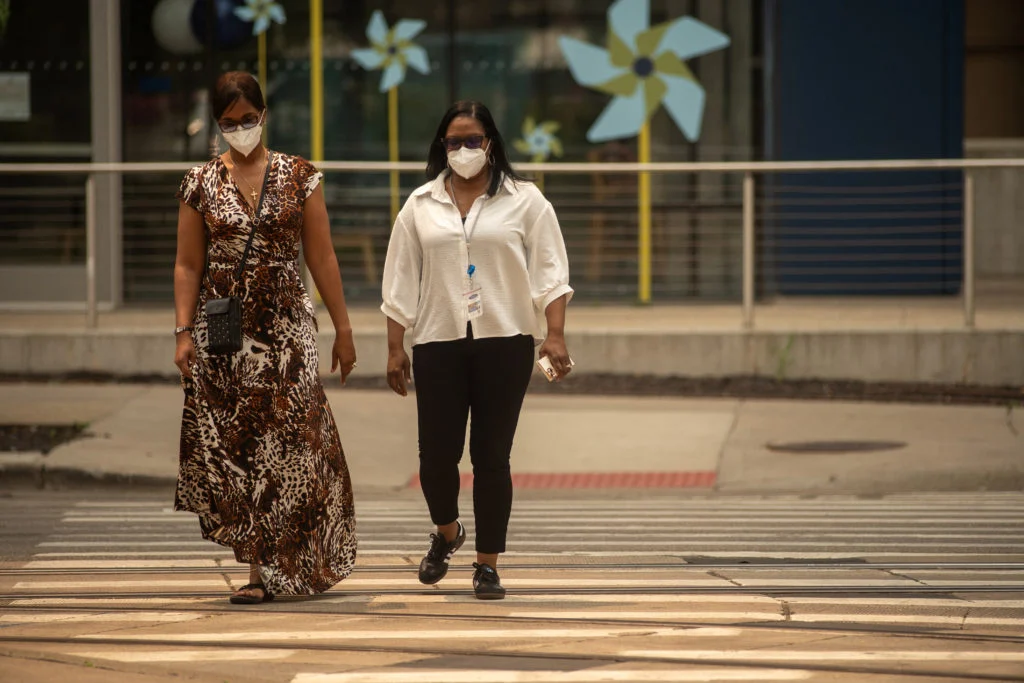
Sometimes, necessity forces us into the outdoors. In these instances, personal protective equipment is essential. While the COVID-19 pandemic made the N95 mask a household item, its utility in wildfire smoke is even more pronounced.
"An N95 is going to get rid of 90-95% of the particles," says Stowell. If you are forced to be outdoors during a smoke event, the mask should be properly fitted to create a seal around the nose and mouth. Respirator-type masks with valves can provide additional comfort by making it easier to exhale, which can be critical for those working in smoky conditions.
However, masks are not a license to ignore the environment. Experts warn that if you begin to experience symptoms—such as wheezing, a whistling sound in the chest, or shortness of breath—it is a physiological red flag. "If you start wheezing, that’s definitely more concerning," Dr. Sethi warns. At the first sign of respiratory distress, the only effective remedy is to relocate to a space with filtered air.
The Broader Implications: A Changing Normal
The reality of the modern wildfire season suggests that we are moving toward an era where air quality will be a recurring seasonal challenge. The implications for public health are profound. Schools may need to implement "indoor recess" policies more frequently, businesses may need to reconsider remote work during high-pollution events, and urban planning will need to prioritize high-efficiency filtration in public infrastructure.
As we look to the future, the integration of real-time data, personal protective measures, and a more robust understanding of how smoke impacts human physiology will be essential. Protecting our health in an era of smoke is not just about individual vigilance; it is about building a societal resilience that recognizes air quality as a fundamental pillar of public health. By staying informed, monitoring our immediate environment, and preparing our homes, we can mitigate the risks posed by this invisible, drifting threat.