








In the modern age, the quest for immortality has migrated from the realm of science fiction into the daily routines of millions. From high-profile biohackers spending millions annually on blood plasma exchanges to social media influencers peddling complex, multi-supplement stacks, the cultural narrative around aging has shifted. The prevailing message is clear: if you aren’t "optimizing" every facet of your biology, you are failing to reach your potential.
But behind the slick marketing and the allure of "perfect" health lies a growing concern among researchers and long-term health coaches: the pursuit of the "optimal" is often prohibitively expensive, deeply complex, and, ironically, potentially detrimental to the very life you are trying to extend.

The Myth of the "Optimized" Life
The longevity industry is currently dominated by high-profile figures such as Dr. Peter Attia, Dr. Andrew Huberman, and biohacker Bryan Johnson. Their content, while scientifically grounded in parts, has created a sense of urgency that suggests basic health behaviors are insufficient for a long life.
However, data from organizations like Precision Nutrition (PN), which has coached hundreds of thousands of individuals, paints a different picture. Their findings suggest that the obsession with optimization is not only unnecessary but often counterproductive. The "basics"—consistent exercise, whole-food nutrition, adequate sleep, stress management, and social connection—account for the vast majority of longevity outcomes.

Chronology of the "Optimization" Shift
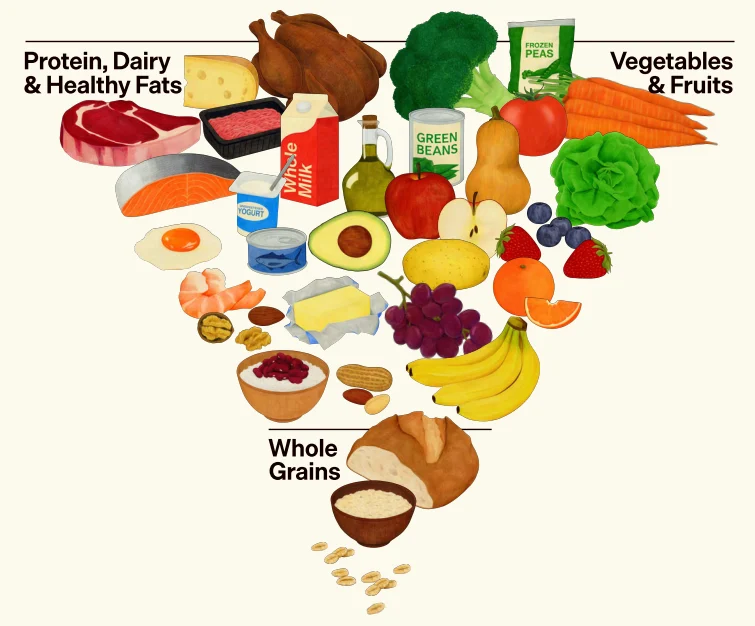
- Pre-2010s: Public health messaging focused on the "basics": the food pyramid, 30 minutes of daily activity, and smoking cessation.
- 2010s–2020: The rise of wearable technology (Fitbits, Oura rings, CGMs) allowed for the quantification of daily health metrics.
- 2020–Present: The "Biohacking Era." The mainstreaming of advanced, fringe, and often unproven interventions (e.g., cold plunges, NAD+ injections, continuous glucose monitoring for non-diabetics) has created a "more is better" culture.
The Law of Diminishing Returns
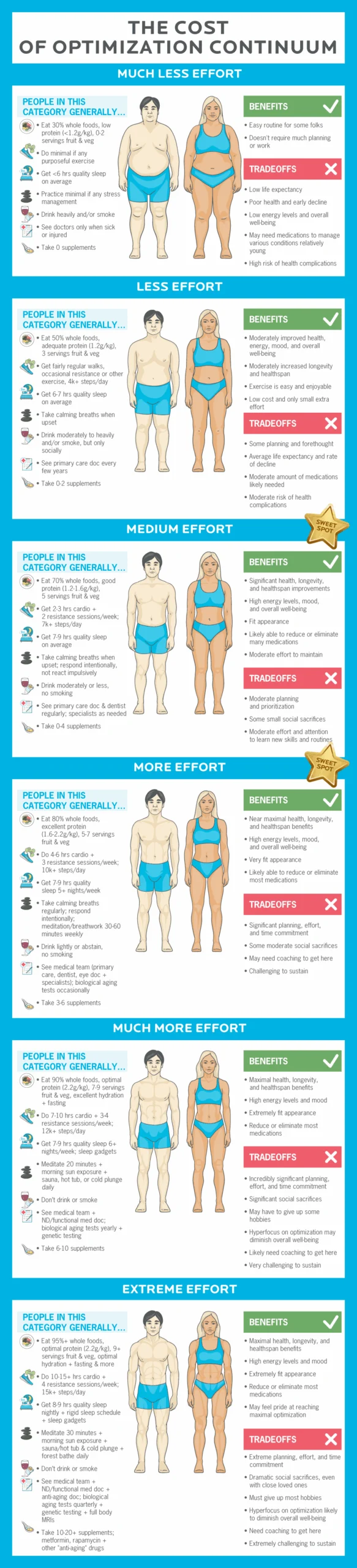
The core argument against extreme optimization is the law of diminishing returns. When an individual goes from a sedentary lifestyle to a "medium-effort" lifestyle—incorporating regular walks and a diet centered on whole foods—the health benefits are exponential. The risk of all-cause mortality drops significantly.
However, as you move from "high effort" to "extreme optimization," the gains plateau. You might spend an additional $10,000 a year and 20 hours a week on specialized blood work, niche supplements, and complex recovery modalities, but the marginal increase in life expectancy is statistically negligible compared to the foundational work already performed.

Supporting Data: What Actually Moves the Needle
When we strip away the "optimization" noise, the data is remarkably consistent regarding what constitutes a high-return lifestyle.
1. Exercise: The U-Shaped Curve
The "Extreme Exercise Hypothesis" suggests that while moderate-to-high exercise is a potent life-extender, extreme, chronic overtraining can lead to myocardial fibrosis and coronary artery calcification. The sweet spot for most adults is roughly 150–300 minutes of moderate-intensity aerobic activity per week, complemented by two to three sessions of resistance training.

2. Nutrition: The 80/20 Rule
Large-scale studies involving millions of participants indicate that health benefits from fruit and vegetable consumption plateau at five servings per day. Similarly, replacing ultra-processed foods (UPFs) with whole foods yields the most dramatic results. The "optimal" diet isn’t the one that eliminates every gram of sugar; it is the one that is 80% nutrient-dense and sustainable enough to maintain for a lifetime.
3. Social Connection: The Invisible Foundation
Perhaps the most overlooked factor in longevity is social health. The Harvard Study of Adult Development, spanning over 87 years, has consistently identified strong social relationships as the single greatest predictor of longevity and life satisfaction. Social isolation, conversely, has been shown to be as physiologically damaging as smoking 15 cigarettes per day.

Official Perspectives: The Risk of "Underdosing" vs. "Overdosing"
Medical experts and public health organizations emphasize that the true crisis in developed nations is not a lack of "biohacking," but a severe "underdosing" of basic health behaviors.
Current statistics are sobering:

- Only 10% of Americans consume the recommended five servings of fruits and vegetables daily.
- Only 24% meet the combined aerobic and resistance exercise guidelines.
- One-third of adults fail to achieve the minimum 7 hours of sleep required for basic cognitive and cardiovascular maintenance.
The "official" medical consensus is that by focusing on these missing foundations, the average person can achieve near-peak optimization. The "extra" interventions often touted by influencers are, at best, experimental and, at worst, carry risks of liver toxicity or hormonal disruption that haven’t been adequately studied in the long term.
The Cost of Optimization: A Financial and Mental Burden
Beyond the physiological risks, the "optimizer" lifestyle carries a heavy, often hidden price tag.

Financial Implication
An individual pursuing a basic healthy lifestyle might invest a modest amount in gym memberships and quality groceries. An "optimizer," by contrast, may spend thousands on:
- Functional medicine testing (e.g., gut microbiome mapping, genetic longevity panels).
- High-end recovery tools (e.g., infrared saunas, hyperbaric chambers).
- Supplements that have little-to-no high-quality human evidence (e.g., NMN, Resveratrol).
The "Deep Health" Tradeoff
Perhaps the most significant cost is to "Deep Health"—the integration of physical, emotional, mental, existential, and social well-being. When a person becomes obsessed with hitting specific macros, tracking every sleep stage, or avoiding all social situations that involve non-optimized food, they sacrifice their quality of life. Longevity loses its value if the process of extending it strips away the very experiences that make life worth living.

Conclusion: Reclaiming Your Agency
The message is not that you should stop caring about your health. Rather, it is an invitation to reclaim your autonomy from the noise of the "wellness industrial complex."
If you are already doing the basics—moving your body, eating whole foods, managing your stress, and prioritizing your relationships—you are likely already capturing 90% of the possible longevity benefits available to a human being. The remaining 10% is rarely worth the 300% increase in effort, cost, and anxiety required to pursue it.

Before you invest in the next "cutting-edge" supplement or tracking device, ask yourself: Am I doing the basics with 80% consistency? If the answer is no, that is where your effort belongs. The best life-extension protocol isn’t a complex, expensive, or restrictive one; it is the one you can actually enjoy while you are living it.